
Lieferung heute & morgen

Qualitätsgarantie

Willkommens-Angebote freischalten: KOSTENLOSE Lieferung | Bis zu 80 % RABATT | Kostenlose 30-Tage-JoyPlus-Testphase
App herunterladen
A thermometer is a staple in many home medicine cabinets. But measuring time and price aren’t the only things to consider when you buy one. It’s important to choose a device that suits the intended measurement site, the age of the person using it and how much cleaning it requires. A digital stick thermometer works differently from a contactless thermometer with an infrared sensor. Features such as a fever alarm, memory function or silent mode can also be more or less useful depending on your daily routine.
Claims such as ‘reading in one second’ usually refer to the time it takes for the device to display a result. With an infrared thermometer, the distance, angle, measurement site, ambient temperature and correct positioning can all affect the result. So you’ll need to position a forehead thermometer according to the instructions. A stick thermometer takes longer to give a reading, but how to use it under the arm, orally or rectally is clearly defined.
A contactless thermometer doesn’t touch the skin. This can be useful when measuring a sleeping child or for use by several family members. However, the sensor and casing still need to be kept clean and dry. A waterproof thermometer isn’t necessarily fully submersible, either. With many devices, only the tip can be cleaned with a damp cloth, while the display casing must stay dry.
A colour-coded display makes readings easier to see, but it can’t provide a medical assessment for everyone. Temperature ranges may be interpreted differently depending on the measurement method and the person’s age. So treat a fever alarm as a guide. If readings remain unusual or you’re unsure what they mean, seek medical advice.
Depending on the model, a classic digital thermometer with a flexible tip can be used orally, under the arm or rectally. A flexible tip can make it more comfortable to use with children. Babies and young children must only be measured under adult supervision.
A forehead thermometer takes a reading on the forehead, either without contact or with light contact. An ear thermometer uses an infrared sensor in the ear canal. Both types are quick, but need to be positioned correctly. Before you buy, check that the instructions specifically mention the age group and measurement site you need.
A typical body temperature measuring range might be 32,0 to 42,9 °C. A resolution of 0,1 °C makes small temperature differences visible, but it doesn’t mean every reading will be the same in all conditions. Look for easy-to-read LCD or LED displays, the option to switch between °C and °F, and clear alert tones.
A colour-coded display can help you distinguish between normal, raised and high readings at a glance. For taking temperatures at night, a silent mode and a subtle display are useful, as they’re less likely to disturb a sleeping child.
If several people will be using the thermometer, check the cleaning instructions and look for a storage case and an easily accessible sensor. A memory function that stores the last reading or several readings can help you keep track of changes, but it doesn’t replace keeping records in line with medical advice.
Also check whether batteries, a case and instructions are included. For devices that use button cell or AAA batteries, keep batteries out of children’s reach and dispose of them in line with local requirements.
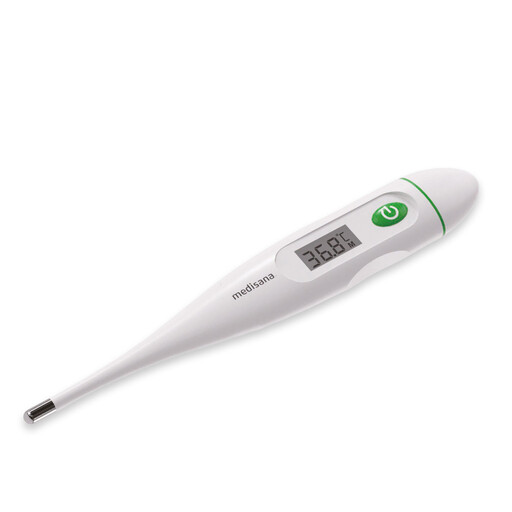
Why it suits this type of user: According to the product details, this stick thermometer takes a reading in around 20 seconds. It has a flexible tip and is designed for oral, underarm and rectal use.
The measurement method and range are clearly stated. The tip is water-resistant and can be cleaned according to the instructions.
Flexible tip, audible fever alarm, memory for the last reading, storage case and battery included.

Why it suits this type of user: This device supports both contact and contactless forehead readings. It features PositionCheck and offers age-based guidance on the display.
A target light, distance sensor and on-screen instructions help you position it correctly, rather than leaving you to rely on guesswork.
Takes a reading in around two seconds according to the product description, with a colour-coded display, silent mode and an additional object-measuring function.
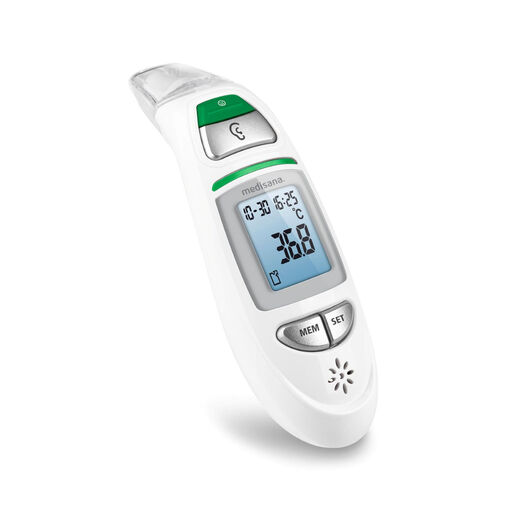
Why it suits this type of user: According to the product details, this device measures forehead, ear, surface, liquid and room temperatures, making it suitable for a range of everyday situations.
The different measurement options are clearly listed, so you can check before buying whether you’ll actually need to measure object and liquid temperatures.
Infrared technology, visible fever alarm, date and time display, and options for measuring body, liquid, surface and room temperatures.
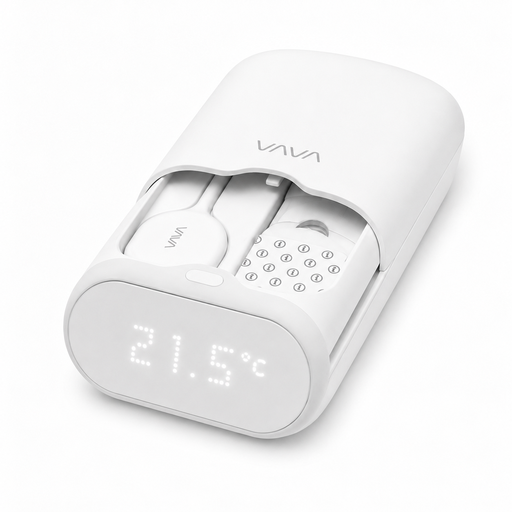
Why it suits this type of user: A wearable underarm sensor sends readings to a separate LED display and is designed for monitoring over longer periods at home.
Battery life, wireless range and alert thresholds are clearly specified, helping you judge how useful it will be overnight and during rest periods.
Up to 24 hours of sensor operation according to the product details, audible and visual alerts, USB-C charging and no app required.
We’ve put together a complete, regularly updated list of products that meet these strict selection criteria and the safety regulations in force in the EU.
Its lifespan depends on the battery, storage, cleaning and how much physical wear and tear it’s subjected to. Replace the batteries when the display becomes faint, and replace the device if the sensor or casing is damaged or the readings are unclear. There’s no single expiry date that applies to all models.
Both types can take readings quickly. What matters is the age recommendation, correct positioning and the instructions. A contactless forehead thermometer or a silent mode can be useful when you’re measuring a sleeping baby. If you’re unsure, ask a medical professional for advice.
As well as the purchase price, the main costs are batteries and, where needed, disposable probe covers or strips. Models with a memory function and automatic shut-off can make them easier to use. So check what’s included and which type of battery you’ll need before buying.