
Lieferung heute & morgen

Qualitätsgarantie

Willkommens-Angebote freischalten: KOSTENLOSE Lieferung | Bis zu 80 % RABATT | Kostenlose 30-Tage-JoyPlus-Testphase
App herunterladen
A thermometer is a staple in many households, but choosing between a digital thermometer, infrared thermometer, ear thermometer and contactless thermometer isn't always straightforward. Families in particular often look for a device that works for babies, children and adults, takes a quick reading and can also check milk or bath water when needed.
However, if you only focus on terms like "1-second measurement" or "medical accuracy", you can easily overlook important details. Three common buying mistakes can mean a thermometer rarely gets used in daily life:
A forehead thermometer measures without contact or with light contact on the forehead. This is especially handy when you don't want to wake a sleeping child. An ear thermometer takes the temperature in the ear canal and should be positioned according to the instructions. For babies and young children, always check the manufacturer's age recommendation.
A classic digital stick thermometer measures via a probe and is usually limited to body temperature. The operation is generally straightforward. If you also want to check the temperature of liquids, food or room air, look for a 3-in-1 thermometer or 6-in-1 thermometer with object, liquid and room temperature modes.
A stated measurement time of around one second can be useful in family life. It prevents long waits and makes it easier to take readings from restless children. However, speed alone doesn't tell you whether the device is being used correctly. Pay attention to details about the recommended distance, positioning and cleaning of the sensor.
A memory function is helpful if you want to compare several readings. The models in our selection store, depending on the version, 7, 20, 32 or 35 measurements. Check whether the date and time are also recorded and whether the stored values can be clearly retrieved.
A fever alarm can be a sound, vibration, coloured backlight or a combination of these signals. An alarm value of 37.5 °C or 37.6 °C is a product setting, not a universal medical assessment. The display should therefore always be considered in relation to the measurement method, age and health condition.
For night-time use, a silent thermometer with a switchable beep is a good idea. For battery-operated devices, the battery type, automatic shut-off and the availability of a spare battery are practical buying criteria. A compact housing and a storage case make it easier to use on the go.
The following products cover various needs. The details refer to the respective product descriptions and do not replace medical advice.
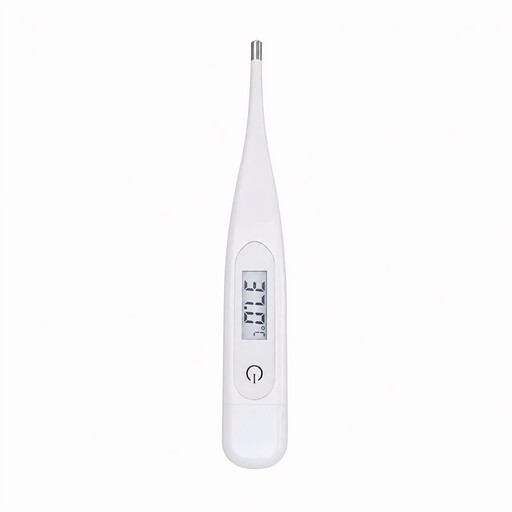
Why this product fits the profile: This pen-shaped digital thermometer focuses on classic body temperature measurement and can be stored compactly for home or travel.
It does away with unnecessary extra modes and states a clear measurement range of 32.0 °C to 42.9 °C. The housing is mercury-free.
Display in 0.1 °C increments, switchable to Fahrenheit and an audible signal when the measurement is complete.

Why this product fits the profile: This contactless thermometer combines forehead measurement, object measurement and an adjustable display for different age groups.
The PositionCheck function indicates distance and alignment. This visibly addresses a common source of error with contactless measurements.
Colour-coded LCD display, silent mode and measurement of body, liquid and food temperatures.
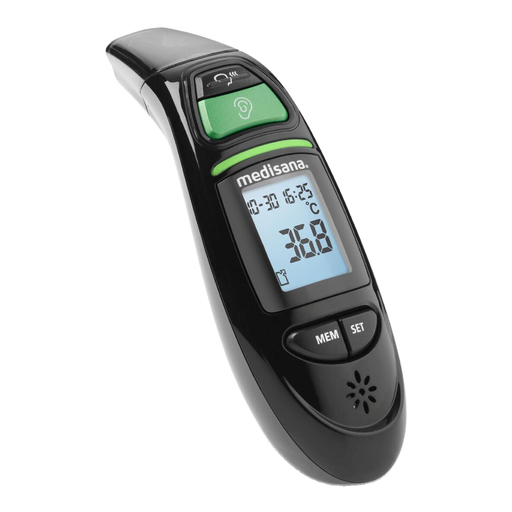
Why this product fits the profile: This temperature measuring device is aimed at households that want to capture body, surface, liquid and room temperature with one device.
The six measurement functions are divided into body, forehead, ear, surface, liquid and room temperature. The correct mode should be selected before use.
Infrared technology, visual fever alarm, date and time display, plus storage case and batteries included.
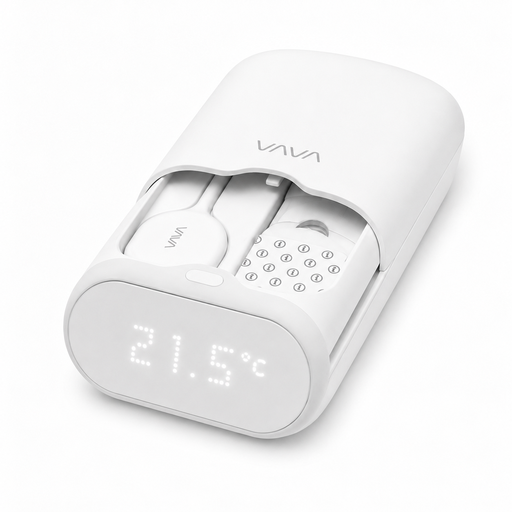
Why this product fits the profile: The wearable sensor measures under the arm and transmits the reading wirelessly to a separate LED display. This can be handy during quiet times and for longer observation.
The display also informs you about connection interruptions, a detached sensor and low battery. This keeps important device statuses visible.
Up to 24 hours of sensor use, up to 15 metres stated wireless range and switching between Celsius and Fahrenheit.
We've put together a complete, regularly updated list of products that fully meet these strict selection criteria and the safety regulations in force in the EU.
For the most comparable readings possible, you should always follow the same method:
A reading is for guidance only and should not be assessed in isolation if there are noticeable symptoms. If you are unsure, have a persistently high temperature or have a very young child, medical advice is advisable.
The actual lifespan depends on the batteries, cleaning, storage and frequency of use. Models with automatic shut-off can reduce battery consumption. Damaged probes, cracks in the housing or unclear readings are reasons to stop using the device.
Many devices are described as suitable for babies or for use from birth. What matters is the specific age recommendation, the correct distance and the intended measurement site. A contactless thermometer should not be used as the sole basis for medical decisions.
For battery-operated models, the main ongoing cost is for replacement batteries. Devices with a memory function, automatic shut-off and a switchable beep can make use easier. Before buying, it's worth checking the battery type, what's included in the box and available accessories.