
Lieferung heute & morgen

Qualitätsgarantie

Willkommens-Angebote freischalten: KOSTENLOSE Lieferung | Bis zu 80 % RABATT | Kostenlose 30-Tage-JoyPlus-Testphase
App herunterladen
A thermos flask should keep coffee, tea or water at the right temperature for several hours and be safe to transport in everyday situations. In practice, however, poor insulation performance is not the only cause of disappointing purchases. Closures, cleaning and the actual capacity are often underestimated too.
Claims such as “hot for 12 hours” or “cold for 24 hours” generally refer to specific usage conditions. The fill level, starting temperature, ambient temperature and how often the flask is opened all make a difference. A thermos flask that is only partially filled usually loses heat faster than a full one.
So check whether the stated time is phrased as “up to” and whether the manufacturer provides instructions on preheating or pre-cooling.
A leak-proof thermos flask needs a seal that closes reliably. A practical pouring spout can make serving easier, but it is not automatically suitable for carrying in a bag. With screw-top closures, check that the lid locks fully into place and that the seal can be removed.
Hot drinks also pose a risk of scalding. The closure should be completely closed before transport. Carbonated drinks are unsuitable for many vacuum flasks because pressure can build up inside.
A 1-litre thermos flask is suitable for several cups while remaining relatively easy to handle. A 1.5-litre thermos flask offers more capacity, but is usually taller and heavier. For backpacks, cars or small kitchen cupboards, external dimensions and weight are therefore just as important as the stated capacity.
A vacuum flask with a double-wall construction reduces heat exchange between the interior and its surroundings. Stainless steel models are often marketed as stainless steel insulated flasks. They are resistant to knocks and suitable for the office, home and use on the go.
A glass inner flask can preserve the natural flavour of coffee and tea, but is more vulnerable to drops and sudden changes in temperature. The specific construction matters more than a general material label.
For better temperature retention:
A coffee pot with a heat-retention function should allow you to pour in a controlled manner. A one-handed closure can be practical in the office or at breakfast. For transport, however, a secure seal and a clearly closed lid are what matter most.
Look for:
Coffee oils, tea residue and food particles can collect in narrow openings or sealing rings. A wide opening makes filling and cleaning easier. With a thermos flask for coffee and tea, the lid should be left open to dry after cleaning.
For soups or hot meals, an insulated container for hot and cold drinks is not always the right choice. A wide insulated container with space for a spoon is better suited to liquid foods. Also check that the container is explicitly intended for food.
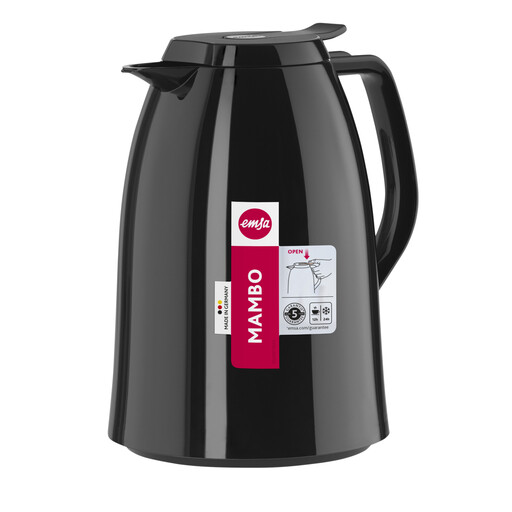
Why this product matches the profile: The 1-litre insulated jug is suitable for the breakfast table, workplace or several cups of coffee at home. The Quick-Tip closure is designed for controlled, one-handed pouring.
The wide opening makes filling and cleaning easier. According to the product information, the lid is leak-proof; nevertheless, the closure should be fully closed before transport.
1-litre capacity; keeps drinks hot for up to 12 hours and cold for 24 hours, according to the manufacturer.
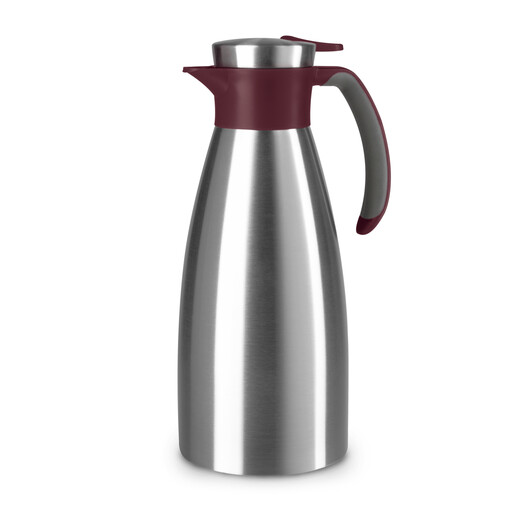
Why this product matches the profile: The 1.5-litre thermos flask is designed for larger groups, families and longer coffee breaks. Stainless steel, a soft-grip handle and Quick-Tip closure combine durability with convenient everyday operation.
The non-slip handle supports controlled handling. The product information states that it has a leak-proof design and a wide opening for cleaning.
1.5-litre capacity; double-walled stainless steel; keeps drinks hot for up to 12 hours and cold for 24 hours, according to the product information.
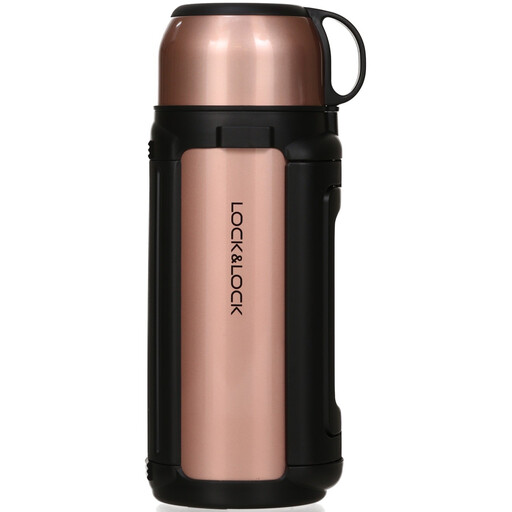
Why this product matches the profile: This model is aimed at users looking for a vacuum flask for the office, travel or outdoor activities, complete with an integrated drinking cup and carry handle.
The wide opening makes filling and hand-washing easier. According to the product description, a silicone seal prevents leaks; carbonated drinks are not intended for use with this flask.
Double-walled vacuum insulation with copper coating; integrated cup; 1.5-litre capacity.
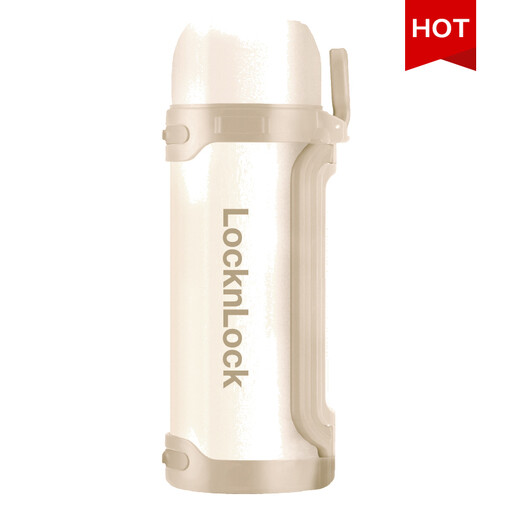
Why this product matches the profile: The large capacity is ideal for days out together, longer car journeys or keeping a supply in the office. The carry handle and wide opening make transport and cleaning easier.
According to the product information, the 304 stainless steel construction and leak-proof lid are designed for regular use. Check that the closure is firmly secured before packing the flask away.
1.8-litre capacity; 304 stainless steel; wide opening and carry handle.
We have put together a complete, regularly updated list of products that fully meet these strict selection criteria and the safety regulations applicable in the EU.
The service life of a thermos flask depends largely on its seals, inner coating and how the vacuum body is handled. Avoid drops, heavy impacts and abrasive cleaning products. For stainless steel models, hand-washing is recommended unless the manufacturer states that the flask is dishwasher-safe.
Glass inner flasks should not be filled with boiling liquid if they have previously been chilled significantly. After a drop, check the flask for cracks, loose parts or unusual noises. Damaged seals can affect both leak-proofing and insulation performance.
This depends on the construction, fill level, starting temperature and how often the flask is opened. Several of the models mentioned offer manufacturer claims of up to 12 hours. Preheating the flask and filling it as fully as possible can help maintain the temperature.
Wash the interior, lid and seal with warm water and a mild cleaning product. A wide opening makes cleaning easier. Afterwards, leave the insulated flask to dry completely with the lid open. Always follow the care instructions provided by the relevant manufacturer.
For coffee and tea, a taste-neutral interior, controlled pouring spout and easily accessible opening are useful features. A 1-litre insulated flask is often a good fit for the home or office. For several people or longer trips, a model with a capacity of 1.5 litres or more may be more practical.