
Lieferung heute & morgen

Qualitätsgarantie

Willkommens-Angebote freischalten: KOSTENLOSE Lieferung | Bis zu 80 % RABATT | Kostenlose 30-Tage-JoyPlus-Testphase
App herunterladen
A thermos flask should keep drinks hot or cold for several hours, remain leak-proof while you’re out and be easy to clean. In practice, however, many models are not suited to their intended use. A narrow drinking opening can make cleaning more difficult, a cup lid is not automatically suitable for carrying in a bag, and a large vacuum flask may be unnecessarily heavy for your daily commute.
This buying guide from the Joybuy Product Recommendation Officer explains the key differences between insulated bottles, thermal mugs, vacuum jugs and insulated food containers in a clear, practical way.
A leak-proof drinking bottle needs a reliably closing lid and intact seals. Even so, buyers should check whether the closure is actually designed for carrying the bottle on its side. With straws, push buttons or drinking openings, liquid may escape if the bottle is handled incorrectly. Fizzy drinks are unsuitable for many insulated bottles because pressure can build up inside.
Insulation performance depends on factors including double-wall construction, vacuum insulation, capacity, starting temperature and the opening. Claims such as “keeps drinks hot for a long time” are not very meaningful without a specific time period. Manufacturers’ figures also generally apply under particular conditions. For everyday use, it is therefore important to consider whether the bottle will be filled completely in the morning or opened frequently.
Stainless steel is robust and retains little odour, but not every stainless steel drinking bottle is made in the same way. 304 and 316 stainless steel are commonly used for drinkware; the LocknLock model specifies 316 stainless steel for the bottle body and interior, offering increased corrosion resistance. Plastic models, on the other hand, can be lighter, but depending on their design may only be suitable for certain temperature ranges.
For commuting or university, 350 to 750 ml is a practical capacity for many users. A 720 ml thermos flask such as the LocknLock Mermaid Line holds several drinks without reaching the size of a large vacuum jug. For families, conferences or longer stays, models with a capacity of 1 to 1.5 litres are suitable. The diameter, height and weight should also be compatible with your rucksack, cup holder or kitchen cupboard.
A screw top is usually secure and suitable for carrying, provided the seal is fitted correctly. A straw makes drinking while walking or exercising easier, but may require additional cleaning. A two-part lid with a narrow drinking opening and a wider opening for ice cubes combines convenience with easier access for cleaning.
Before buying, check the following:
Many stainless steel thermos flasks should only be cleaned by hand. A bottle brush and storing the bottle with the lid open until it is completely dry can help prevent residue and odours. With plastic tumblers, specific temperature limits are crucial: according to the product information, the 5five Estiva Tumbler is designed for cold and hot drinks up to 70 °C. This sets it apart from vacuum-insulated stainless steel bottles, which are typically designed for hot drinks.
Hot liquids can cause scalding. The lid should be fully closed before the bottle is carried. The thermos containers mentioned here are not designed for use in a microwave, oven or direct heat.
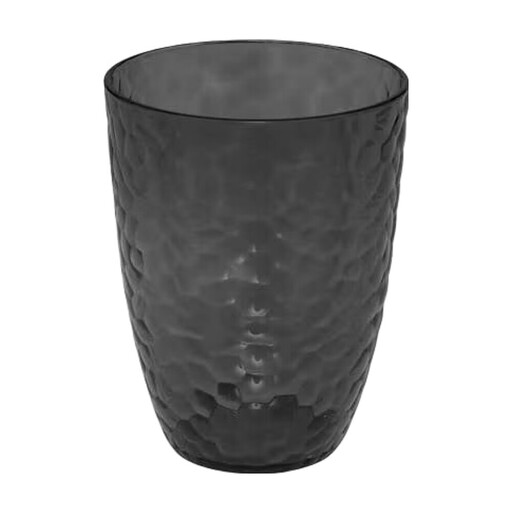
Why this product suits this profile: With a capacity of 380 ml, this compact thermal mug is suitable for your desk or short journeys. It is designed for cold and hot drinks up to 70 °C.
The stated temperature limit makes the intended use clearer than broad claims about keeping drinks warm. This tumbler should not be classed as a full vacuum-insulated bottle.
380 ml capacity, low weight of 55 g and hand washing.
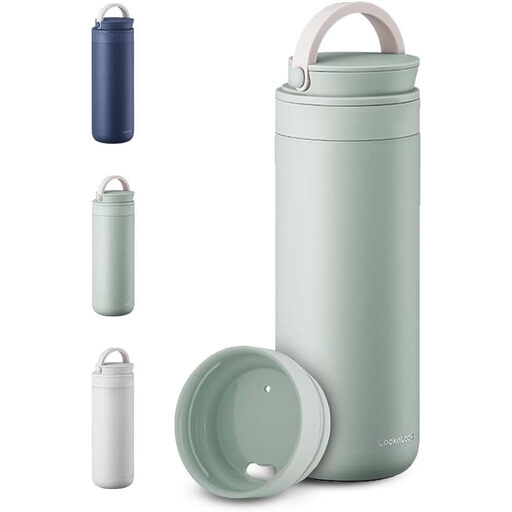
Why this product suits this profile: The double-wall stainless steel vacuum insulation, screw top and integrated carrying loop make this a good choice for commuters and working professionals.
The wide opening makes it easier to add ice and clean the tumbler. At the same time, the manufacturer expressly states that it should be washed by hand and not used in a microwave or dishwasher.
475 ml, leak-proof screw lid and two opening options.

Why this product suits this profile: This insulated food container has a capacity of 1.5 litres, a wide opening and a seal for carrying soups or meals.
The wide opening reduces hard-to-reach areas inside. The manufacturer’s information also expressly specifies hand washing and securing the closure before transport.
316 stainless steel, 1.5-litre capacity and wide filling opening.
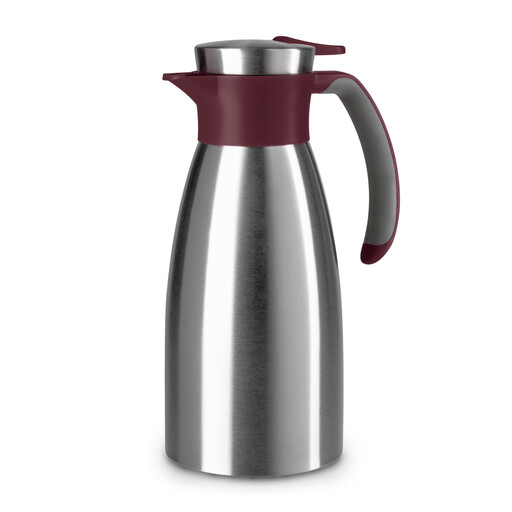
Why this product suits this profile: This 1-litre insulated jug is designed for serving drinks at home, in the office or at meetings, and features a Soft Grip handle.
The product description gives specific guidance of up to 12 hours for hot drinks and up to 24 hours for cold drinks, rather than making vague claims about insulation performance.
Double-wall stainless steel, 1-litre capacity and Quick-Tip closure.
We have put together a complete, regularly updated list of products that fully meet these strict selection criteria and the safety regulations applicable in the EU.
This depends on the construction, capacity, drink temperature and how often the bottle is opened. Vacuum-insulated models are generally designed to maintain temperature for longer. Manufacturer claims such as “hot for up to 12 hours” are intended as a guide and should not be taken as a guarantee for every usage situation.
For everyday travel, 350 to 750 ml is usually easier to handle than a large vacuum jug. Look for a secure screw top, a suitable weight and an opening that is easy to clean. A model with a carrying loop can be practical for commuters and students.
A thermos flask is primarily designed for drinks and usually has a narrow opening. An insulated food container often has a wide opening so that food can be added, removed and cleaned easily. For soup, stew or larger meals, an insulated food container is therefore more practical than a traditional drinking bottle.