
Lieferung heute & morgen

Qualitätsgarantie

Willkommens-Angebote freischalten: KOSTENLOSE Lieferung | Bis zu 80 % RABATT | Kostenlose 30-Tage-JoyPlus-Testphase
App herunterladen
A thermos flask should keep coffee, tea or water at the right temperature for several hours. In practice, however, some models disappoint not because of their insulation, but because of small design details: the stopper drips, the opening is too narrow to clean properly, or the capacity doesn’t match your actual needs.
So your buying decision shouldn’t be based on design alone. The key factors are type of insulation, material, stopper, size and ease of cleaning. These criteria can help you assess marketing claims objectively and choose an insulated flask that suits the office, your commute, travel or camping.
Claims such as ‘keeps drinks hot or cold for up to 24 hours’ usually apply under specific conditions, such as a completely full flask, a pre-warmed inner wall and only occasional opening. If you fill the flask with a small amount or pour from it frequently, the temperature may drop more quickly.
So check whether the manufacturer’s claim applies to hot drinks, cold drinks or both, and whether a specific starting temperature is given. ‘Up to’ doesn’t guarantee the same results in every everyday situation.
A leak-proof thermos flask should be safe to carry when the stopper is closed. However, a stopper that catches a few drips when you pour doesn’t automatically make the flask fully leak-proof. Check whether it has silicone seals, how the stopper screws into place and whether the flask is explicitly described as leak-proof for transport.
Take particular care with hot drinks: the lid must be fully closed, and the flask shouldn’t be overfilled. Don’t put fizzy drinks or dry ice in an ordinary thermos flask, as pressure can build up.
A wide opening makes a flask easier to fill and clean. Even so, some stainless-steel thermos flasks are only suitable for hand washing. Residue can build up in lids with multiple seals if the individual parts aren’t rinsed regularly and allowed to dry completely.
Before you buy, check whether dishwasher suitability is actually stated. If it isn’t, hand washing with mild washing-up liquid and a soft brush is the safer option.
A double-walled, vacuum-insulated flask reduces heat exchange between your drink and its surroundings. Models with a stainless-steel body often combine vacuum insulation with a double wall. Some also specify a copper coating on the inside.
Always treat temperature claims as information provided by the individual manufacturer. For example, the product details available here state that various models keep drinks at temperature for up to 12 or 24 hours. Actual performance depends on factors including the amount of liquid, its starting temperature, the outside temperature and how often the flask is opened.
A practical tip: before filling a thermos flask with a hot drink, pre-warm it with hot water for one or two minutes. You can pre-chill it in the same way for cold drinks.
A stainless-steel thermos flask is a good option for many uses because its body is relatively robust and easy to clean. Descriptions such as 304 stainless steel or 18/8 stainless steel refer to the body’s material composition, but you should also check the lid, seals and inner coating.
Glass inner containers can be damaged by knocks or sudden temperature changes. They’re best suited to use at home or in the office, where the flask can be handled carefully. Plastic models are often lightweight, but you should still check their material details and care instructions.
The right size depends on how you plan to use it:
A 1.5-litre thermos flask can be useful if you regularly top up your drink. For shorter journeys, a compact insulated bottle or travel mug is often easier to carry. Also check the height and diameter, especially if you’ll be storing it in a rucksack, side pocket or car holder.
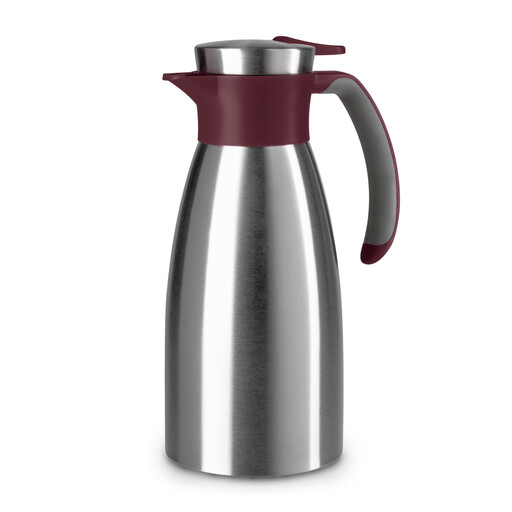
Why this product suits this profile: This 1-litre insulated jug is suitable for everyday use at home or in the office. Product details state that it keeps drinks hot for up to 12 hours and cold for up to 24 hours.
The soft-grip handle and Quick-Tip stopper make it straightforward to use. The product description also says it has a leak-proof design.
1-litre capacity, double-walled stainless steel and an ergonomic handle for controlled pouring.
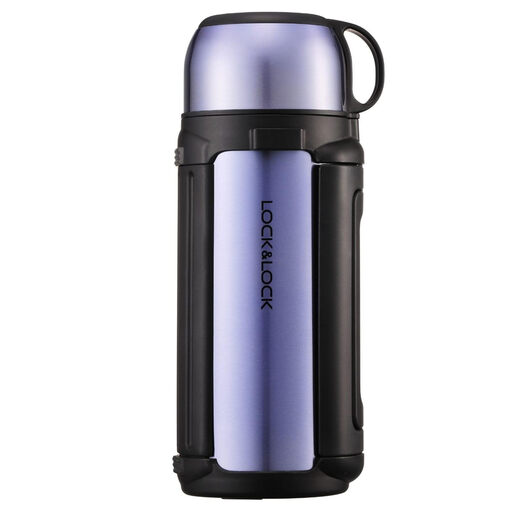
Why this product suits this profile: This jug combines a 1.5-litre capacity with double-walled vacuum insulation, a stainless-steel body, a carry strap and an integrated cup.
The wide opening makes the jug easier to fill and clean. Product details describe the screw-top lid as leak-proof; make sure it’s fully closed before carrying the jug.
1.5-litre capacity, integrated drinking cup, carry strap and folding handle. Hand washing is recommended.
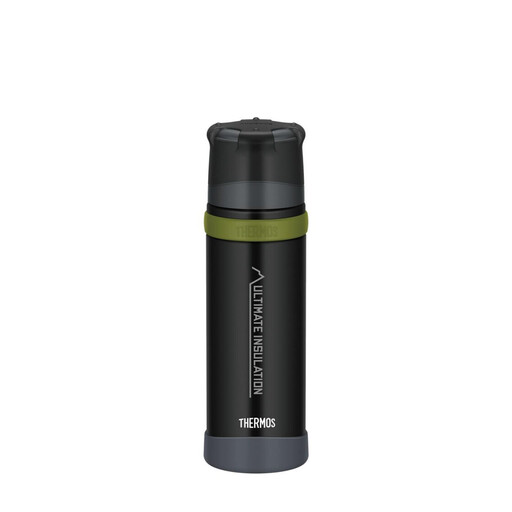
Why this product suits this profile: With a compact 0.5-litre capacity, this flask is designed for commuters, walkers and outdoor enthusiasts who need something easy to carry.
According to the product description, the removable twist lid also doubles as a drinking cup. That means you need to carry less extra kit.
Double-walled stainless steel, keeps drinks hot or cold for up to 24 hours according to product details, and is suitable for the dishwasher.
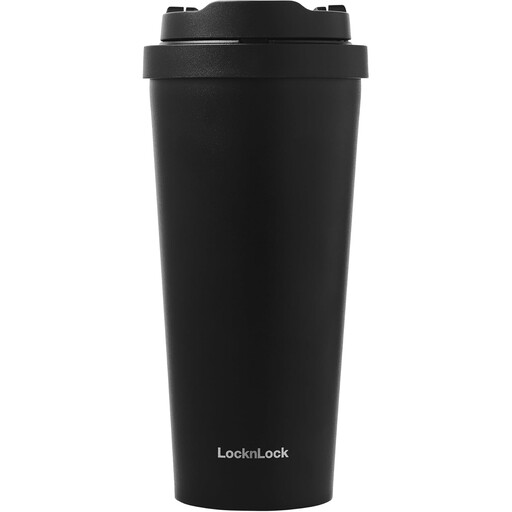
Why this product suits this profile: This compact travel mug is designed for coffee, tea and cold drinks at the office, in the car or on your commute.
A safety lock is designed to prevent the lid from opening accidentally. According to the product details, the wide opening also makes the mug easier to fill and clean.
550 ml capacity, one-touch opening, safety lock and a fit for standard cup holders according to the product information.
We’ve put together a complete, regularly updated list of products that meet these strict selection criteria and fully comply with the safety regulations in force in the EU.
For more consistent temperature retention, pre-warm or pre-chill the flask before filling it. Don’t fill it to the brim, so the stopper can close securely. Try to remove any leftover drink as soon as possible after use.
For coffee, tea and water, warm water and mild washing-up liquid are usually enough. A soft brush is useful for cleaning seals and screw threads. Harsh cleaners, steel wool and abrasive scourers can damage surfaces or seals. Store the flask with the lid open until it’s completely dry.
Its lifespan depends on the material, seals, stopper and how it’s handled. A stainless-steel body can last a long time with careful use. Seals and lids are often the first parts to wear out. Check your flask regularly for cracks, warping and signs that it’s no longer sealing properly.
Milk, fruit juice and other perishable drinks shouldn’t be left in a thermos flask for many hours. They can spoil or build up pressure through fermentation. For longer journeys, water, coffee or tea without perishable additions are more practical choices.
It depends on how you’ll use it. An insulated bottle or thermos flask with a capacity of 1 to 1.5 litres is suitable for several servings. A travel mug of around 350 to 550 ml is easier to carry on your commute and fits in a cup holder. The key factors are capacity, stopper, ease of cleaning and how you’ll be carrying it.