
Lieferung heute & morgen

Qualitätsgarantie

Willkommens-Angebote freischalten: KOSTENLOSE Lieferung | Bis zu 80 % RABATT | Kostenlose 30-Tage-JoyPlus-Testphase
App herunterladen
A Thermos flask should keep coffee, tea or water at the desired temperature for many hours. In practice, however, some models disappoint with leaky closures, hard-to-reach interiors or a capacity that does not match your actual needs. Focusing only on the longest advertised heat-retention time or an eye-catching design means overlooking important details.
Claims such as “keeps drinks hot for up to 12 hours” or “keeps drinks cold for up to 24 hours” are guidelines based on specific conditions. Actual performance depends, among other things, on how full the flask is, whether it was preheated and how often the closure is opened. A vacuum-insulated water bottle, for example, can retain its temperature for longer if it is conditioned with hot or cold water before filling.
It is therefore worth checking whether the hot- and cold-retention times are stated explicitly and whether the model is intended for stationary use or is a water bottle for use on the go.
A leak-proof Thermos flask needs a correctly fitted sealing ring and a closure that can be secured reliably. With screw tops, the lid should close smoothly without catching or becoming misaligned. With a push-button or Quick-Tip closure, it is important that the mechanism is easy to operate and clean.
The closure should always be fully closed before transport. Hot drinks can also cause scalding if the lid is not fitted correctly or pressure escapes when it is opened.
A wide opening makes filling and cleaning easier. Narrow bottle necks can be problematic if coffee, tea or drinks that leave residue are added regularly. With a stainless steel Thermos flask, you should also check whether it is designed for hand washing or dishwasher cleaning.
Double-walled stainless steel models are generally more resistant to impacts than versions with a glass insert. A glass Thermos flask can, however, be damaged by drops or sudden changes in temperature. The relevant warning information is therefore more important than general marketing claims.
The right size depends on how you intend to use it:
A 1.5-litre Thermos flask holds approximately six to twelve portions, depending on the size of your cups. Also check the dimensions and empty weight. A large model can take up considerably more space in a bag or vehicle than a slim insulated bottle.
With a double-walled Thermos flask, an insulating gap separates the inner and outer walls. Vacuum-insulated versions reduce heat transfer particularly effectively. Stainless steel is robust and resistant to rust, while a glass insert needs to be handled with greater care.
Important specifications include:
An insulated flask for coffee and tea should affect the taste as little as possible. Models without an inner coating may appeal to users who prefer a neutral material surface. Regular cleaning is still essential, however.
For serving at home, a one-handed closure with controlled pouring is practical. When commuting or walking, on the other hand, a secure screw or push-button closure is essential. A Thermos flask with a cup can offer extra convenience when you are out and about, but it does require a little more space.
For sports and travel models, a carrying handle, hand strap or slim shape can be useful. A thermal mug is more suitable for drinking directly and for smaller quantities. A large insulated bottle or insulated flask is designed for several portions.
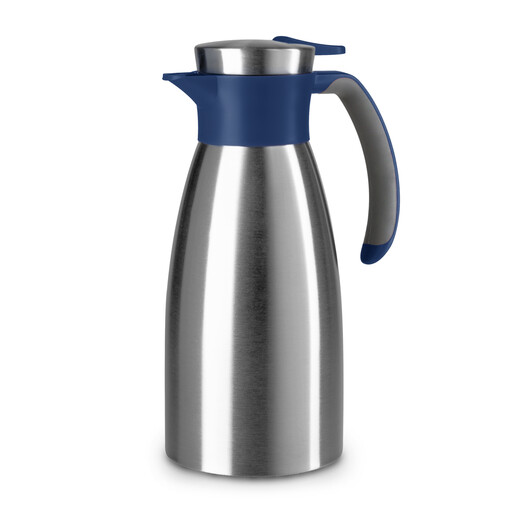
Why this product suits this profile: The 1-litre insulated flask is suitable for the home, office or a smaller coffee table. The Soft-Grip handle and Quick-Tip closure are designed for one-handed operation.
The product details describe it as a versatile insulated flask and mention a leak-proof closure and cleaning guidance. This makes it possible to check important everyday considerations before buying.
Double-walled stainless steel, a 1-litre capacity and, according to the product description, keeps drinks hot for up to 12 hours and cold for up to 24 hours.
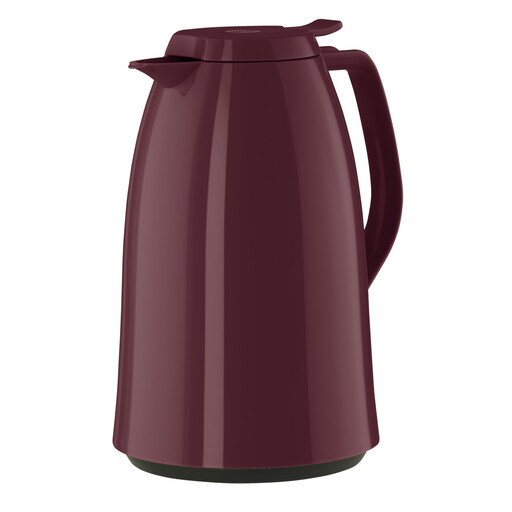
Why this product suits this profile: This Thermos flask is designed for larger groups and regular serving. Quick Tip, one-handed operation and a wide opening support use at home or in the office.
The manufacturer specifies a double-walled glass insert, a wide opening and a five-year guarantee. The warnings exclude use in a dishwasher or microwave, as well as use with carbonated drinks.
1.5-litre capacity, a stated hot-retention time of 12 hours and cold-retention time of 24 hours, plus manufacture in Germany.
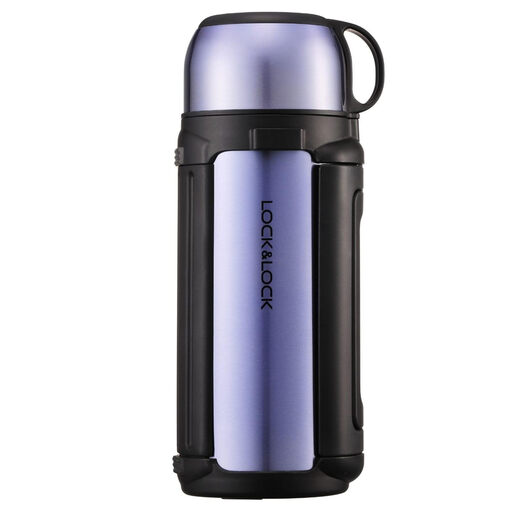
Why this product suits this profile: Designed for travel, outdoor activities and transporting larger quantities of drinks, this model combines a shoulder strap, folding handle and integrated cup.
The wide opening and screw top make filling, checking and cleaning easier. At the same time, the product description expressly advises hand washing and avoiding carbonated drinks.
1.5-litre capacity, double-walled vacuum insulation, copper coating, integrated cup and shoulder strap according to the product details.
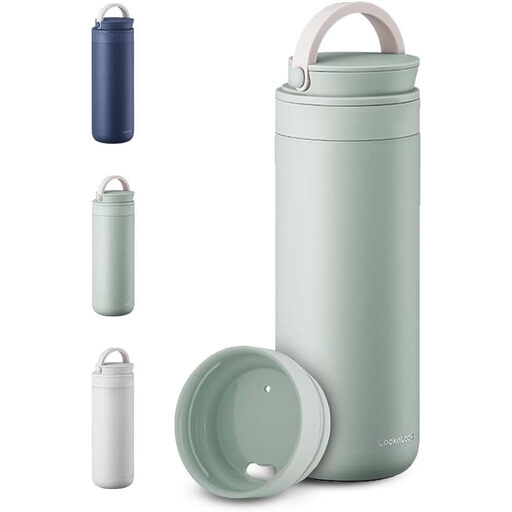
Why this product suits this profile: This compact thermal mug is sized for coffee, tea or water in the office, on the commute and when travelling. A carrying handle makes it easier to transport.
The two-way lid provides a narrow drinking opening and a wide opening for ice cubes and cleaning. According to the product details, hand washing is recommended.
475-millilitre capacity, double-walled vacuum-insulated stainless steel, BPA-free components and a leak-proof screw top according to the product description.
We have put together a complete, regularly updated list of products that fully meet these strict selection criteria and the safety regulations applicable in the EU.
A Thermos flask stays hygienic and functional if it is emptied and rinsed after every use. Leave the flask and lid to dry afterwards with the closure open. Do not use wire wool or harsh cleaning products, as these can damage surfaces and seals.
For hot drinks, preheating the flask with hot water is recommended. Do not fill the flask to the brim, and do not use carbonated drinks, dry ice or highly perishable liquids such as milk for extended periods. If you notice visible damage to the body, glass or sealing ring, stop using the product.
This depends on the construction, fill volume, starting temperature and how often the flask is opened. Many models state a hot-retention time of several hours. This should be understood as a manufacturer’s figure, not as a guaranteed temperature at every point in time.
Both designs have different characteristics. Stainless steel is generally more resistant to impacts and suitable for use on the go. A glass insert requires greater care in the event of drops and sudden changes in temperature. The intended use, cleaning requirements and the information provided by the relevant manufacturer are what matter most.
For one person, 0.35 to 0.7 litres is often sufficient. For the office, household or several people, 1 to 1.5 litres is more practical. A 1.8-litre insulated bottle offers more capacity, but is usually heavier and takes up more space.