
Lieferung heute & morgen

Qualitätsgarantie

Willkommens-Angebote freischalten: KOSTENLOSE Lieferung | Bis zu 80 % RABATT | Kostenlose 30-Tage-JoyPlus-Testphase
App herunterladen
A narrow hallway doesn't have to be an obstacle to organization. The right piece of furniture can end the daily shoe clutter in your entryway while visually enhancing the space. However, the search for the perfect slim shoe cabinet has its pitfalls, which can quickly turn a smart solution into a purchase you'll regret. As your Joybuy Product Recommendation Officer, I'll help you identify the crucial features and make an informed choice.
Many models promise space-saving shoe storage but fail in practice due to fundamental design flaws. Pay attention to these three typical problems to avoid disappointment.
To avoid these mistakes, you should check three core aspects before buying. These define whether a space-saving shoe cabinet fulfills its function in everyday life.
A shoe cabinet with a shallow depth generally measures less than 30 cm. So-called tip-out shoe cabinets are particularly space-saving, with depths often between just 17 and 25 cm. In these models, shoes are stored vertically in flap compartments.
Important Checkpoint: Measure not only the depth of the cabinet itself but also the space required by an open flap or door. In very narrow passageways, this can be crucial to avoid blocking the path.
The longevity of a cabinet depends directly on the material and its craftsmanship.
Regardless of the material, an anti-tip device for wall mounting is an essential safety feature, especially in households with children or pets.
The stated shoe capacity is often a theoretical value based on small shoe sizes. Check the internal dimensions of the compartments. A key advantage is adjustable or removable dividers in the flap compartments. These allow you to flexibly adapt the storage space to different types of shoes—from flat sandals to ankle-high boots. A closed shoe rack protects shoes from dust, while open shelves offer better ventilation.
Here are some models tailored to different needs and living situations.
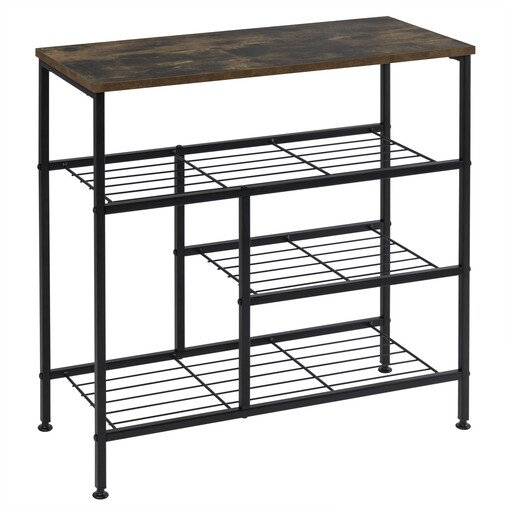
Why This Fits Their Persona: Ideal for those who want a straightforward, open, and sturdy solution for daily shoe storage in the entryway. The industrial style fits well in modern apartments, and the open design ensures quick access and good ventilation.
The open construction of metal and engineered wood completely bypasses the problem of poor ventilation. The sturdy metal frame prevents the typical instability of cheap, closed models.
The 40.5 cm height between shelves also provides space for taller footwear like boots. Adjustable feet protect the floor and compensate for unevenness.
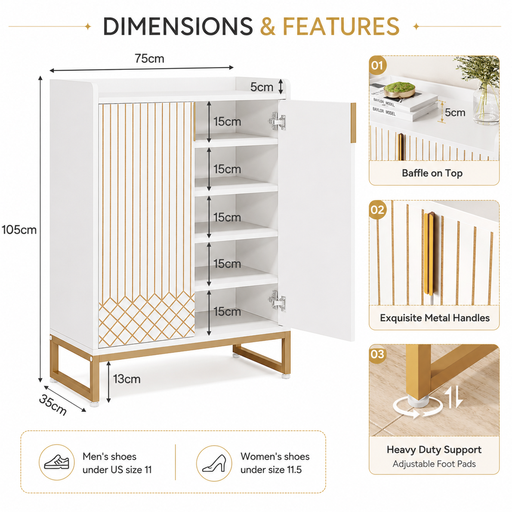
Why This Fits Their Persona: For anyone looking for a `modern white shoe cabinet` that blends seamlessly into a stylish living concept. This model looks like an elegant chest of drawers and discreetly hides shoes behind closed doors.
The construction with a sturdy wood structure and metal legs provides a solid base and prevents wobbling. The classic doors with metal hinges are often more durable than complex flap mechanisms.
With 5 tiers, it offers high capacity for up to 25 pairs of shoes. The closed front protects from dust and ensures a tidy appearance. Gold accents add a special touch to the piece.
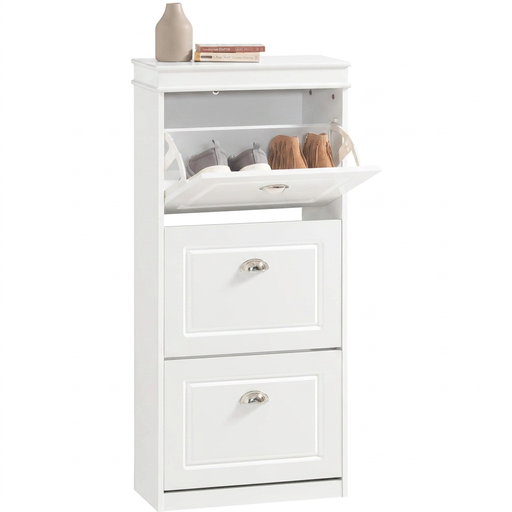
Why This Fits Their Persona: Perfect for families or shared apartments that need maximum shoe capacity in a very narrow hallway. The `tip-out shoe cabinet` makes optimal use of the room's height without taking up valuable floor space.
With a depth of only 24 cm, this model is extremely space-saving. The construction from FSC-certified MDF (E1) and the included anti-tip device directly address concerns about stability and safety.
The three flaps offer plenty of storage for various shoe sizes. The material is FSC-certified, indicating that the wood comes from responsible sources.
We have compiled a complete, up-to-date list of products that fully meet these strict selection criteria and safety standards.
1. How deep should a slim shoe cabinet be? A shoe cabinet is considered slim if its depth is less than 30 cm. Particularly space-saving tip-out cabinets are often only 17 to 25 cm deep. Measure your hallway at its narrowest point and plan for enough space to open the doors or flaps to ensure the passageway remains clear.
2. What is a tip-out shoe cabinet and who is it suitable for? A tip-out shoe cabinet is a type of cabinet where shoes are stored slightly tilted in drawer-like compartments rather than flat. This allows for a very shallow construction depth. It is ideal for very narrow hallways, niches, or entryways where a conventional cabinet would take up too much space.
3. How do I avoid odors in a closed shoe cabinet? Always let worn shoes air out completely before placing them in the cabinet. Some models have small ventilation slits on the back panel. Alternatively, cedar wood blocks or special shoe deodorizers can help absorb moisture and neutralize odors. Regular cleaning of the cabinet's interior is also recommended.