Workshop attendees with a Wi-Fi dead zone
If you use your laptop on a different floor from the router, what matters is the connection where you’ll actually be working.


For a virtual workshop in a three-storey house, start by improving the connection where you’ll actually be working, rather than automatically replacing the main router. If there’s an Ethernet cable available there, you could use a wired access point or mesh node. Without a cable, a wireless node will still need a good connection to the router. Replacing the router makes most sense when your broadband connection type or the router’s features also point to an upgrade.
If you use your laptop on a different floor from the router, what matters is the connection where you’ll actually be working.
An existing Ethernet cable can connect an access point or mesh node directly, avoiding a wireless link between floors.
First check that the new device is compatible with your DSL, cable or fibre connection, and whether you need extra Wi-Fi coverage where you’ll be taking part in the workshop.
For a workshop in a three-storey house, the location of your workspace, the connection back to the router and compatibility with your existing internet service are all key considerations.
| What you need | What to check before buying | Who it matters most to |
|---|---|---|
| Coverage where you’ll be taking part in the workshop | Check the connection where you’ll actually be working, and consider where you could position additional units. | If I’m taking part from another floor, I need a reliable connection there. Around 36% of consumers prioritise coverage where they work. |
| A stable backhaul connection | Check whether you have an Ethernet connection, or whether there’s a location with a strong wireless connection to the main router. | If a weak connection between the node and router could disrupt a live session, the backhaul matters just as much. Around 29% of consumers put the backhaul first. |
| Compatibility with your internet service | Check your DSL, cable or fibre connection, as well as your modem and operating mode. | If I want to replace the main router, the new device must be compatible with my internet connection and existing network. Around 21% of consumers prioritise this compatibility. |
| Security and ongoing costs | Check for software updates, Wi-Fi encryption and any additional services that may come at extra cost. | If you send personal data over your home network, you’ll want to keep your settings secure and understand any ongoing costs. Around 14% of consumers put security and predictable costs first. |
The maximum speed advertised doesn’t tell you how good the connection will be at your workspace, with several floors between you and the router.
Start with the location where you’ll be taking part in the workshop, and check whether an additional node can connect there by Ethernet or from a suitable wireless location.
A mesh router without a built-in modem won’t automatically replace a DSL, cable or fibre router.
Before buying, check whether you need a device with a compatible built-in modem, or a router that works with your existing modem.
With eero 6+, additional online security tools are offered as a separate subscription.
Check which features are included as standard, then choose any additional services separately based on what you actually want to use.
Worth considering if you want to extend an existing FRITZ! router with compatible repeaters. If you’re replacing your router, you’ll also need to check that it’s compatible with your connection type.
Deco systems are worth considering if you’re looking for a mesh setup with the option of an Ethernet connection between units.
The ZenWiFi XT9 is an option if a mesh system in router or access point mode is compatible with your existing modem or provider’s router.
The eero 6+ three-pack is an example of an app-managed mesh system that can be used with a suitable modem.
The products below include mesh kits for use as a router or to extend your network, a DSL router and an access point connected via Ethernet. They don’t guarantee coverage across three floors, so check your connection type, the location of the equipment and whether you’ll need any additional devices.
 No image available
This kit may suit you if you’re looking for a mesh system with router or access point mode.
Wi-Fi 7, WPA3 and two Gigabit WAN/LAN ports per unit are listed.
 No image available
Three units give you the option of positioning additional mesh stations in different rooms, but that doesn’t guarantee coverage across three floors.
AC1200, Gigabit ports on each unit, and router and access point modes are listed.
 No image available
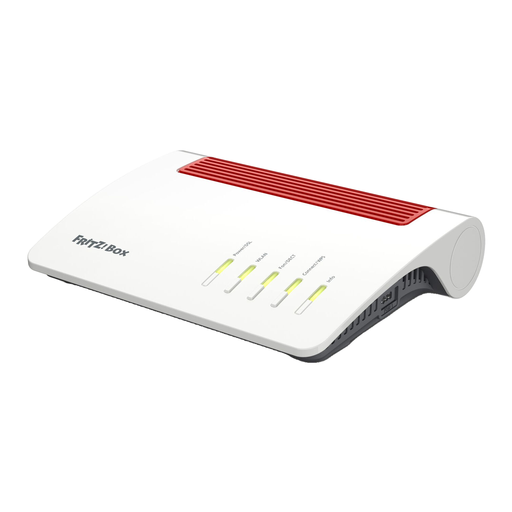
This model may be suitable as your main DSL router if you want to replace your router and extend your network with FRITZ!Mesh.
Specifications include VDSL Supervectoring 35b, four Gigabit LAN ports and WPA2/WPA3. You’ll need compatible FRITZ!Repeaters for additional mesh stations; they aren’t listed as part of the product title.
 No image available
This two-unit kit may suit a mesh setup if one unit is connected to the modem via Ethernet.
Wi-Fi 7 BE3600, three Gigabit ports per unit and WPA3 are listed. The product description recommends the kit for homes with two to four bedrooms; this doesn’t confirm Wi-Fi coverage across three floors.
 No image available
This access point may be suitable if you want to keep your existing router and have an Ethernet connection at the location you need. It’s described as an access point, not a router.
Specifications include tri-band, a 10GbE uplink and PoE+. A compatible PoE+ switch or injector is required for operation and, according to the description, isn’t included.
Not necessarily. First check the connection where you’ll actually be working, and how it gets there. If your workspace is a long way from the router, a suitably connected access point may be a more targeted solution than simply replacing the main router.
Choose a location where the node still has a sufficiently strong connection to the main router or previous node, rather than putting it at the far edge of a Wi-Fi dead zone. If you have Ethernet between floors and your devices support it, a wired backhaul is an option.
That depends on the offer and any additional services you choose. With eero 6+, additional online security tools are described as a separate subscription, so check what’s included before budgeting for these services.
Germany’s Federal Network Agency confirms that you’re free to choose your own end device at the network termination point, including on passive optical fibre networks. It also refers to the same freedom for VDSL and cable. Your chosen device must still be technically compatible with your specific connection.
Devices covered by the relevant EU harmonisation legislation and placed on the EU market must carry CE marking. The Federal Network Agency lists marking, product identification and a declaration of conformity among the points to check; a shop description alone doesn’t confirm that a particular device complies.