
Lieferung heute & morgen

Qualitätsgarantie

Willkommens-Angebote freischalten: KOSTENLOSE Lieferung | Bis zu 80 % RABATT | Kostenlose 30-Tage-JoyPlus-Testphase
App herunterladen
Choosing a 3-wheel scooter for a child seems simple at first glance. However, many parents and grandparents quickly discover that the model they picked is unsafe, doesn't grow with their child, or rapidly loses its appeal. To help you make the right choice, we'll highlight the most common pitfalls and show you which objective features truly matter in a kids' kick scooter.
An attractive design alone doesn't make for a great piece of outdoor gear. Be careful not to fall into these common traps:
To avoid a bad buy, you should focus your attention on a few crucial technical parameters. These are the primary factors that determine the scooter's safety, fun, and longevity.
For kids' scooters in the 3+ age group, the lean-to-steer system has proven to be particularly advantageous. Instead of turning the handlebar, the child steers the scooter by shifting their body weight. This intuitive motion naturally promotes a sense of balance and motor coordination. Models with three wheels—two in the front and one in the back—provide a stable base that makes learning to ride significantly easier.
A height-adjustable scooter is a smart investment. Look for models with handlebars that can be locked into several positions to ensure an ergonomic posture for years to come. Also, check the manufacturer's specified maximum weight capacity in kilograms. A robust frame and a sturdy deck ensure the scooter remains reliable even with intensive use. A foldable kids' scooter offers added convenience for transport and storage.
A wide and non-slip deck gives the child a secure footing. The surface should be textured to prevent slipping, even when wet. An easily accessible and effective rear-wheel brake is essential for controlling speed. Many models also feature a scooter with light-up wheels. These wheels are often powered by motion (dynamo effect) and don't require batteries. They not only increase the fun factor but also improve visibility in low-light conditions.
Based on the criteria mentioned, we have identified several products that are well-suited for different needs and user profiles.
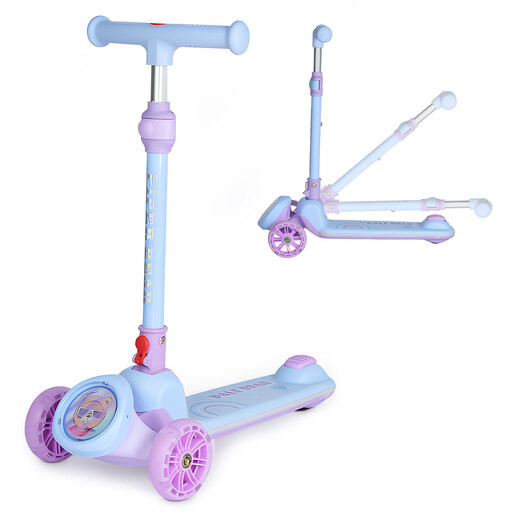
Why This Fits Their Persona: This model focuses on the essential features for a safe start. It's a practical gift for boys and girls that meets the basic requirements for safety and adaptability without breaking the bank.
The handlebar is height-adjustable and grows with the child. The lean-to-steer system and the wide, non-slip deck directly address the common problems of instability and lack of safety.
Features intuitive lean-to-steer and battery-free LED light-up wheels that enhance the fun of riding.

Why This Fits Their Persona: Ideal for families looking for a long-term solution. Suitable for children from 3 to 12 years old and with a weight capacity of up to 50 kg (according to the manufacturer), this scooter will accompany a child for many years.
The three-level adjustable handlebar height from 61 cm to 81.5 cm (per manufacturer) prevents the scooter from being outgrown too quickly. Its robust construction and folding feature make it a practical and durable companion.
Offers a wide age range and an easy folding function for transport and storage. The light-up deck (battery-operated) provides extra visibility.

Why This Fits Their Persona: For kids who are thrilled by light-up effects. This model combines proven safety features with dynamic LED modes on the deck, making it a real eye-catcher.
Despite its focus on design, core functions are not neglected: the scooter is foldable, height-adjustable, and uses the stable lean-to-steer system. The extra-wide deck provides a secure platform.
Combines a folding function with eye-catching, dynamic LED light modes on the deck and light-up wheels for maximum visibility and fun.
We have compiled a complete, up-to-date list of products that fully meet these strict selection criteria and all applicable safety regulations.
A scooter with three wheels is generally a good choice for children aged 3 and up. The three-wheel design offers high stability, allowing even younger children to safely maintain their balance and gain their first riding experiences. Always pay attention to the specific age recommendations from the manufacturer.
With a lean-to-steer system, the handlebar is not rigidly connected to the front wheels. Instead, the child leans the handlebar to the left or right, causing the wheels to move in the desired direction. This type of steering is very intuitive and promotes the child's balance and coordination.
For most modern kids' scooters with light-up wheels, this is not the case. The LEDs are powered by a dynamo integrated into the wheels. As soon as the wheels start spinning, they begin to light up. This is maintenance-free and ensures the lights always work as long as the scooter is in motion. However, light-up decks often do require batteries.