Who is a multi-cooker suitable for?

Weekday lunch packers

If you want to heat up a small portion of ready-to-eat butter beans and portion it without any fuss, look for a suitable cooking function and check how easy the pot and accessories are to clean. The Verbraucherzentrale describes beans from a tin as ready to eat.

Batch-cookers preparing several days’ meals

If you’re preparing several portions, usable pot capacity matters, as does having a plan for cooling, storage and transport. The German Federal Institute for Risk Assessment (BfR) recommends cooling hot food promptly for longer storage and considering whether refrigeration will be available where you plan to eat.

Versatile one-pot cooks

If you want to prepare other ingredients or complete meals as well as tinned beans, consider whether cooking functions without pressure will be enough, or whether you also plan to use pressure cooking regularly. Manufacturers such as Russell Hobbs, Rommelsbacher and Tefal list different cooking methods in their multi-cooker ranges.

What should you look for when buying?

Multi-cooker without pressure cooking as a requirement

A good fit if: You mainly want to heat up tinned beans with sauce or vegetables and prepare other dishes in the same pot.

The trade-off: For a single lunch portion, a large pot or lots of functions may be more than you need.

Multi-cooker with pressure cooking

A good fit if: You also regularly prepare dishes that you’d like to pressure-cook.

The trade-off: Building and releasing pressure require extra steps. You don’t need this function for beans that are already ready to eat.

A saucepan you already own

A good fit if: You only occasionally heat up a small amount and don’t need any other multi-cooker functions.

The trade-off: An additional multi-cooker takes up storage and cleaning space, while a saucepan you already own won’t automatically offer programmes for other dishes.

Priority What to look for Who is it important to?
Heating without unnecessary pressure A dedicated cooking or simmer function without pressure; check the controls and pot size against the portion you plan to make. If I want to heat tinned beans with other ingredients, I don’t need a pressure-cooking programme. Around 36% of consumers put fuss-free heating first.
Taking lunch with you safely Plan for refrigeration at work and use suitable containers or a cool bag. If keeping food hot, its temperature needs to be maintained until it is eaten. If I want my lunch to stay safely chilled or genuinely hot enough until my break, I plan for transport too. Around 29% of consumers prioritise this step.
Usable capacity Compare the stated usable capacity with the number of portions you plan to make, rather than looking only at the nominal capacity. If I’m preparing several lunches at once, the usable capacity needs to suit my portions. Around 21% of consumers prioritise this.
Everyday cleaning Check which parts are dishwasher-safe and how to clean the lid and other accessories. If I use the appliance often, I want to clean the pot and accessories without awkward maintenance steps. Around 14% of consumers consider this the most important factor.

Common misconceptions

  • Tinned beans need to be pressure-cooked

    Ready-to-eat beans from a tin don’t need to be pressure-cooked like dried beans. A pressure-cooking programme is therefore not an essential buying criterion for this task.

    Choose a heating function that suits what you actually need. Consider pressure cooking only if you plan to use it for other dishes too.

  • The keep-warm function guarantees safe transport

    The setting on your kitchen appliance doesn’t tell you what temperature the beans will be at later in your lunchbox.

    Plan separately for cooling and chilled transport. For food kept hot, the BfR recommends a temperature of at least 60 °C throughout until it is eaten; an appliance function doesn’t prove that this temperature will be maintained while you’re out and about.

  • The nominal capacity in litres is the same as the usable capacity

    Some models have different nominal and usable capacities. The larger figure can therefore be misleading when you’re planning several portions.

    Compare the specifications for the specific model and follow its filling guidance.

Relevant brands and model ranges

Russell Hobbs

The Good to Go 28270-56 is one option with cooking and boiling functions, but no listed pressure-cooking programme.

  • The manufacturer lists eight functions, a removable control panel and a dishwasher-safe cooking pot.
  • At 6.5 litres, the stated capacity may be larger than needed for a single lunch portion. Dishwasher suitability is subject to the instructions for this model.

Rommelsbacher

The MeinHans MD 1000 is a pressure multi-cooker for households that want to use other cooking methods as well as reheating.

  • The manufacturer lists a removable 6-litre pot with a usable capacity of 4 litres. The F.A.Z. Kaufkompass praised this model’s build quality and controls.
  • The F.A.Z. Kaufkompass found this model awkward to clean; this isn’t a judgement on every appliance made by the brand.

Tefal

The Turbo Cuisine CY754830 combines pressure cooking with other cooking functions.

  • Tefal lists a 5.0-litre capacity and 3.2-litre usable capacity, as well as browning and keep-warm functions.
  • Manufacturer comparisons of cooking times and energy use for other dishes don’t prove an advantage when simply heating tinned beans.

Instant Pot

The Duo range is an option if you want to prepare pressure-cooked dishes as well as tinned beans.

  • The Duo instructions describe several cooking methods.
  • According to the Duo instructions, an appliance under pressure must not be forced open, and pressure cooking without water is not allowed. These instructions apply to the Duo variants described there.

COSORI

The 5.7-litre electric pressure cooker is an option if you want to use other cooking programmes as well as reheating.

  • The manufacturer confirms the type of appliance and its nominal capacity of 5.7 litres.
  • The nominal capacity alone doesn’t tell you the usable capacity or whether tinned beans will heat up more quickly.

Joybuy products for lunch portions

The models below range from small cooking and simmering appliances for individual portions to a pressure multi-cooker offering additional cooking methods.

IAGREEA 2.6-litre slow cooker with steaming insert and two manual heat settings

IAGREEA Slow Cooker 2,6 L

An option if you want to heat beans with other ingredients in a small slow cooker.

The product description lists a 2.6-litre capacity, two manual heat settings, a steaming insert and a coated inner pot.

View at Joybuy
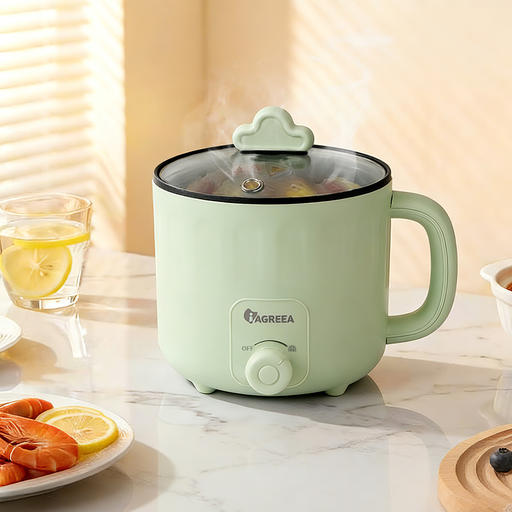
IAGREEA portable 1.6-litre electric cooker with non-stick interior

IAGREEA Portable Electric Cooker 1,6 L

This compact model could suit you if you want to cook a small meal in the pot.

The product description lists a 1.6-litre capacity, a non-stick interior and Dual Power.

View at Joybuy
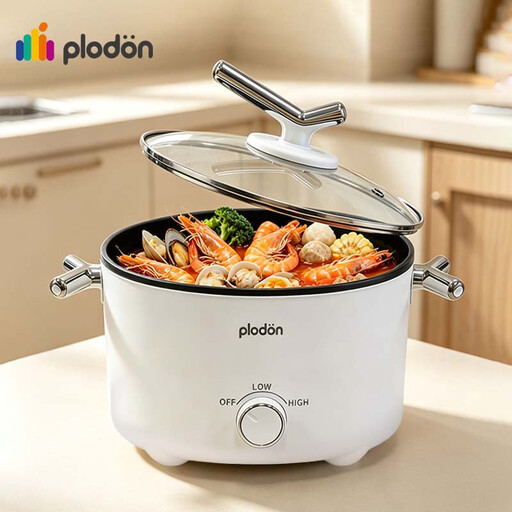
plodon 2.0-litre Electric Hot Pot with 1000 watts and two heat settings

plodon Electric Hot Pot 2,0 L

An option if you want to heat beans gently or bring them to the boil quickly, depending on how you’re preparing them.

The product description lists a 2.0-litre capacity, 1000 W and Dual Power control. Note the stated maximum fill level of two-thirds.

View at Joybuy
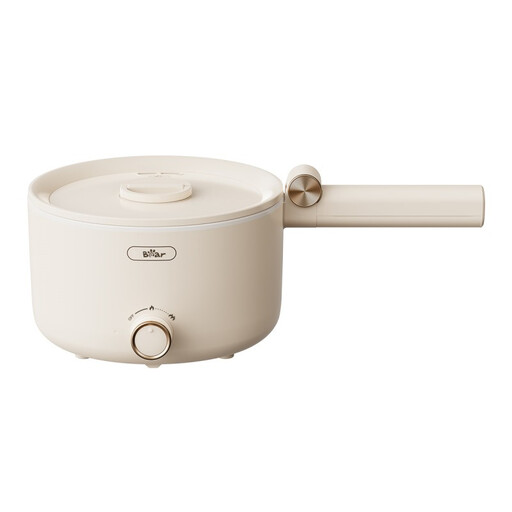
Bear Multifunctional Electric Cooking Pot DRG-C16Z1 with a 1.6-litre capacity

Bear DRG-C16Z1 1,6 L

This small cooking pot could suit you if you want to prepare a single lunch portion.

The product description lists a 1.6-litre capacity.

View at Joybuy
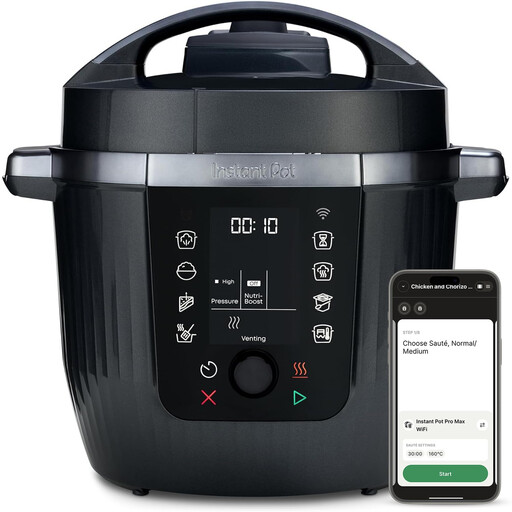
Instant Pot Pro 10-in-1 multi-cooker with a 5.7-litre capacity

Instant Pot Pro 10-in-1 5,7 L

This model is a better fit if you’re preparing several portions and want to use additional cooking methods as well as reheating.

The product description lists a 5.7-litre capacity, 10-in-1 functionality and 1200 W. When pressure cooking, you must release all the pressure before opening the appliance; check the instructions for the specific model.

View at Joybuy

Frequently asked questions

Do tinned butter beans need to be pressure-cooked?

No, ready-to-eat beans from a tin don’t need to be pressure-cooked. The Verbraucherzentrale describes tinned beans as ready to eat. Dried beans need to be prepared differently.

Can I leave heated beans in my lunchbox from the morning until lunchtime without taking any further steps?

Heating the beans alone doesn’t tell you whether they’ll stay at a safe temperature until your lunch break. For longer storage, the BfR recommends cooling hot food quickly to below 7 °C and keeping it chilled while travelling; a cool bag and refrigeration where you plan to eat can help. If food is to be kept hot, the BfR recommends a temperature of at least 60 °C throughout until it is eaten. An appliance function doesn’t prove that a lunchbox will maintain these temperatures.

What should I bear in mind when using a multi-cooker with pressure cooking?

Read the instructions for your specific model before pressure cooking. The Instant Pot Duo instructions require liquid when pressure cooking, among other things, and warn against forcing the lid open before all the pressure has been released. These instructions apply to the Duo variants described there and not automatically to other models.

What are the rules in Germany on CE marking and complaints?

Mains-powered electric multi-cookers placed on the market in Germany and covered by relevant harmonised EU product legislation must meet its conformity requirements, including the required CE marking. The European Union describes the CE mark as the manufacturer’s declaration of conformity, not an independent quality mark. If a product you’ve bought is faulty, your statutory rights against the seller are separate from any voluntary guarantee.