What should you consider when choosing one?
An existing saucepan or suitable microwave
Suitable if: You only want to heat one portion of pre-cooked beans soon.
The trade-off: You won’t need a new appliance for slow cooking, but you’ll still need to plan how to store and transport the prepared portion.
A small manual slow cooker
Suitable if: You also regularly slow-cook small, moist dishes and make around one or two portions.
The trade-off: Heat settings or a keep-warm function don’t prove that the food stays hot enough throughout.
A larger manual or digital slow cooker
Suitable if: You regularly prepare several complete meals at once; a timer can also be useful if you’ve planned the cooking time.
The trade-off: Larger batches need to be portioned and chilled appropriately; automatic keep-warm settings don’t confirm the temperature throughout the dish.
The Federal Centre for Nutrition describes tinned pulses as pre-cooked. For food kept hot, the German Federal Institute for Risk Assessment recommends a temperature of at least 60 °C throughout; for longer storage, hot food should be cooled quickly to below 7 °C and kept chilled.
| Consideration |
What to check before buying |
Who is it especially relevant to? |
| Heating food without an unnecessary purchase |
Whether you’re just heating pre-cooked beans or regularly slow-cooking complete meals. |
If I’m only heating one tin for my next lunch, I don’t want to buy an appliance I’ll rarely use for anything else. Around 36% of consumers focus on quick heating and whether they really need another appliance. |
| Planning chilling and transport |
Whether the portion will stay chilled until mealtime or be kept hot enough throughout. |
If I’m taking my food with me, I need a suitable way to keep it chilled or hot for the whole journey. Around 29% of consumers prioritise having a safe way to transport their food. |
| Capacity for several portions |
Compare the recipe quantity and filling guidance with the stated capacity of the specific model. |
If I’m batch-cooking several lunches, the pot needs to suit the total quantity and the finished batch needs to fit in my fridge. Around 21% of consumers focus mainly on choosing a suitable batch size. |
| Ease of use, cleaning and storage space |
Distinguish a cooking-time timer from heat settings; check the appliance’s external dimensions and care instructions for each part. |
If I use the appliance regularly, I want to be able to place it somewhere suitable and put it away after cooking without an unnecessarily complicated clean. Around 14% of consumers focus on ease of use and space requirements. |
Appliance options at Joybuy
The options below include compact cooking appliances with a slow-cooking function for small dishes, as well as multi-cookers for larger batches. For appliances covered by the EU Low Voltage Directive, check the rated voltage, CE marking and compliance of the specific version on offer before buying. The directive applies to the voltage ranges it covers; according to the European Union, CE marking is a declaration by the manufacturer, not an independent quality mark.
 No image available
IAGREEA Slow Cooker 2,6 l with Steamer
An option for small, moist dishes if you’d like to slow-cook as well as heat beans.
2,6 l; two manual heat settings; described in the product name as having a steamer and non-stick coating.
View at Joybuy
 No image available
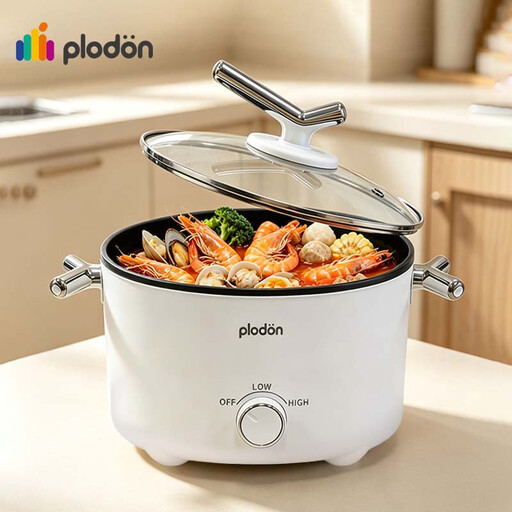
plodon Electric Hot Pot 2,0 l
For small one-pot dishes if you’d like to use a slow-cooking function as well as heat food.
2,0 l; LOW/HIGH heat control; removable power cable according to the product description.
View at Joybuy
 No image available
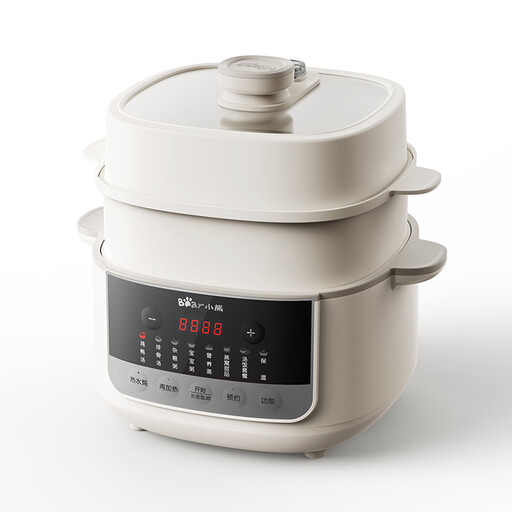
Bear DDZ-J25G2 Multi-Cooker
An option if you’d like to prepare a meal with several components.
2,5-l main pot, four 0,4-l inner pots, steaming rack and 600–715 W according to the product description. Wait before opening after use, as steam may escape, and follow the operating instructions.
View at Joybuy
 No image available
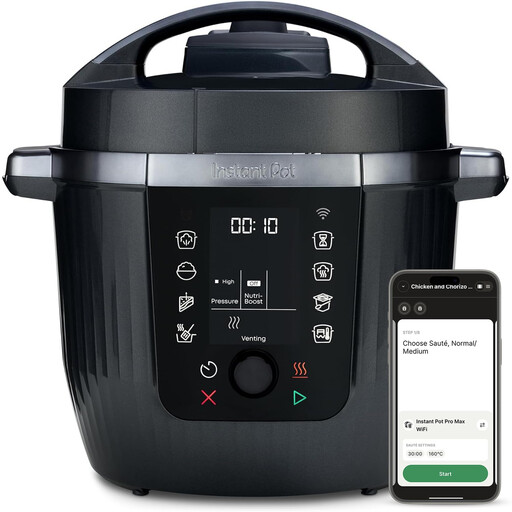
Instant Pot Pro 10-in-1 Multi Cooker 5.7L
For larger batches if you’d like to use the slow-cooking function of a multi-cooker.
5,7 l; described as serving up to six portions; app control, 1200 W and dishwasher-safe inner pot. When pressure cooking, release the pressure fully before opening and follow the operating instructions.
View at Joybuy
 No image available
Midea 9-in-1 Electric Pressure Cooker 8L
For larger family batches if you’d like to use the slow-cooking function alongside other programmes.
8 l, twelve programmes and a keep-warm function; the product description states that it serves up to ten portions and has programmes for beans/chilli, soup and stew. When pressure cooking beans, fill no higher than the 1/2 mark and follow the instructions for releasing pressure.
View at Joybuy
Frequently asked questions
Do tinned butter beans need to cook through in a slow cooker?
No. According to the Federal Centre for Nutrition, ordinary tinned pulses are already cooked and ready to eat. This doesn’t apply to raw or dried beans, which need to be cooked thoroughly.
Can I leave cooked beans in a switched-off slow cooker overnight?
No. A switched-off slow cooker won’t chill the food. For longer storage, the German Federal Institute for Risk Assessment recommends cooling hot food quickly to below 7 °C and keeping perishable foods chilled; they should also stay chilled while being transported.
Is the keep-warm setting enough for a packed lunch to eat later?
A keep-warm setting alone doesn’t prove that food will stay hot enough throughout for the whole period. The German Federal Institute for Risk Assessment recommends keeping food at a minimum of 60 °C throughout; also plan for the conditions during transport.
How do I clean and store a small slow cooker?
Check the care instructions for the exact model and each individual part. Crock-Pot states that the pot and lid of the CSC046X are dishwasher-safe; also check the external dimensions against the space you have available.
What should I know about CE marking and making a complaint?
Electrical appliances covered by the EU Low Voltage Directive must meet the relevant requirements; the directive covers the voltage ranges specified, from 50 to 1.000 V AC and 75 to 1.500 V DC. The European Union describes CE marking as a declaration by the manufacturer, not an independent quality mark, so check the specific version of the appliance on offer. If a product is faulty, your statutory rights are against the seller, while a guarantee is an additional voluntary promise, as explained by the consumer advice centre.


