Heat a tin quickly
During the renovation, your main priority is a hot meal without delay, and you’d rather not buy another appliance unnecessarily. The German Federal Centre for Nutrition notes that pulses in tins or jars are already cooked.


A slow cooker is rarely worth buying just to heat the occasional tin of pre-cooked butter beans. The German Federal Centre for Nutrition explains that pulses in tins or jars are already cooked and ready to eat, while slow cookers are designed for longer cooking times. If you only want to heat one tin, an appliance you already own and can use safely during the renovation is likely to be enough. The USDA advises against reheating chilled leftovers in a slow cooker. A small slow cooker is better suited to regularly planned small dishes, a larger model to full recipe quantities, and a multi-cooker if you’ll genuinely use its other cooking functions.
During the renovation, your main priority is a hot meal without delay, and you’d rather not buy another appliance unnecessarily. The German Federal Centre for Nutrition notes that pulses in tins or jars are already cooked.
You regularly plan to make small dishes using slow cooking, but have limited worktop space. Make sure both the appliance’s footprint and capacity suit the space you have and the recipes you plan to make.
You’re making larger dishes rather than heating a single tin, so you need room for the full recipe and a suitable way to store any leftovers. German consumer advice centres recommend using the contents of an opened tin straight away or transferring them to a lidded, food-safe container.
First decide whether you only want to heat pre-cooked beans or plan to slow-cook whole dishes in future. Then consider recipe size, worktop space and whether you need additional programmes.
A good fit if: you simply want to heat pre-cooked butter beans quickly during the renovation and can safely use an appliance you already own.
The trade-off: you won’t need to buy another appliance, but this option won’t slow-cook dishes for regular meal planning.
A good fit if: you plan to keep slow-cooking small dishes regularly after the renovation. Russell Hobbs lists the Compact Home 25570-56 as having a 2 l capacity and making up to two portions.
The trade-off: it holds less than a 3.5 l model, so check that it can fit the full quantity in your recipes.
A good fit if: you regularly plan to make whole stews for several people. Tristar describes the VS-3915 as having a 3.5 l capacity and making up to four portions.
The trade-off: a larger capacity won’t solve the problem of quickly heating a single portion. A keep-warm setting alone also doesn’t confirm the temperature of the food.
A good fit if: you genuinely need several cooking methods during the renovation. The German Instant Pot Duo manual describes slow cooking and other cooking modes.
The trade-off: more programmes mean additional instructions to follow. When pressure cooking, follow the safety guidance in the manual for your specific model.
| Buying priority | What to check before buying | Who is this important to? |
|---|---|---|
| Heating food quickly | Can you safely use a saucepan or microwave you already own during the renovation? | If I only want to heat one tin, I want to do it quickly without having to set up another appliance; around 36% of consumers put quick heating first. |
| Worktop space and small quantities | Compare the external dimensions and recommended fill quantity with your available space and the full recipe quantity. | If I regularly make small stews but have little worktop space, I’m looking for an appliance that suits both; around 29% of consumers say this is their main priority. |
| Several portions of stew | Plan for the number of portions, the full recipe quantity and how you’ll store any leftovers. | If I batch-cook for several meals, the pot needs to hold the quantity I plan to make; around 21% of consumers put making several portions of stew first. |
| Several cooking methods | Check which programmes you need, along with the manual’s safety and set-up guidance. | If I need more than slow cooking at my temporary cooking space, I want to know which other methods the appliance supports; around 14% of consumers prioritise several cooking methods. |
Tinned pulses are already cooked, while a slow cooker is designed for longer cooking times. Another appliance could take up worktop space without making it any easier to heat food quickly.
First check whether you can safely use a saucepan or microwave you already own during the renovation. Only compare slow cookers if you plan to slow-cook whole dishes regularly.
A keep-warm setting doesn’t prove that chilled leftovers will heat quickly enough or that the food will reach the required temperature throughout.
The USDA advises against reheating leftovers in a slow cooker. For kitchen hygiene, the German Federal Institute for Risk Assessment recommends heating food to 70 °C throughout for at least two minutes, and keeping it at a minimum of 60 °C throughout when holding it hot.
Advice on eating pulses straight from the pack applies to pre-cooked beans in tins or jars. The German Federal Institute for Risk Assessment warns against undercooking raw beans and using gentle cooking methods.
Tell tinned beans apart from raw or dried beans, and follow the recommended cooking instructions for the latter.
The Compact Home 25570-56 and Cook@Home 22740-56 illustrate the sizes and features available for planned dishes, from small to larger quantities.
The manual VS-3915 and digital VS-3920 offer different capacities and controls for planned slow-cooked dishes.
The German Duo manual describes slow cooking and other cooking modes for households that need more than slow cooking alone.
This selection from Joybuy includes compact slow cookers for planned small dishes, as well as multi-cookers with a slow-cook function for other cooking methods and larger quantities.
 No image available
Suited to planned small dishes if you’re looking for a compact appliance with several manual heat settings.
Features listed in the product name: 2.6 l, two manual heat settings, steamer insert and non-stick coating.
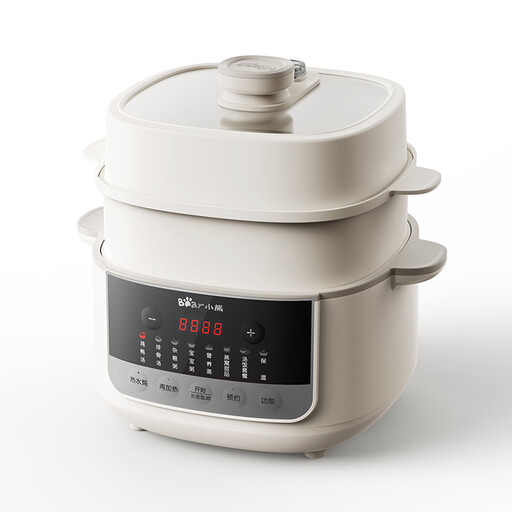 No image available
An option if, alongside slow cooking, you also need the steaming and soup functions listed in the product name.
Features listed in the product name: 4.1 l, plus steaming and soup functions. The description warns that hot steam is released; wait a few minutes after cooking before opening.
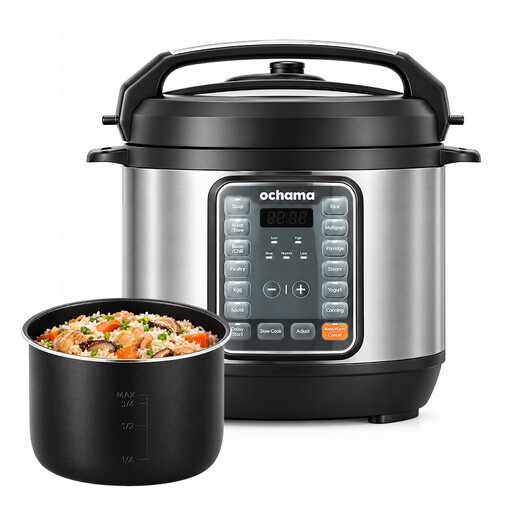 No image available
For larger planned dishes if you’ll genuinely use other programmes, such as pressure cooking, as well as slow cooking.
Features listed in the product name: 6 l, 1000 W and 12-in-1. When pressure cooking, follow the fill-level markings and instructions for fully releasing the pressure; never force the lid open.
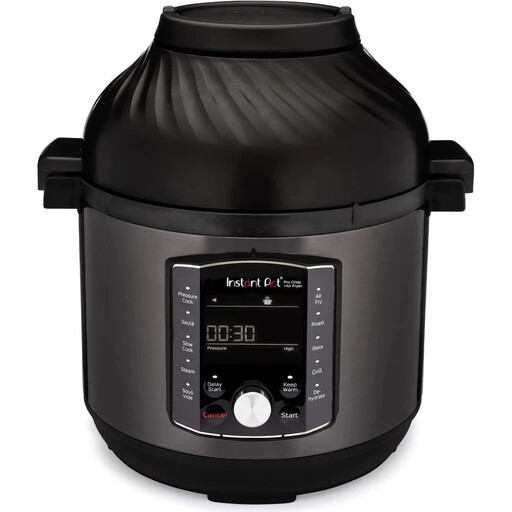 No image available
Worth considering if you genuinely need pressure cooking and air frying in the same appliance as well as slow cooking.
Features listed in the product name: 7.6 l and 220V EU. When pressure cooking, follow the instructions for locking the lid and fully releasing the pressure; the description warns about hot steam.
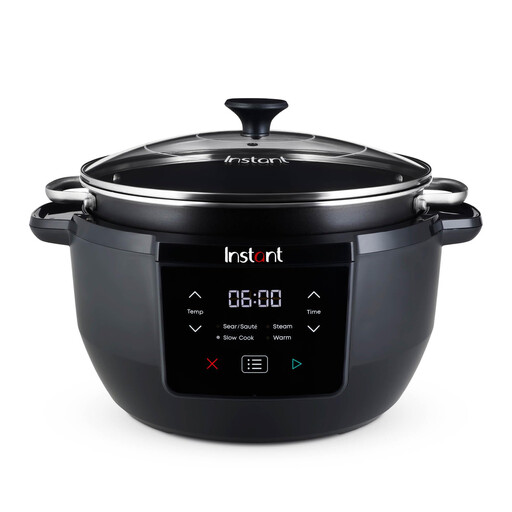 No image available
For larger planned stews, if the 7 l capacity suits your recipe and the space available.
Features listed in the product name: 7 l and grey. According to the description, the inner pot is not designed for use in an oven, on a hob or on an induction hob.
No. According to the German Federal Centre for Nutrition, common pre-cooked pulses in tins or jars are ready to eat. Raw or dried beans are different: the German Federal Institute for Risk Assessment warns against undercooking raw beans and using gentle cooking methods.
The USDA advises against reheating leftovers in a slow cooker because it may take too long to heat them. For kitchen hygiene, the German Federal Institute for Risk Assessment recommends heating food to 70 °C throughout for at least two minutes and keeping it at a minimum of 60 °C throughout when holding it hot. A keep-warm setting alone doesn’t measure the temperature.
Use the contents of an opened tin straight away or transfer them to a lidded, food-safe container, as recommended by German consumer advice centres. For hot food you plan to store for longer, the German Federal Institute for Risk Assessment recommends cooling it quickly to below 7 °C and keeping it refrigerated.
Check the manual for your specific appliance for information on suitable surroundings, intended use and warnings, and make sure the power connection is in good condition. The German Federal Institute for Occupational Safety and Health describes the manufacturer’s instructions as the most important source of information for using electrical products at home; a building site isn’t automatically a suitable place to set up an appliance.
Electrical products covered by German low-voltage regulations must bear a CE marking before being made available, as explained by the German Federal Institute for Occupational Safety and Health. The statutory warranty provided by the seller is separate from any voluntary manufacturer’s guarantee. Online purchases generally come with a 14-day right to cancel; exceptions and the applicable start date of the cancellation period should be checked.