
Lieferung heute & morgen

Qualitätsgarantie

Willkommens-Angebote freischalten: KOSTENLOSE Lieferung | Bis zu 80 % RABATT | Kostenlose 30-Tage-JoyPlus-Testphase
App herunterladen
Tinned meat is a practical choice for many households: it can be stored without refrigeration, is usually ready to eat and can be used as a sandwich filling, an ingredient or a quick meal. If you’re thinking of buying tinned meat, don’t judge it by pack size or marketing claims alone. Differences in meat content, salt levels, ingredients, portion size and shelf life all affect how useful a product is day to day.
A multipack often looks cheaper at first glance. What matters, though, is the price per 100 g or per kilogram. A six-pack of 340 g tins contains a different total amount from six 400 g tins. It’s also worth considering how quickly you’ll use the contents once a tin has been opened.
Corned beef, beef in its own juice, pork in its own juice and pork in lard can be very different. Check:
For example, a product labelled “tinned beef” may have a different texture and seasoning from classic corned beef.
Unopened tins are usually stored at room temperature in a cool, dry place away from light. The best-before date on the packaging still matters. Don’t use tins that are damaged, bulging, leaking or badly dented. Once opened, transfer the contents to a non-metallic, sealable container and keep them in the fridge. Check the label for specific guidance on how soon to eat the contents; the products described here often advise using them within two to three days.
Ingredients are listed in descending order by weight. For corned beef, check whether the label gives a specific percentage for “cooked beef”. For example, Hereford Corned Beef 340g lists beef as its main ingredient and contains salt, sugar and sodium nitrite as a preservative.
When buying beef in its own juice, check whether it also contains stock, water or spices. Depending on the recipe, pork in its own juice may also contain pork rind or pork head meat. This information helps you get a realistic idea of the texture and how best to use the product.
The nutrition table makes it easier to compare products fairly, regardless of tin size. Pay particular attention to:
Values aren’t directly comparable across different portion sizes unless they’re given per 100 g. A 400 g tin also doesn’t automatically provide four full meals.
A traditional tin is handy for the cupboard, camping kit or emergency supplies. You’ll need a clean tin opener if you plan to eat straight from the tin. When heating the meat, take it out of the tin and warm it in a suitable container. “Ready to eat” means no preparation is needed, but you can still use the product in stir-fries, stews, sandwiches or salads.
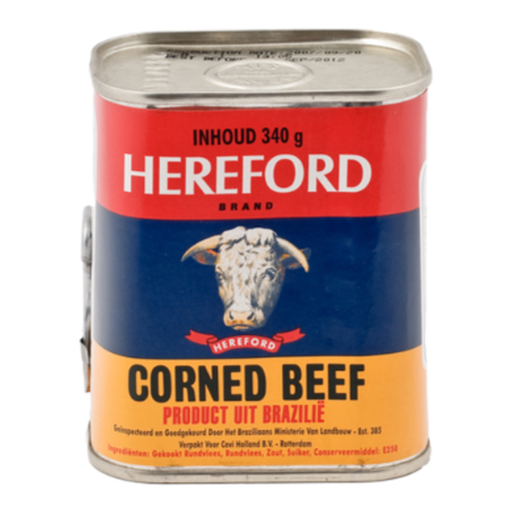
Why it suits this shopper: The single 340 g tin is a good choice if you want to try a manageable amount of corned beef first. According to the product information, it’s ready to eat hot or cold.
The ingredients and nutrition information are given per 100 g, making it easy to compare this tin fairly with other corned beef products.
Single 340 g tin; 19 g protein and 1.8 g salt per 100 g according to the product information.
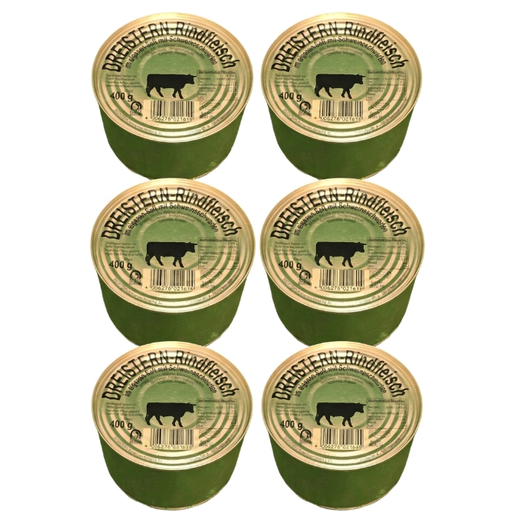
Why it suits this shopper: This multipack contains six 400 g tins of beef in its own juice. It’s designed for households that regularly keep long-life meat on hand.
The total quantity is 2.400 g. If you work out the price per kilogram and know how much you use, you can assess a multipack more accurately than by looking at the number of tins alone.
Six 400 g tins; according to the product description, made with beef, beef stock, salt and spices.
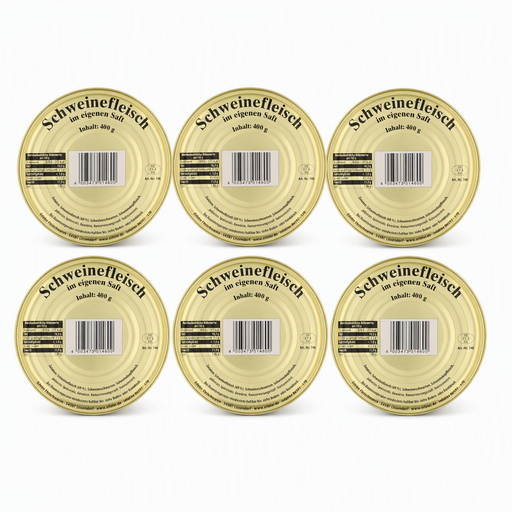
Why it suits this shopper: This six-pack is a good option for stocking up, camping trips and anyone who regularly uses tinned pork in hot dishes.
The ingredients list includes 69% pork, as well as pork rind and pork head meat. This gives you a clear idea of what to expect before you buy.
Six 400 g tins; according to the nutrition information, 15.9 g protein and 1.86 g salt per 100 g.
We’ve put together a complete, regularly updated list of products that meet these strict selection criteria and fully comply with the safety regulations in force across the EU.
For busy professionals, tinned meat can be part of a quick evening meal. Corned beef, for example, goes well with bread, potatoes, salads or stir-fries. Beef in its own juice can be used in stews and sauces. Depending on the seasoning, pork in its own juice works well in hearty stir-fries or as a sandwich filling.
For camping and outdoor use, make sure tins are transported securely, protected from moisture and checked regularly for their best-before dates. Once a tin has been opened, you’ll need somewhere to keep the contents chilled if you don’t eat them all straight away.
Shelf life varies by product and is shown on the packaging. Unopened tins are usually stored in a cool, dry place away from light. Always check the best-before date and the condition of the tin.
Many products are labelled as ready to eat and can be enjoyed cold. You can also warm them gently. Transfer the contents to a suitable container and follow any instructions on the packaging.
The only way to tell is to check the unit price. Compare the price per 100 g or kilogram, and also consider how long the contents will keep once opened. A multipack makes most sense if you’ll use the quantity regularly.