
Lieferung heute & morgen

Qualitätsgarantie

Willkommens-Angebote freischalten: KOSTENLOSE Lieferung | Bis zu 80 % RABATT | Kostenlose 30-Tage-JoyPlus-Testphase
App herunterladen
A tinned stew can provide busy professionals, families, students and bulk buyers with a convenient meal. The range spans classic ready-made stews with meat, vegetarian lentil stew and ready-made soup with noodles. However, products vary considerably in their ingredients, portion sizes, allergens and salt content.
Anyone who focuses only on a large tin size or a marketing description such as “homemade” may overlook important details. The following criteria can help you choose a tinned stew that better suits your everyday needs.
An 800 g tin or an 850 ml tin may be enough for one main meal, but for two people the amount required will vary depending on the side dishes. A 400 g portion, on the other hand, provides a clearer single serving. When stocking up, it is therefore worth checking the net quantity and intended number of people, rather than looking only at the price per item.
Names such as pea stew, bean stew or chicken noodle stew provide an initial indication. However, the quantities listed in the ingredients are what really matter. Examples from the selection include:
This makes it easier to assess whether a product mainly consists of the ingredient named in its title or whether that ingredient represents only a smaller proportion.
A vegetarian vegetable stew may have a different recipe from a stew containing bacon or sausage. For organic products, check the organic seal or the corresponding labelling on the packaging. For allergy sufferers, the allergen list is decisive: even a meat-free stew may contain celery, mustard, milk or gluten, for example.
Check the following before buying:
According to the product information, Alnatura Bio-Herzhafte Linseneintopf is vegetarian and contains 24% lentils, potatoes and carrots. Celery is listed as an allergen; gluten, soya and milk are not listed as ingredients in the product information provided. Nevertheless, always check the specific packaging before eating the product.
Jeden Tag Chicken Noodle Stew, on the other hand, lists wheat or gluten, egg, celery, mustard and milk as allergens. Anyone buying a ready-made soup for several people or for the workplace should not assess this information based on the product name alone.
Nutritional information allows for an objective comparison. The most relevant points include:
The information usually refers to 100 g or 100 ml. With a 400 g tin, the actual amount consumed is correspondingly higher. According to the product data, Erasco Erbseneintopf Hubertus contains 88 kcal and 0.86 g of salt per 100 g. Alnatura Bio-Erbseneintopf contains 63 kcal and 1.00 g of salt per 100 g. A direct comparison should therefore always use the same reference quantity.
Most products can be heated in a saucepan; some are also suitable for the microwave. Always transfer the contents to a microwave-safe container first. A tin must never be put in the microwave.
After opening, transfer any leftovers to a non-metallic, sealable container and refrigerate. The recommended time for consumption varies according to the product information: 24 hours or up to two days is often stated. The label and the manufacturer’s instructions are always decisive. Unopened tins should be stored in a dry, cool place protected from direct sunlight. Damaged or swollen tins should not be eaten.
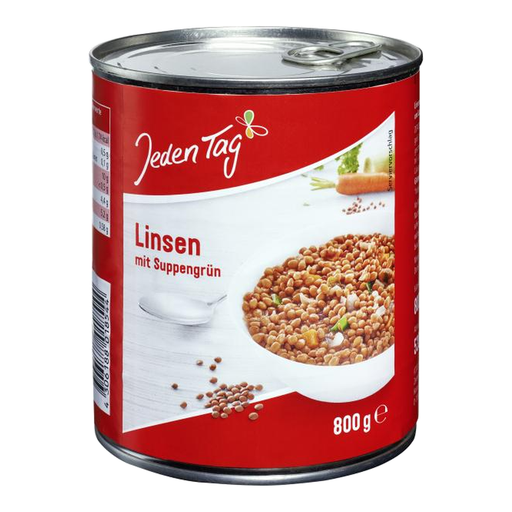
Why this product suits this profile: The large tin combines lentils with potatoes, carrots, leeks and onions, and is labelled as vegetarian. It is suitable for simple stockpiling and can be heated in a saucepan or in the microwave.
The ingredient proportions and allergens are stated. With 23% lentils, you can understand the product composition before buying.
850 ml contents, a vegetarian recipe and flexible heating in a saucepan or in the microwave.
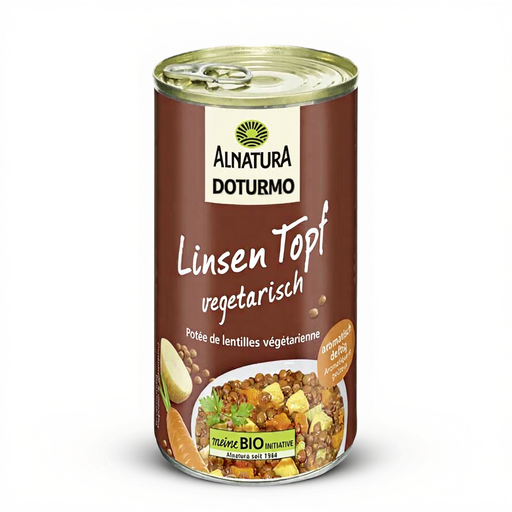
Why this product suits this profile: According to the product information, the 400 g portion comes from organic farming and is vegetarian. It is suitable for single-person households or anyone looking for a controlled portion size.
The organic labelling, the 24% lentil content and the stated celery warning provide specific points to check instead of a general marketing claim.
400 g net quantity, organic ingredients and clear information on preparation and storage.
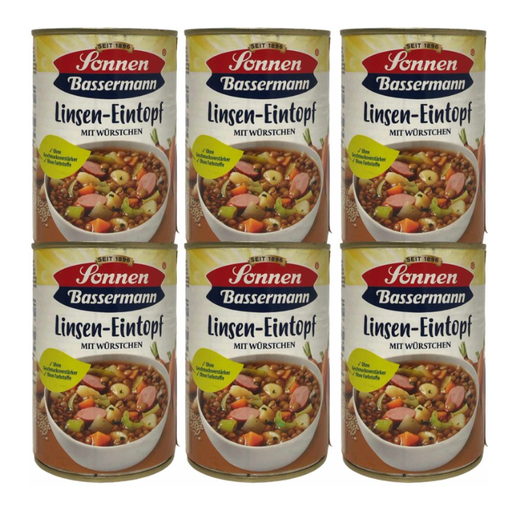
Why this product suits this profile: The six-pack of 400 g portions is suitable for households that regularly plan long-life ready meals and prefer consistent individual portions.
The pack size means you do not have to store an opened large tin over several meals. However, the ingredient and allergen information should still be checked.
Six individual 400 g portions and, according to the product information, 30% lentils per 100 g.
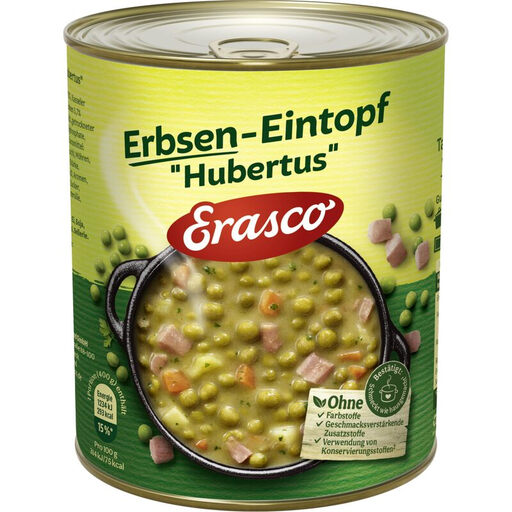
Why this product suits this profile: This classic pea stew contains smoked pork cubes and bacon. The 800 g format is suitable for a larger lunch or evening meal and can be served with bread.
The 42% pea content and the specified meat ingredients make the composition clear. Celery is listed as an allergen.
800 g contents, 42% peas and preparation in just a few minutes according to the product description.
We have put together a complete, regularly updated list of products that fully meet these strict selection criteria and the safety regulations applicable in the EU.
Place the contents of the tin in a saucepan and heat, stirring occasionally. Many products should not be allowed to boil vigorously. For microwave preparation, transfer the stew to a suitable container and heat according to the instructions on the packaging. The exact time depends on the quantity and the appliance’s power.
When unopened, the best-before date printed on the tin applies. The tin should be stored in a cool, dry place protected from direct light. Once opened, follow the manufacturer’s instructions; this is often one to two days in the fridge. The date and information on the specific packaging are decisive.
Some products are explicitly vegetarian, such as Alnatura Bio-Linseneintopf or Jeden Tag Linseneintopf mit Suppengemüse. Other varieties contain bacon, sausage or meat. You should also check allergens such as celery, mustard, milk, egg and gluten against the ingredients list.