
Lieferung heute & morgen

Qualitätsgarantie

Willkommens-Angebote freischalten: KOSTENLOSE Lieferung | Bis zu 80 % RABATT | Kostenlose 30-Tage-JoyPlus-Testphase
App herunterladen
Tinned sweetcorn is a long-life staple that can be added to salads, soups, stir-fries or side dishes without lengthy preparation. Even so, tinned sweetcorn, baby corn and ready-to-eat corn on the cob differ considerably in terms of ingredients, texture and quantity. If you only compare the price per pack, you can easily overlook important details.
A 340 g tin does not necessarily contain 340 g of sweetcorn kernels. Some of the stated weight may refer to water or brine. That is why the drained weight is what matters when comparing prices. If this information is missing from the listing, check the product packaging before buying.
Sweetcorn naturally contains carbohydrates and sugar. Some products also contain added sugar or sugar syrup. Checking the ingredients list provides clarity. For classic sweetcorn, for example, sweetcorn, water and salt may make up the entire ingredients list. Creamed sweetcorn, on the other hand, often contains sugar, starch and acidity regulators.
Sweetcorn, vegetable corn, baby corn, sticky corn and cornmeal are not interchangeable. Sweetcorn kernels are suitable for salads and side dishes, while baby corn is more commonly used in wok dishes or as a topping. Creamed sweetcorn gives soups and sauces a creamier texture. Cornmeal is not ready-to-eat corn, but a dried cooking ingredient.
For a straightforward tinned sweetcorn product, a short ingredients list is often helpful. If you are shopping for vegan or vegetarian products, you should still check the specific labelling of the product in question. For organic sweetcorn, the EU organic logo or the stated organic certification indicates that it has been produced in accordance with the relevant requirements.
Claims such as “non-GMO” or “no added sugar” only apply when they are stated for the specific product. They should not automatically be applied to an entire brand or category.
Nutritional information is often given per 100 g and, for tinned sweetcorn, may refer to the drained product. The key details include:
The nutritional values of sweetcorn in a jar or tin may differ when water, salt, sugar or other ingredients are included.
Unopened tins should generally be stored in a cool, dry place. Damaged, swollen or leaking packaging should not be used. Once opened, the contents should be refrigerated, ideally in a clean glass or plastic container. The recommended time for consumption depends on the product and ranges from one to three days in the information available here.
For everyday use, it is worth choosing a pack size that matches your consumption: a small 140 g tin is suitable for individual portions, while 340 g or 425 g packs may be more practical for family meals and meal prep.
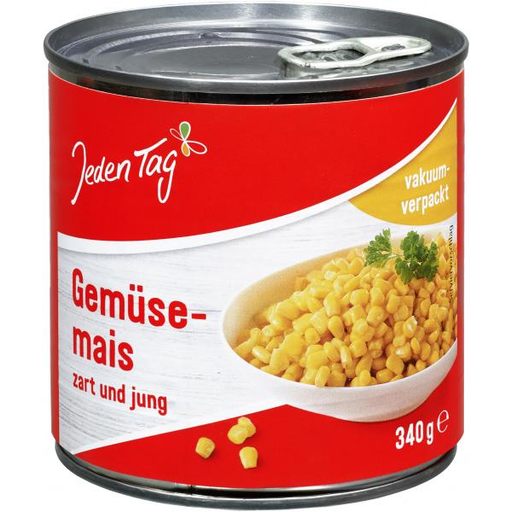
Why this product suits this profile: The 340 g tin is ideal for households that regularly need sweetcorn kernels for salads, pizza or side dishes. The ingredients list states sweetcorn, water and salt.
The stated nutritional values are given per 100 g. Salt and fibre are also listed, making it easier to compare this product with others.
Vegetarian, gluten-free according to the product information, and suitable for a range of dishes as a classic tinned sweetcorn product.
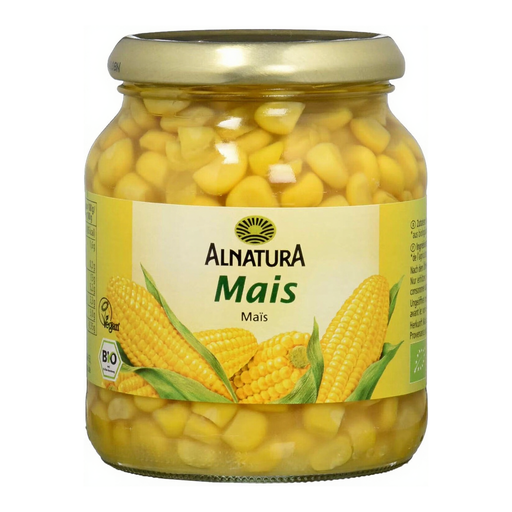
Why this product suits this profile: According to the product information, this variety comes from certified organic farming and contains sweetcorn, water, sea salt and lemon juice.
The organic labelling and specific ingredients list make it clear which selection criteria the product is intended to meet.
Organic-certified according to the stated information, vegan and providing 3.3 g of fibre per 100 g.
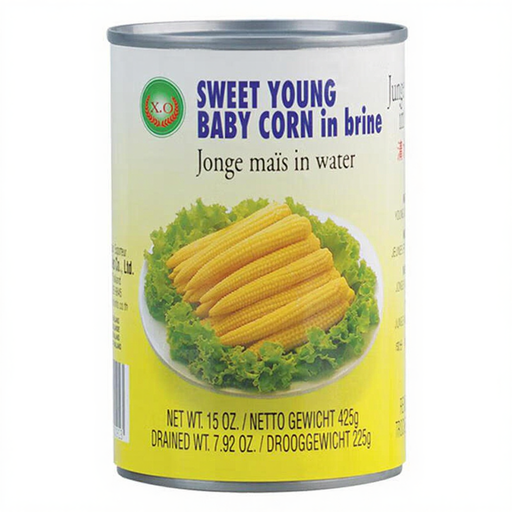
Why this product suits this profile: Baby corn adds a different shape and texture to wok dishes, salads and soups compared with conventional sweetcorn kernels.
The product information lists 54.88% baby corn, as well as water, salt and citric acid. This means the composition is clear before you buy.
Ready to eat, listed at 28 kcal per 100 g and, once opened, to be refrigerated and consumed within three days.
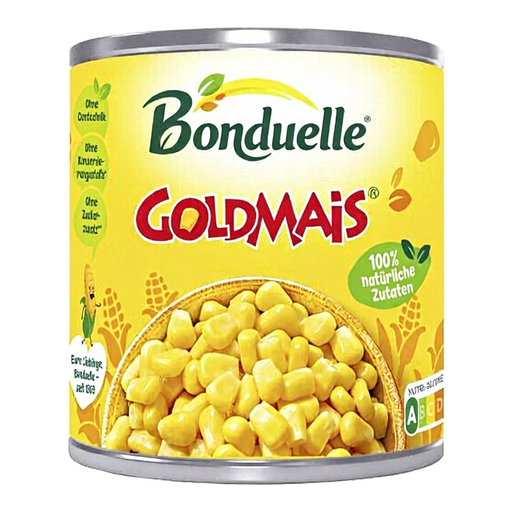
Why this product suits this profile: The 425 ml tin provides a larger quantity for family meals, buffets or several portions of sweetcorn for salads and side dishes.
The ingredients are listed as sweetcorn, water and salt, with no added sugar. Values per 100 g drained are provided for comparison.
Vegan according to the product information, with no declared allergens and 3.0 g of fibre per 100 g.
We have put together a complete, regularly updated list of products that fully meet these strict selection criteria and the safety regulations applicable in the EU.
Unopened tins should be kept in a cool, dry place away from direct sunlight. Once opened, the sweetcorn should not be left in the tin. It is better stored in a sealable container in the fridge. The brine can be drained; if you are watching your salt intake, the sweetcorn kernels can also be rinsed briefly.
For salads, ready-to-eat sweetcorn can be used straight after draining. In hot dishes, it should generally be added towards the end of cooking to preserve its texture. Baby corn can be cut into strips, briefly fried or served whole.
Yes, classic tinned sweetcorn and many baby corn products are cooked and can be used directly after opening and draining. Products such as cornmeal, however, require preparation. Always follow the relevant instructions on the packaging.
This depends on the product. The information available here states one to three days. Opened sweetcorn kernels should be refrigerated in a suitable container and used as soon as possible.
Several of the products mentioned are labelled vegan, including Alnatura Organic Sweetcorn and Bonduelle Goldmais Sweetcorn. However, a vegan diet requires checking the labelling of the specific item, as recipes and product variants may differ.