
Lieferung heute & morgen

Qualitätsgarantie

Willkommens-Angebote freischalten: KOSTENLOSE Lieferung | Bis zu 80 % RABATT | Kostenlose 30-Tage-JoyPlus-Testphase
App herunterladen
Tinned tuna has a long shelf life, is quick to portion and is suitable for salads, pasta, pizza, sandwiches and simple meals. However, tinned tuna products can differ significantly in terms of the preserving liquid, fish content, drained weight and seasoning. As a Joybuy Product Recommendation Officer, I filter the relevant product information and show you what to look out for when shopping in Germany.
A 185 g tin does not automatically contain 185 g of tuna. Some of the weight comes from water, salt, oil or sauce. That is why the drained weight is so important. For example, Deutsche See Tuna Fillets in Natural Brine 185 g have a drained weight of 140 g. Many 185 g tins from Saupiquet have a drained weight of around 130 g.
For a fair price comparison, you should therefore calculate the price per 100 g of drained fish, rather than looking only at the price of the tin.
Tuna in oil generally contains more fat and energy because of the preserving oil than tuna in its own juice or brine. It also makes a difference whether you drain the oil completely or use some of it in pasta and salads.
The type of oil is also relevant: tuna in olive oil has different flavour characteristics from tuna in sunflower oil. The specific nutritional information on the label remains decisive, as the fish content and amount of oil vary from product to product.
Terms such as “responsibly caught” are difficult to assess without further information. Look for verifiable details such as MSC certification, the fishing area and the fishing method. An MSC statement should be verifiable directly on the packaging or in the product information.
For the products listed here, sustainability is stated in some cases as a product feature. This should not be taken as a general statement about every tin of tuna from a particular brand.
For a neutral comparison, it is worth looking at the first ingredients:
If you want to use the fish as flexibly as possible, a short ingredients list is usually the easiest option. For a ready-to-serve meal, seasoned varieties may be more suitable.
Tuna fillets are usually packed in larger pieces or as sliced fillets. They are ideal for salads, sandwiches and an attractive garnish. “Chunks” or “flakes” are more finely broken up and work well in sauces, spreads or pasta dishes.
When choosing tuna for salads and pasta, you should also check whether the product is already seasoned. A garlic and chilli variety can reduce preparation time, but gives you less scope to adjust the flavour.
Where possible, compare values on the same basis, ideally per 100 g of drained contents. Product information for varieties in brine often shows around 115 to 120 kcal and approximately 24 to 27 g of protein per 100 g. Oil-based varieties can have considerably higher fat and energy values, depending on the product.
These figures are nutritional information only and do not constitute medical or therapeutic advice. If you have a fish allergy, you should also take note of the allergen declaration “fish”. Seasoning sauces may contain additional allergens such as soya or milk.
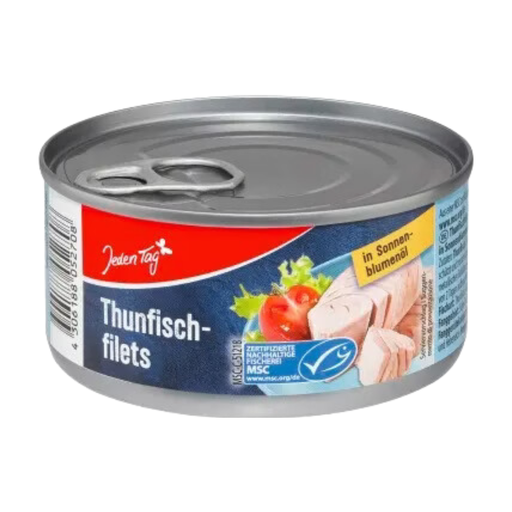
Why this product suits the profile: The 195 g tin provides a practical single serving and a straightforward ingredients list consisting of tuna, sunflower oil and salt. According to the product information, it provides 25 g of protein and 137 kcal per 100 g.
The stated drained weight and nutritional values make it easier to compare with other tins. The MSC statement provides specific guidance about the fishery identified.
195 g tin, 25 g of protein per 100 g according to the product information, and MSC labelling.
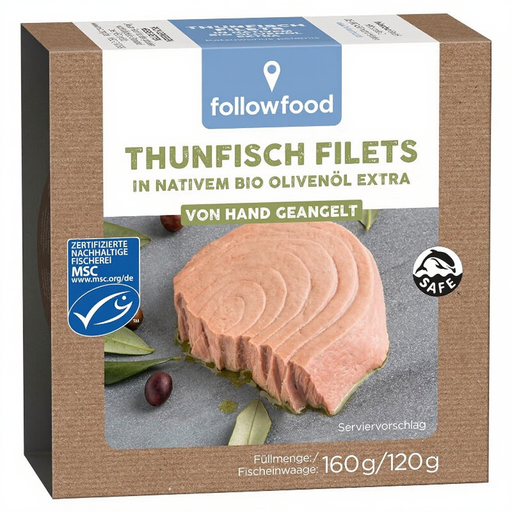
Why this product suits the profile: The tin combines MSC labelling with organic olive oil. According to the product information, the fillets are wild-caught using the “Pole and Line” fishing method.
The preserving liquid, stated drained weight of around 120 g and ingredients list are clearly provided. This makes it easier to assess the oil content.
Organic olive oil, MSC labelling and 25 g of protein per 100 g according to the product information.
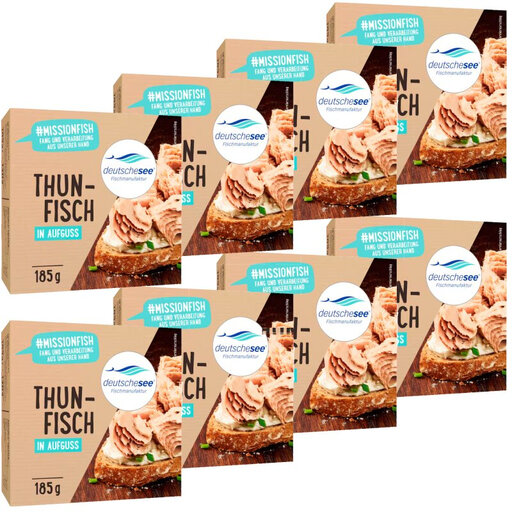
Why this product suits the profile: The 8-pack is ideal for households that regularly use tuna in salads, pasta, pizza or sandwiches. According to the product information, each tin has a drained weight of 140 g.
The multipack reduces the need for frequent individual purchases. Water and salt as the listed accompanying ingredients make this variety easy to season in different ways.
8 tins, around 26 g of protein per 100 g drained, and MSC information according to the product description.
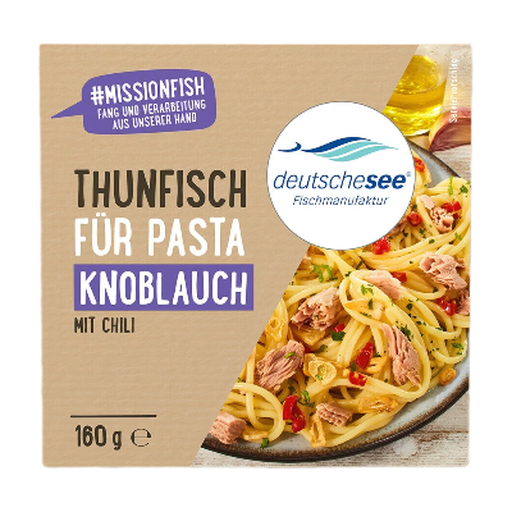
Why this product suits the profile: This variety is already seasoned with garlic, chilli and parsley, and designed for pasta dishes. The 8-pack is well suited to working people or households that regularly need quick meals.
The seasoning is clearly listed in the ingredients. This shows that it is not plain tuna fillets, but a ready-to-use pasta ingredient.
8 x 160 g, garlic and chilli seasoning, and direct use with cooked pasta.
We have put together a complete, regularly updated list of products that fully meet these strict selection criteria and the safety regulations applicable in the EU.
Unopened tins should be stored in a cool, dry place and protected from direct sunlight. Check the tin before opening it: if it is bulging, leaking or visibly damaged, it should not be used.
After opening, transfer the contents to a suitable, preferably non-metallic container and place it in the fridge. Depending on the product information, it should be consumed within 24 hours to three days. Always follow the specific instructions on the packaging. Oil or sauce should not automatically be left in the opened tin.
According to the available product information, varieties in water or brine contain around 115 to 120 kcal per 100 g of drained fish. Oil-based varieties are often higher, for example at around 191 to 200 kcal. The exact value depends on the product and the amount of oil remaining.
Shelf life depends on the best-before date on the packaging and the storage conditions. Store the tin in a dry place at room temperature. A damaged, swollen or leaking tin should not be eaten.
For maximum flexibility, tuna fillets in brine or oil are ideal, as you can choose the sauce and seasonings yourself. If you need to prepare a meal particularly quickly, a ready-seasoned variety such as Deutsche See Garlic Tuna for Pasta could be a suitable option.