
Lieferung heute & morgen

Qualitätsgarantie

Willkommens-Angebote freischalten: KOSTENLOSE Lieferung | Bis zu 80 % RABATT | Kostenlose 30-Tage-JoyPlus-Testphase
App herunterladen
A tinted SPF 50 sun cream combines daily UVA and UVB protection with a cosmetic effect. It can help even out the appearance of your skin tone, make redness less noticeable or provide a light base under make-up. However, not every tinted product is automatically suitable for every skin type or everyday situation.
The SPF rating mainly describes protection against UVB rays, which are a major cause of sunburn. For daily facial protection, you should also look for clearly stated UVA protection. Asian products often use the PA rating for this, such as PA++++. On the European market, the UVA symbol in a circle is another important guide.
SPF 50+ does not replace other protective measures either. Strong midday sun, spending long periods outdoors and not reapplying enough can significantly reduce the level of protection.
A tinted sun cream can look different on very fair, deep, olive or noticeably rosy skin. An overly rosy tone-up effect can make the complexion look grey, while yellow or lavender pigments may visibly alter its appearance.
Where possible, test the product at the transition between the jawline and neck. Coverage is also important: tinted facial sun protection usually offers light correction, but it does not necessarily replace foundation or concealer.
A radiant complexion can feel comfortable on dry skin, but may quickly look shiny on oily or blemish-prone skin. Conversely, mattifying formulas can make dry areas more noticeable.
You should therefore look for specific details such as:
A facial cream with sun protection should be applied generously and evenly to the face, ears and neck. Applying too thin a layer reduces the level of protection stated on the packaging. For longer periods in the sun, regular reapplication is essential, especially after sweating, swimming, drying yourself or rubbing the skin.
Products with SPF 30 may be suitable for certain everyday situations. However, if you are specifically looking for a tinted SPF 50 sun cream, you should not consider SPF 30 products an equivalent alternative. The selection below therefore focuses on SPF 50 or SPF 50+.
A tone-up sun cream often uses rosy, peach, yellow, green or lavender pigments. These can help even out the appearance of the complexion, but they will not completely cover every area of redness or pigmentation.
The term sun protection with a make-up effect therefore usually refers to a light tint, soft-focus effect or glow rather than a full-coverage foundation.
A lightweight fluid or essence texture is often suitable for use under make-up. Creamier formulas may feel more comfortable on dry skin. If you have sensitive skin, it is worth checking for fragrance, alcohol and any known personal irritants. Testing a small amount on an inconspicuous area before regular use may be advisable.
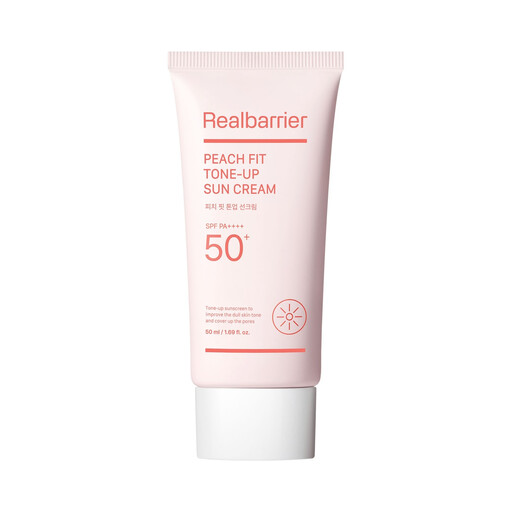
Why this product suits this profile: The peach tint is designed to create a natural, subtly radiant, more even-looking complexion. SPF 50+ and PA++++ meet the high level of protection required.
The product details explicitly state that it offers light coverage rather than replacing foundation. The shade should still be tested on the jawline and neck.
Peach tint, SPF 50+, PA++++, plus ceramide NP and panthenol in the stated formula.
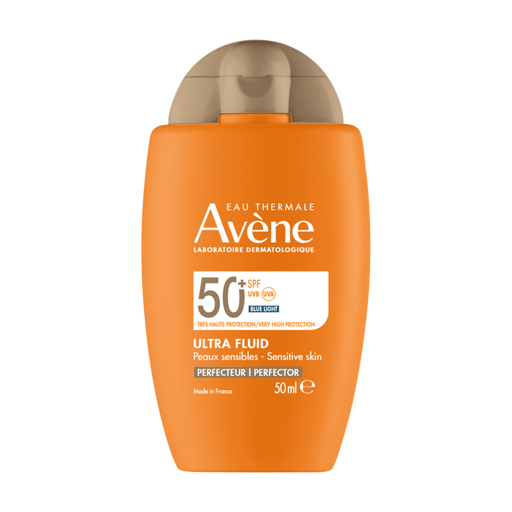
Why this product suits this profile: This ultra-fluid product is positioned as a tinted daily facial sunscreen for sensitive skin and can be used as a make-up base.
The product description points out that the universal shade may look different depending on skin depth and undertone.
SPF 50+, UVA and UVB protection, water-resistant formula, plus fragrance-free and octocrylene-free specifications.
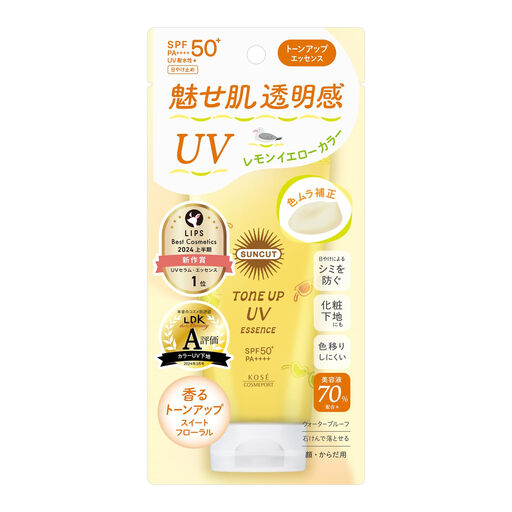
Why this product suits this profile: The larger 80 g quantity and stated water resistance make it an interesting option for regular use on the face and body.
The yellow tint is clearly stated. This makes it easier to assess before buying whether it will look neutral on your undertone.
SPF 50+, PA++++, stated water resistance and suitability for the face and body.
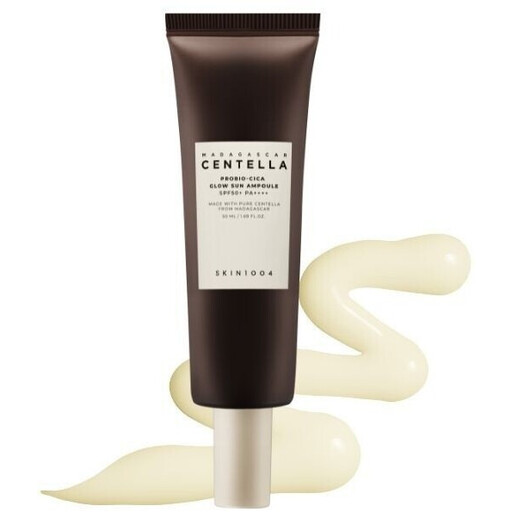
Why this product suits this profile: The ampoule texture is described as providing a fresh glow finish alongside caring ingredients such as panthenol, niacinamide and ceramide NP.
The product details describe a satin-like finish rather than a highly glossy surface. Even so, those with oily skin should keep an eye on the T-zone.
SPF 50+, PA++++, glow finish, plus a formula containing niacinamide, panthenol and Centella asiatica extract.
We have put together a complete, regularly updated list of products that fully meet these strict selection criteria and the safety regulations applicable in the EU.
Tinted products can leave light or coloured marks on clothing. Allow the formula to dry sufficiently and follow the manufacturer's instructions.
That depends on the level of coverage you want. Tinted sun cream usually helps even out the appearance of your skin tone slightly and can act as a primer. If you have more pronounced redness or pigmentation, or want an even foundation-level finish, you will need an additional make-up product.
Shelf life depends on the best-before date printed on the packaging, the PAO symbol and how the product is stored. Heat, direct sunlight and frequent opening can affect the product's properties. Once opened, follow the stated period of use.
Many Korean and Japanese sunscreens are designed as lightweight essence, fluid or tone-up formulas and are used as make-up bases. However, drying time, finish, pigmentation and compatibility with your own foundation are all important. If PA++++ and SPF 50+ are shown, you should also check the application instructions and information on the original packaging.