
Lieferung heute & morgen

Qualitätsgarantie

Willkommens-Angebote freischalten: KOSTENLOSE Lieferung | Bis zu 80 % RABATT | Kostenlose 30-Tage-JoyPlus-Testphase
App herunterladen
For many, a tinted sunscreen with a high SPF is the ideal everyday solution: it reliably protects the skin from UV radiation, provides moisture, and creates an even complexion without the need for heavy makeup. However, the search for the right product can quickly become overwhelming. Many formulations don't deliver on their promises, leading to disappointment.
This guide will help you avoid common purchasing pitfalls and understand the criteria that truly matter for effective and comfortable daily facial sun protection.
Before you make a decision, you should be aware of the common product flaws that often only become apparent after purchase.
To make an informed choice, focus on the following objective parameters.
A high sun protection factor (SPF) of 50 is the foundation for effective protection against UVB rays, which are responsible for sunburn. Just as important is broad-spectrum protection that also covers UVA rays. These penetrate deeper into the skin and are a primary cause of premature skin ageing and wrinkles.
Modern formulations also offer blue light protection (High-Energy Visible Light, HEVL). This light is emitted not only by the sun but also by screens and is suspected of contributing to the development of pigmentation spots. Look for products that explicitly state they protect against the entire light spectrum.
The product name already gives a clue about its feel on the skin.
A good tinted sunscreen should do more than just protect and tint; it can also take over parts of your daily skincare routine. A particularly valuable ingredient is hyaluronic acid. A sunscreen with hyaluronic acid helps to intensely moisturise the skin and plump up fine dehydration lines. Antioxidants like Vitamin E, Niacinamide, or Licochalcone A further support the skin in protecting itself from environmental oxidative stress.
Based on the criteria mentioned, we have identified products that are suitable for different needs and skin types.
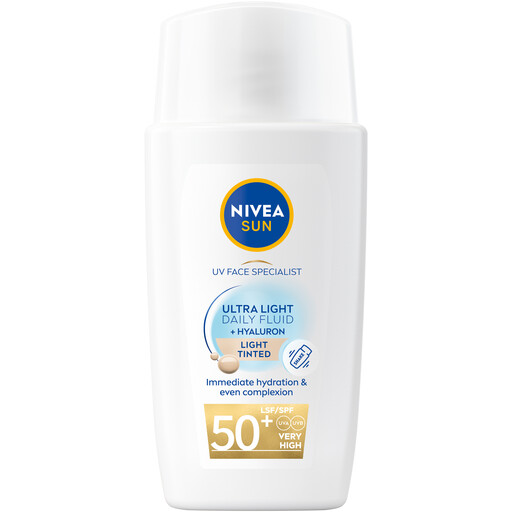
Why This Fits Their Persona: Ideal for uncomplicated daily use. This product combines the reliable protection of an established brand with a light tint for fair skin types and moisturising hyaluronic acid. An efficient all-in-one solution for the morning routine.
The formulation is explicitly developed for fair skin types, thus avoiding the "one-shade-fits-all" trap. The ultra-light fluid texture is designed to be non-greasy.
According to the manufacturer, it contains hyaluronic acid and the antioxidant Licochalcone A. It offers protection against the effects of blue light.
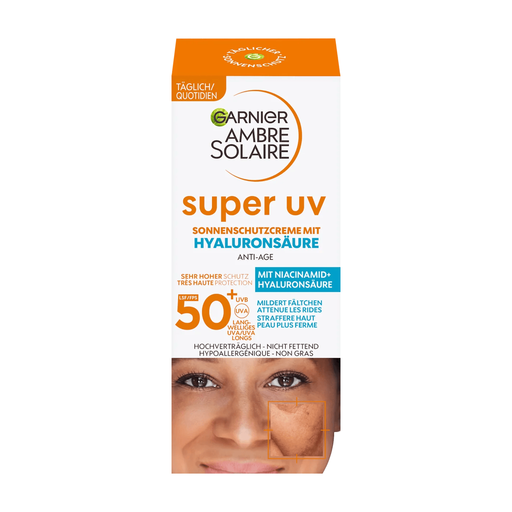
Why This Fits Their Persona: An alternative for users whose priority is preventing skin ageing and who prefer to use their own foundation. This product focuses on anti-ageing active ingredients.
As it is untinted, it completely bypasses the issue of finding the right shade and provides a transparent, hydrating base for any makeup. The ultra-light formula absorbs quickly.
Combines high SPF 50 with targeted anti-ageing ingredients like hyaluronic acid and Vitamin B3 to counteract wrinkles and fine lines, according to the manufacturer.
Many products promise a lightweight texture. We have compiled a selection of creams that stand out for their non-greasy formulations and meet strict selection criteria.
For many skin types, it can serve this purpose, as it combines moisturiser, sun protection, and a light tint. For very dry skin, an additional hydrating serum underneath may be beneficial. It is generally not intended as a full replacement for a high-coverage foundation but serves as an excellent base.
Look for products explicitly labelled for your skin tone (e.g., "for fair skin") or offered in multiple shades. Formulations with so-called "adaptive pigments" or a "tone-up" effect often adjust more flexibly. When in doubt, products with coverage described as "sheer" or "light" are a safe bet.
UVA rays, which are a major contributor to skin ageing, can penetrate clouds and window glass. Therefore, daily facial sun protection is recommended year-round, especially if you work near a window. Modern products also often provide blue light protection, which is emitted from screens.