
Lieferung heute & morgen

Qualitätsgarantie

Willkommens-Angebote freischalten: KOSTENLOSE Lieferung | Bis zu 80 % RABATT | Kostenlose 30-Tage-JoyPlus-Testphase
App herunterladen
A tinted sunscreen for your face promises the perfect blend of protection and aesthetics: a high SPF to shield your skin from UV radiation and a light tint to create an even complexion. However, the search for the right product can quickly become overwhelming. Many formulas don't deliver on their promises, leading to unflattering results or skin irritation.
This guide will help you avoid the most common purchasing pitfalls and understand the criteria that truly matter for making an informed decision.
The marketing claims are often grand, but the reality in the bathroom mirror can look quite different. Watch out for these three typical pitfalls to avoid disappointment.
To find the right product for your needs, you should focus on objective features. The following three parameters are crucial for protection, comfort, and a successful result.
A high sun protection factor is the foundation. For daily use in an urban environment, a tinted sunscreen with SPF 50 offers robust protection against UVB radiation, which is the primary cause of sunburn. Just as important is protection from UVA rays, which penetrate deeper into the skin and contribute to premature skin aging. Look for the UVA seal (a circle with "UVA" inside) or the PA classification (ideally PA++++) to ensure broad-spectrum protection.
The product name often gives a clue about the texture. A tinted sun fluid is typically very light and liquid, ideal for normal to oily skin. A tinted day cream with SPF 50 can be richer and is well-suited for dry skin. Those prone to shine should specifically look for a mattifying sunscreen with ingredients like silica or clay, which absorb excess sebum. For sensitive skin, fragrance-free formulas without irritating alcohols are a must.
The tint can be achieved in several ways:
Based on the criteria above, we have curated a selection of products suitable for different user profiles and skin types.
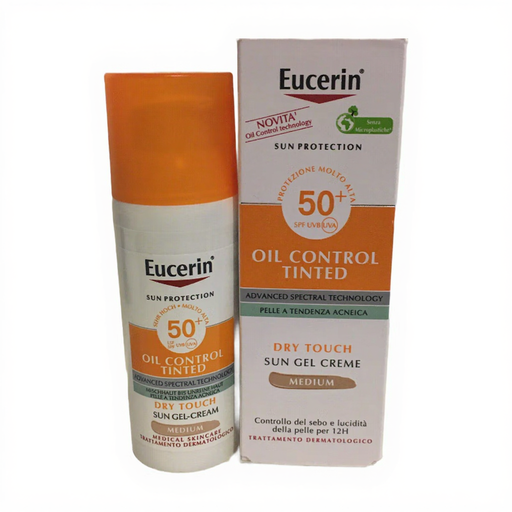
Why It's a Match: Ideal for anyone seeking reliable, high sun protection that also controls unwanted shine. The lightweight gel-cream texture is specifically designed for the needs of combination to oily skin.
The formula actively counteracts "greasy shine." According to the manufacturer, the Sebum Control Technology provides an anti-shine effect that lasts for up to 12 hours.
Combines high broad-spectrum protection (SPF 50+, PA+++) with a proven mattifying effect. The formula is non-comedogenic and fragrance-free.
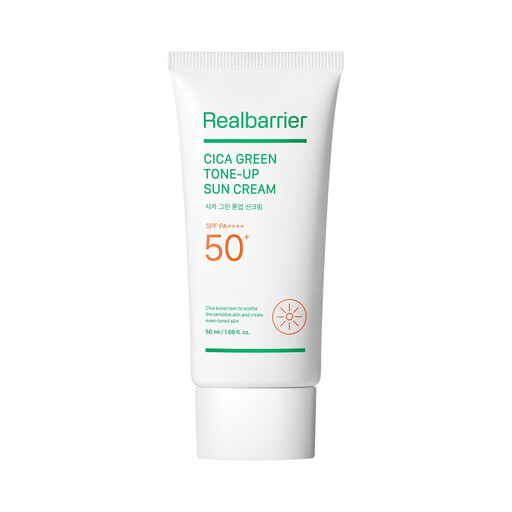
Why It's a Match: This sunscreen is formulated for skin prone to irritation and redness. It combines very high protection with skin-soothing and colour-correcting properties.
Instead of an ill-fitting skin tint, this product uses a green hue to visually neutralise redness. This bypasses the "wrong shade" problem and creates a calmer base.
Contains Centella Asiatica extract (Cica), known for its soothing properties. The lightweight, non-sticky formula protects with SPF 50+ and PA++++.
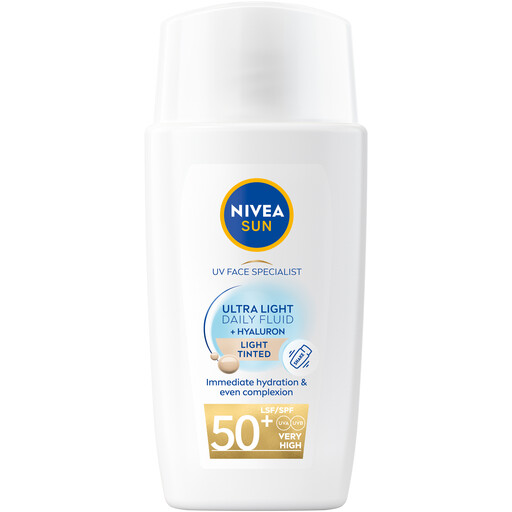
Why It's a Match: A straightforward solution for daily use, specifically developed for fair skin tones. It combines moisturiser, sun protection, and a light tint in one step.
This product avoids the "one-size-fits-all" trap by offering a targeted shade for fair skin. The ultra-light fluid also prevents that heavy, mask-like feeling.
The formula is enriched with Hyaluron, which provides moisture and protects not only against UVA/UVB rays but also against the effects of blue light.
We've compiled a complete, up-to-date list of products that fully meet these strict selection criteria and all applicable safety regulations.
1. How much tinted sunscreen should I use on my face? The amount is crucial for effective protection. A common guideline is the "two-finger rule": apply two strips of the product to your index and middle fingers. This amount is generally sufficient for your face and neck. Applying too little significantly reduces the stated level of protection.
2. Does a tinted day cream with SPF 50 replace a regular sunscreen? Yes, as long as the product offers high broad-spectrum protection (SPF 50 or 50+ and adequate UVA protection) and is applied in the correct amount, it can replace a separate sunscreen for daily use. During intense sun exposure, such as at the beach or during sports, protection should be reapplied regularly, especially after swimming or sweating.
3. Can I use tinted sunscreen on acne-prone skin? Yes, but choosing the right formula is especially important here. Look for products explicitly labelled as "non-comedogenic." This means the formula is designed not to clog pores. A lightweight tinted sunscreen or a fluid with mattifying properties is often more suitable than a rich cream.