
Lieferung heute & morgen

Qualitätsgarantie

Willkommens-Angebote freischalten: KOSTENLOSE Lieferung | Bis zu 80 % RABATT | Kostenlose 30-Tage-JoyPlus-Testphase
App herunterladen
A tipi tent for 6 people promises plenty of space, generous headroom and camping together with family or friends. In practice, however, the stated number of people alone does not determine whether a tent is comfortable to use. Important factors include the actual interior floor area, ventilation, hydrostatic head and the stability of the guying system.
Anyone looking for a tipi tent for longer camping trips should also be aware of common marketing pitfalls. A large external footprint does not automatically mean that six people can sleep comfortably inside. Likewise, the term “weatherproof” alone says little about the seams, groundsheet or material coating.
A 6-person tent may be designed to provide six sleeping spaces without offering enough room for luggage or sitting together. When choosing a glamping tent for families, it is therefore worth checking the interior dimensions, layout and usable headroom. Whether the tent has sleeping cabins or a separate living area also affects comfort.
A waterproof tipi tent should not be described using nothing more than a marketing term. More meaningful details include the hydrostatic head, sealed or taped seams, and a sufficiently protected groundsheet. A hydrostatic head of 3,000 mm is a specific manufacturer’s figure, but it does not replace careful guying or a suitable pitch.
A tent with 3 m of headroom offers plenty of freedom of movement, but its height also gives the wind a larger surface area to catch. Guy ropes and pegs are therefore not optional accessories. Before pitching, check the weather forecast, the ground conditions and whether secure anchoring is possible.
When choosing a large family tent, buyers should distinguish between external and internal dimensions. The OUTFIT tipi tent measures 450 × 390 × 300 cm externally and, according to the product specifications, 420 × 360 × 300 cm internally. The tall central pole allows you to stand upright in the central area. Even so, a group of six should decide in advance how many sleeping mats and bags will need to fit inside, and whether there will be room for a small table.
A spacious group tent is particularly suitable for families or groups of friends who do not want to spend all their time outdoors in poor weather. For overnight stays only, however, a more compact layout may be sufficient.
Hydrostatic head describes the water pressure that a fabric can withstand under laboratory conditions. When comparing different tents, this figure should always be considered alongside seam construction, groundsheet material and the quality of the pitching process.
The OUTFIT model is specified as having an outer material made from 150D Oxford polyester, with a hydrostatic head of 3,000 mm. The product description also states that the seams are taped. This is useful, verifiable technical information, but it is not a guarantee that the interior will remain dry in every type of weather. A level pitch free from sharp objects, together with correctly tensioned guy ropes, remains essential.
A family tent with mosquito netting should allow sufficient air circulation without letting insects enter freely. Look for mesh panels, ventilation openings and the option to leave entrances partially open. In warm weather, good ventilation also helps reduce condensation.
According to the manufacturer’s specifications, the OUTFIT tipi has a breathable inner tent made from 100 % polyester, integrated mosquito nets and ventilation openings. The outer tent has been treated with UV30. This figure describes the material’s treatment; it should not be equated with complete protection from intense sunlight. Choosing a shaded pitch, using a sun canopy and taking regular breaks outside the tent are still sensible precautions.
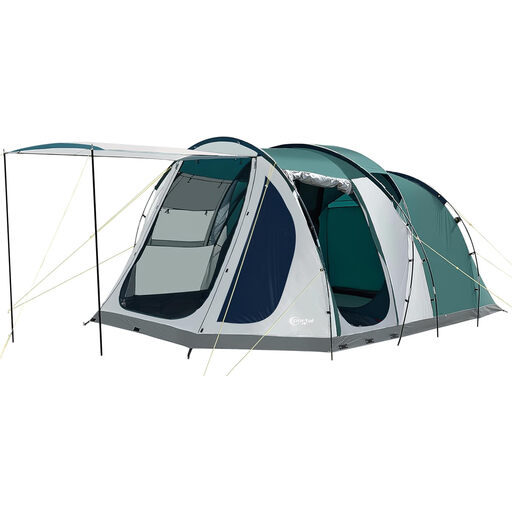
Why this product suits the profile: This tunnel tent is aimed at families looking for separate sleeping and living areas for traditional car camping. Its stated capacity is five people.
The sleeping and living areas are listed separately. This makes it easier to assess the usable space than when only a capacity figure is provided.
7.05 m² sleeping area, 5.8 m² living area, 3,000 mm hydrostatic head and sewn-in groundsheet, according to the product specifications.

Why this product suits the profile: The tipi combines a stated headroom of 3 m with generous dimensions and is designed for glamping trips with family and friends.
The stated external dimensions of 450 × 390 × 300 cm, internal dimensions of 420 × 360 × 300 cm and hydrostatic head of 3,000 mm make it easier to assess the tent objectively.
150D Oxford polyester, taped seams, steel pole, mosquito nets, ten guy ropes and a carry bag, according to the product description.
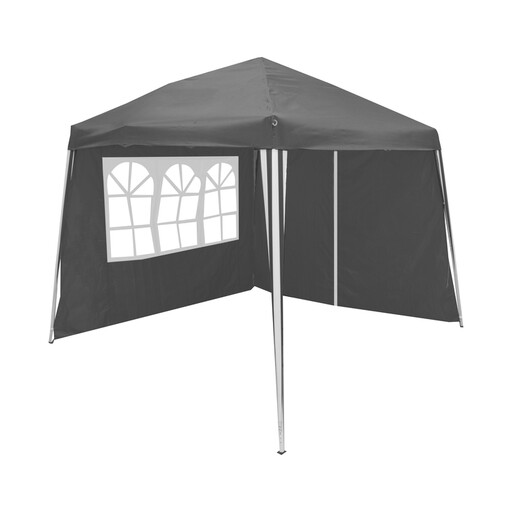
Why this product suits the profile: This folding gazebo is designed for gardens, patios, parties and festivals. It is not an outdoor sleeping tent for six people, but it can provide additional living or shaded space.
This clear distinction prevents a gazebo from being confused with a sleeping tent or a fully enclosed family tent.
300 × 300 × 245 cm, two side panels, folding design, weight of 10.8 kg and stated UV resistance of UPF50+.
A tall tipi should be pitched on a level surface. Remove stones, branches and other sharp objects before spreading out the groundsheet. With the OUTFIT model, the corners are initially secured loosely, after which the central 3 m steel pole is erected. The inner tent is then fitted.
According to the product specifications, 14 pegs and 10 guy ropes are provided for stability. Check that they remain secure regularly, particularly if the wind starts to increase. A tall tent should not continue to be used during thunderstorms or storms. Open fires, barbecues and other sources of flame must not be used inside or immediately next to the tent. Adequate ventilation is also essential when using cooking equipment.
After every use, the tent must be completely dry before being stored in its carry bag. In the long term, moisture can cause mildew stains and damage to the material. Storing the tent somewhere cool and dry will extend its usable life.
We have put together a complete, regularly updated list of products that fully meet these strict selection criteria and the safety regulations applicable in the EU.
This depends on the size, construction, ground conditions and your experience. With a model featuring a central pole, a second person should help with tensioning and guying. Allow enough time when pitching the OUTFIT tipi to secure all the corners, pegs and ten guy ropes correctly.
A tent with a stated hydrostatic head and taped seams may be designed for rainy camping conditions. However, its actual level of protection also depends on how it is pitched, the ground conditions, wind and care. A hydrostatic head of 3,000 mm is a technical comparison figure, not a blanket guarantee of weatherproofing.
For a tipi with external dimensions of 450 × 390 cm, you should also allow space for guy ropes, the entrance area and room to move around. Check the permitted pitch size before booking. Tall tents also need sufficient clearance from trees, fire pits and other obstacles.