
Lieferung heute & morgen

Qualitätsgarantie

Willkommens-Angebote freischalten: KOSTENLOSE Lieferung | Bis zu 80 % RABATT | Kostenlose 30-Tage-JoyPlus-Testphase
App herunterladen
The seasonal tire change is upon us again, and with it comes a decision: book an appointment at the garage, or take matters into your own hands? For those looking to reduce the cost and time spent on workshop visits, a DIY tire change is a practical alternative. Having the right equipment is crucial for ensuring the process is safe, efficient, and damage-free.
As your Joybuy Product Recommendation Officer, I have analyzed the market to offer you an objective guide. This article introduces a selection of tools suitable for home and semi-professional use and provides practical tips to inform your purchasing decision.
The variety of tools available can be overwhelming. The following points will help you find the right components for your needs.
A cordless impact wrench is the centerpiece for a quick tire change. It loosens tight lug nuts in seconds. Pay attention to two key features:
Modern alloy wheels are often painted or powder-coated, making them prone to scratches. Conventional steel sockets can quickly leave unsightly marks. Special impact sockets for alloy wheels are the solution. These protective wheel sockets feature an outer plastic sleeve and often an inner plastic insert as well. This prevents metal-on-rim contact, keeping the surface pristine.
An impact wrench should only be used for loosening and lightly seating the lug nuts. For the final tightening, a torque wrench is essential. It's the only way to ensure the bolts are tightened exactly to the manufacturer's specifications—not too tight and not too loose. This is a critical safety factor.
After the change, checking the tire pressure is mandatory. A mobile cordless car compressor or a portable air pump is ideal for this task. Modern devices allow you to preset the target pressure and shut off automatically, which greatly simplifies the process.
Based on functionality, material quality, and user-friendliness, we have curated a selection of products to make changing tires at home easier.
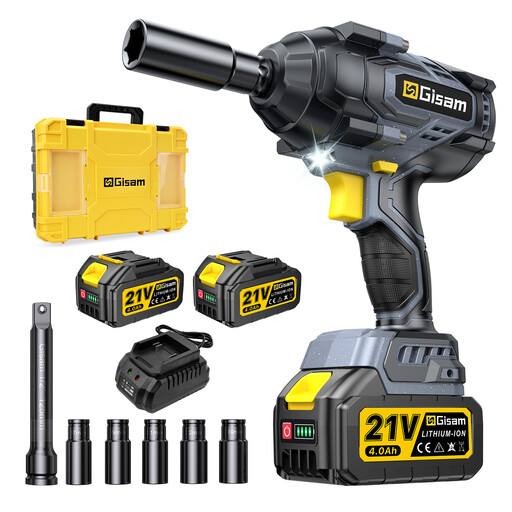
Why It's a Great Choice: This cordless impact wrench from GISAM is engineered for high performance with 1800 Nm of torque and a brushless motor. It effortlessly tackles even the most stubborn lug nuts on cars, SUVs, and light commercial vehicles. The four adjustable speed settings allow for precise power control to prevent thread damage.
Advantages:
Who It's For: Ideal for ambitious DIY mechanics and semi-professional users who regularly work on different vehicle types and need a powerful, reliable tool.
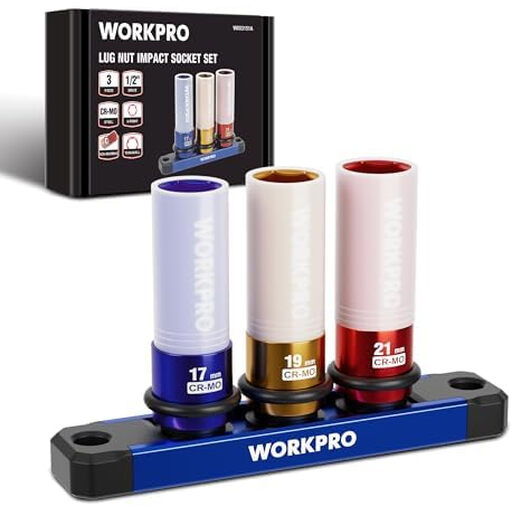
Why It's a Great Choice: This set from WORKPRO provides the essential protection for high-end rims. The sockets are made from durable chrome molybdenum steel (CR-MO) and are designed for use with impact wrenches. The outer protective sleeve and inner plastic insert prevent scratches on both the rim and the lug nuts. The color-coding makes it easy to quickly identify the correct size.
Advantages:
Who It's For: An indispensable accessory for any vehicle owner with alloy wheels. It's the perfect addition to any tire changing tool kit to prevent costly damage.

Why It's a Great Choice: Adjusting tire pressure after a wheel change is crucial. This cordless air compressor from EAFC makes the task exceptionally convenient. Thanks to its digital display, the target pressure can be set precisely (up to 150 psi / 10.3 bar). The pump stops automatically once the pressure is reached. With a 3600 mAh battery, it's suitable not only for car tires but also for motorcycles, bicycles, and sports balls.
Advantages:
Who It's For: Perfect for any driver looking for a simple and precise solution for tire pressure maintenance—whether it's after a tire change, before a long trip, or for regular checks.
The products featured here cover the core requirements for changing tires. If you are looking for specific alternatives or additional accessories, you can find a wider selection of tools for your garage in our Strapping Tools category.
1. How much torque does an impact wrench need for changing car tires? To loosen the lug nuts on an average passenger car, a breakaway torque of 300–500 Nm is usually sufficient. For larger vehicles like SUVs, or if the bolts are heavily rusted, models with 600 Nm or more provide extra power reserves and make the job significantly easier.
2. Can you use an impact wrench to tighten lug nuts on alloy wheels? No, this is not recommended. An impact wrench should only be used for loosening and gently seating the lug nuts. The final tightening must always be done manually with a torque wrench according to the vehicle manufacturer's exact specifications. Applying too much torque can damage the rims, lug nuts, or threads.
3. What belongs in a complete tire changing tool kit? A good basic kit for a DIY tire change includes: