What should you look for when buying?
Start by listing the keys your test cases require. Then compare the layout, footprint and connectivity of the specific model.
| What to consider |
What to look for |
Who is this important for? |
| Navigation keys and layout |
Check that you have Tab, Shift, Enter, the space bar, arrow keys and any other keys your test process requires. Record any active remappings. |
If I’m testing focus changes and controls without a mouse, I need the relevant keys to be easy to reach and the layout to be clear and consistent. Around 36% of consumers put navigation keys and repeatable workflows first. |
| Footprint |
Measure the available space and compare it with the dimensions of the specific keyboard. Remember to allow room for your mouse and other work essentials, too. |
If my desk also needs to accommodate a computer and other work essentials, every bit of space matters, but I don’t want the keys I need to be out of reach. Around 27% of consumers give footprint the highest priority. |
| Connectivity and switching between devices |
Check that USB-A, USB-C, Bluetooth or any required receiver is compatible with your test devices. Check the exact model, especially when comparing consumer and business versions. |
If I’m working across several test computers, the connection needs to work with each one. Around 19% of consumers prioritise connectivity and switching between devices. |
| Typing feel and day-to-day use |
Compare the mechanism and set-up of the specific model to find what works for you. The manufacturer’s comfort claims are no substitute for trying the keyboard yourself. |
If I’m working through longer test sessions, I want to understand how key presses, set-up and, where applicable, charging fit into my working day. Around 18% of consumers prioritise typing feel and ongoing maintenance. |
Joybuy products for compact workspaces
The Joybuy products below include compact keyboards with a German ISO-DE or QWERTZ layout in TKL, 75% and 65% form factors. Check that the navigation keys you need for your tests are easy to reach on the specific version.
 No image available
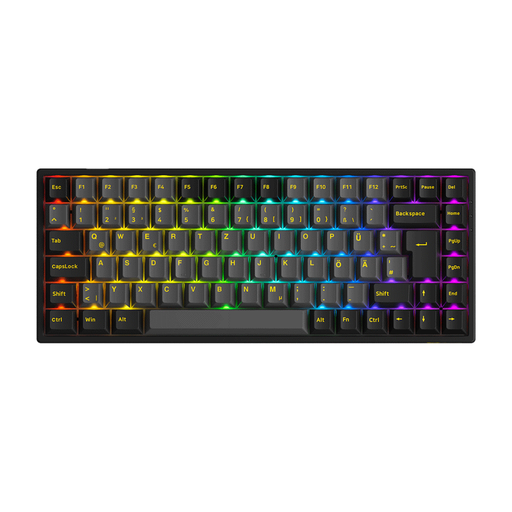
Akko 3084B Plus, 75%, ISO-DE, tri-mode
The stated 75% layout may suit a compact workspace; check that the key layout works for your test cases.
ISO-DE layout; Bluetooth, 2.4 GHz connection or USB-C; dimensions: 315 × 126 × 38 mm.
View at Joybuy
 No image available
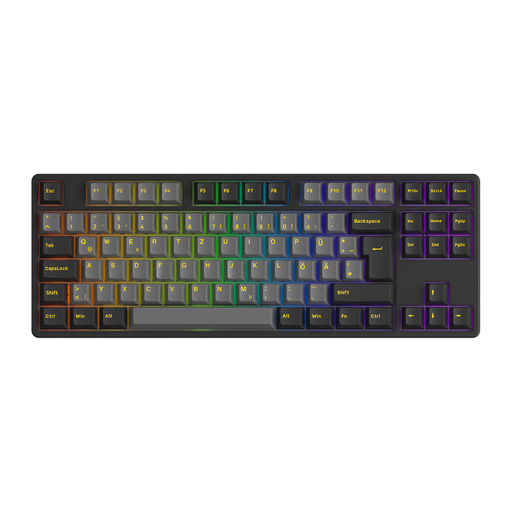
Akko 5087S V1 TKL, ISO-DE QWERTZ
The TKL form factor omits the number pad; check that the remaining keys meet your navigation testing needs.
Wired mechanical keyboard; ISO-DE QWERTZ; USB-C connection; N-key rollover.
View at Joybuy
 No image available
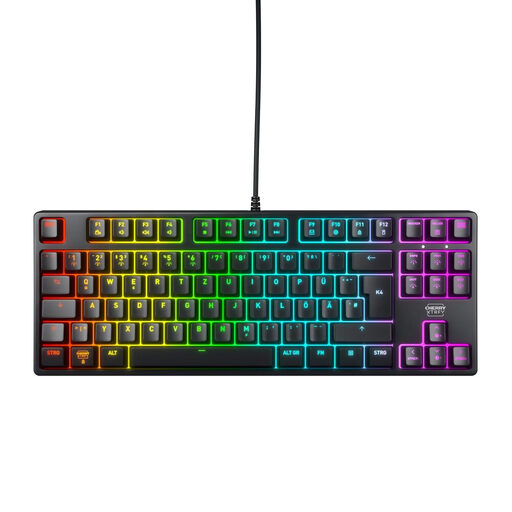
CHERRY XTRFY K4V2 TKL, German QWERTZ
The TKL layout does without a number pad; check that you can reach the keys you need for your test process.
Wired mechanical keyboard; German QWERTZ layout; USB-A; full N-key rollover; MX2A RED linear switches; RGB lighting.
View at Joybuy
 No image available
Ticktype EVO75, 75%, ISO-DE, tri-mode
The stated 75% layout is a compact form factor; compare the actual key layout with your test process.
Mechanical keyboard; ISO-DE layout; Bluetooth, 2.4 GHz wireless or wired USB-C use.
View at Joybuy
 No image available
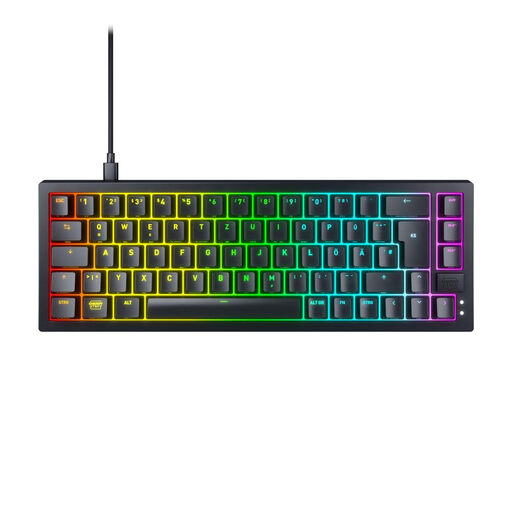
CHERRY XTRFY K5V2, 65%, German QWERTZ
The stated 65% layout is designed for an especially compact form factor; check how easily you can reach the navigation keys you need.
Wired mechanical keyboard; German QWERTZ layout; USB-C to USB-A wired connection; N-key rollover; MX2A RED switches.
View at Joybuy
Frequently asked questions
How do I start testing keyboard accessibility?
Test the focus order using Tab and Shift+Tab, and operate the relevant components with the keys intended for them. Check that focus remains visible and moves predictably. The other keys you need will depend on the component being tested; the W3C Web Accessibility Initiative explains these keyboard accessibility principles.
Do I need a keyboard with a number pad for navigation testing?
Not just for testing. If your test processes don’t require the number pad, a TKL keyboard can save space. Still, check that every key required by your test cases is within reach.
What should I bear in mind when using a remapped keyboard?
Record any active profiles and check which layout is actually in use when testing standard keyboard behaviour. This makes it easier to link any changes in the behaviour you observe to the process being tested.
What details should I check when buying a keyboard for use in Germany?
Check the applicable labelling and information requirements in the product listing, that the product is clearly identified, and that the required manufacturer details and German-language instructions are provided. The Bundesnetzagentur reminds retailers to ensure products carry the correct CE marking before they are offered for sale. For wireless models, the relevant requirements for radio equipment also apply.
Does the German Accessibility Strengthening Act automatically apply to every keyboard?
Section 1 of the BFSG doesn’t support a blanket statement. The product categories listed there include, among other things, consumer-purpose general-purpose computer hardware systems placed on the market after 28 June 2025. Whether a specific product is covered depends on its legal classification and how it is offered for sale.


