
Lieferung heute & morgen

Qualitätsgarantie

Willkommens-Angebote freischalten: KOSTENLOSE Lieferung | Bis zu 80 % RABATT | Kostenlose 30-Tage-JoyPlus-Testphase
App herunterladen
A toast bread tin with lid is designed to produce evenly shaped loaves, sandwich bread or small cakes in your home oven. In practice, however, the name alone does not determine whether it is suitable. The coating, lid design, capacity and care instructions all affect whether the bread baking tin matches your baking habits.
When shopping online in particular, some features are often described too briefly. The following points will help you assess marketing claims objectively and avoid unsuitable purchases.
A non-stick bread tin can make it easier to remove baked goods. However, the term does not automatically indicate how durable the surface is or which temperatures and cleaning products are permitted. Before buying, you should therefore check the manufacturer’s information on oven temperature, cleaning and kitchen utensils.
Metal knives, hard brushes and abrasive cleaning products can damage the coating. Even if a tin is described as dishwasher-safe, it should only be cleaned according to the specific product instructions.
The description “large toast tin” is of little help when planning recipes. A 450 g toast box is more suitable for small to medium quantities of dough, while larger tins can offer more room for a family-sized loaf. In addition to the stated weight, the internal dimensions and whether the lid can be closed completely are important.
Too much dough may stick to the lid or be pushed out as it rises. Too little dough, on the other hand, produces a flat loaf with an uneven shape.
A lid can limit how far the dough rises and help create a rectangular loaf. It does not, however, replace precise dough quantities or a suitable baking time. Before use, check that the lid is oven-safe, moves smoothly and is correctly matched to the tin. Information about the maximum temperature should also be provided.
An oven bread tin should be made from a material suitable for the stated baking temperature. Commonly used metals conduct heat relatively directly, but the actual browning also depends on the type of oven, shelf position and recipe.
For a non-stick bread tin, the following information is relevant:
The description “food-safe” should be supported by specific product information. If you are unsure, the details on the product page and packaging are decisive.
For evenly shaped toast bread, internal dimensions and filling height are more important than the external dimensions. As a guide, the tin should not be filled right to the rim. The dough needs room to rise without reaching the lid before the crust has set.
A toast bread tin with a 450 g capacity may be suitable for recipes designed for this quantity of dough or bread. If you regularly bake larger loaves, you should choose a suitably larger loaf tin with lid rather than simply scaling up recipes without adjusting the baking time.
The lid should sit securely without becoming misaligned during baking. A close-fitting design is helpful for loaves with evenly shaped sides. Information about heat distribution can provide a useful indication, but it does not replace adjustments for your own oven.
Before using the tin for the first time, we recommend that you:

Why this product suits this profile: The stated 450 g capacity makes it easier to get started with smaller toast bread and sandwich bread recipes. The lid helps create an even, rectangular shape.
The specific 450 g capacity is more informative than an unclear size description. The non-stick coating may make removal easier; care and temperature information should be checked before buying.
450 g version with lid and, according to the product description, a non-stick surface; can also be used for certain cake recipes.
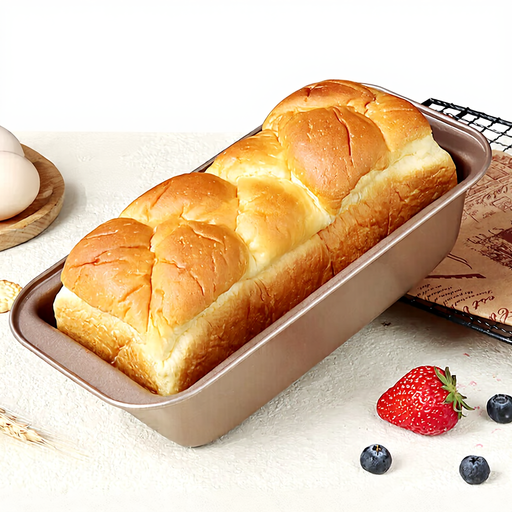
Why this product suits this profile: The larger version is aimed at households that want to bake larger loaves or cakes in the same tin as well as toast bread.
The product description specifies a large tin and a design intended for oven use. Before ordering, the exact internal dimensions and permitted temperature should be checked against your recipe.
According to the product description, a non-stick surface and intended use for bread and cakes; the tin is designed for even heat distribution.
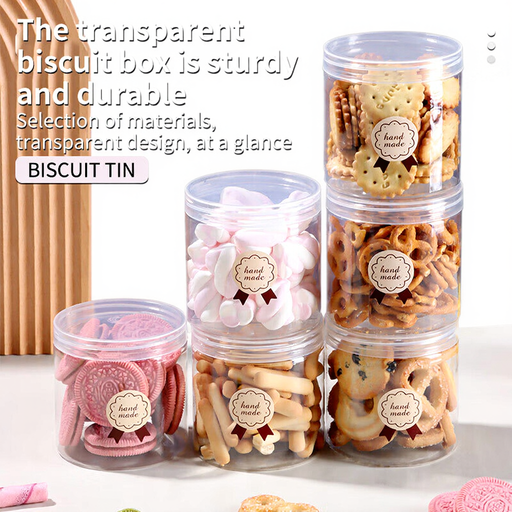
Why this product suits this profile: For frequent users who want to store homemade bread, cakes or biscuits neatly after baking. This set is an accessory and not a baking tin.
The clear distinction between uses helps prevent a common buying mistake: storage containers must not be treated as oven-safe baking tins. The six containers are intended for storing baked goods.
Six round storage containers for biscuits, cakes and other baked goods; the transparent design, according to the product description, makes it easier to see what is inside.
We have put together a complete, regularly updated list of products that fully meet these strict selection criteria and the safety regulations applicable in the EU.
For reliable results, the dough should be assessed not only by weight but also by volume. Depending on the amount of yeast, liquid content and room temperature, the volume of the dough can change considerably. The tin should therefore not be filled completely.
When using it for the first time, a simple basic recipe is recommended. This makes it easier to determine the baking time, shelf position and quantity of dough. If you use the lid, leave the bread in the tin briefly after baking, then transfer it to a wire rack to cool. Moisture trapped beneath the lid can make the crust softer.
This depends on the material, coating and approved temperature range. If the product description states that it can be used as a cake baking tin, it may be suitable for sponge cakes or compact cake recipes. The baking time and quantity of dough must be adjusted to suit the tin.
Not always, but a thin layer of fat can provide extra reassurance with certain types of dough. The manufacturer’s care instructions are decisive. Avoid sprays containing unknown additives and metal utensils if they could damage the coating.
It is not possible to give a fixed lifespan in general terms. It depends on how often the tin is used, the temperature, storage and cleaning. Visible scratches, peeling coating, deformation or a lid that no longer fits properly are all reasons to stop using the tin for food.