
Lieferung heute & morgen

Qualitätsgarantie

Willkommens-Angebote freischalten: KOSTENLOSE Lieferung | Bis zu 80 % RABATT | Kostenlose 30-Tage-JoyPlus-Testphase
App herunterladen
A good toaster is an essential part of breakfast in many households. But the search for the right model can quickly become overwhelming. It's often only after the purchase that you discover the appliance toasts unevenly, the slots are too small for your favourite type of bread, or it breaks down after just a few months. To help you with your selection, we'll highlight the most common pitfalls and show you which features really matter.
Manufacturers often advertise a long list of features, but not all of them are relevant for daily use. Pay attention to these three points to avoid a bad investment:
To find the right toaster for your needs, you should focus on a few crucial technical features.
The first question relates to the size of your household and your breakfast habits.
The housing material affects not only the appearance but also the safety and durability of the appliance.
Some additional features offer real value in everyday use.
Based on the criteria mentioned, we have identified a few models suitable for different user profiles.
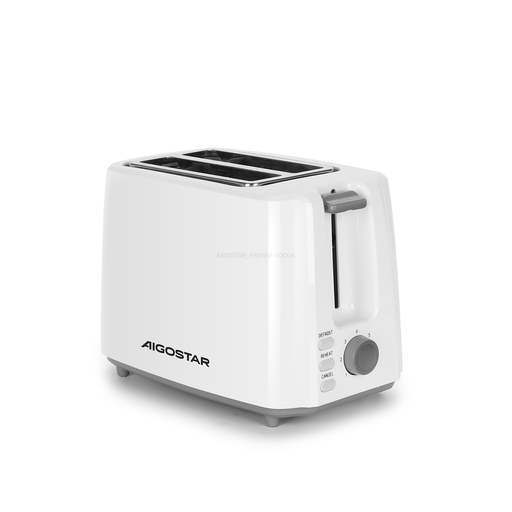
Why This Fits Their Persona: This model focuses on the essentials: reliable toasting. It's ideal for users looking for a straightforward, space-saving appliance for daily use without paying for unnecessary extras.
It avoids the pitfall of superfluous features. Instead of a complex display, it offers a simple rotary dial with seven browning levels, enabling precise and repeatable control of the core function.
The combination of dual-sided heating technology for even results and a removable crumb tray makes it a practical and low-maintenance daily helper.
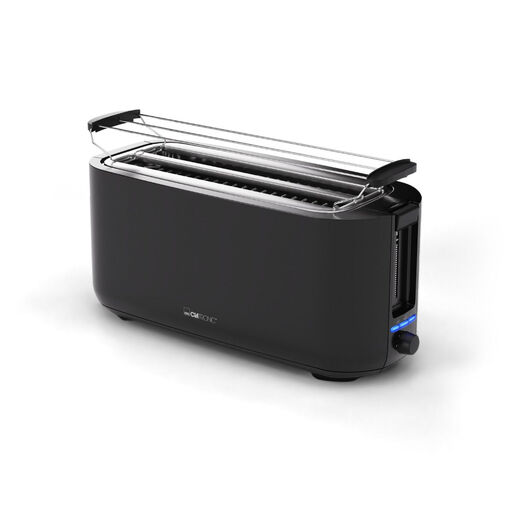
Why This Fits Their Persona: For families where mornings are rushed, capacity is key. This long-slot toaster can prepare up to four slices at once and offers additional flexibility with its warming rack.
It bypasses the problem of poor build quality with a heat-insulated cool-touch housing that remains safe even under heavy use. The solid construction is designed for regular use in a family household.
Its high capacity for four slices and the detachable warming rack make it extremely versatile. Features like defrost and reheat complete the package for daily family life.
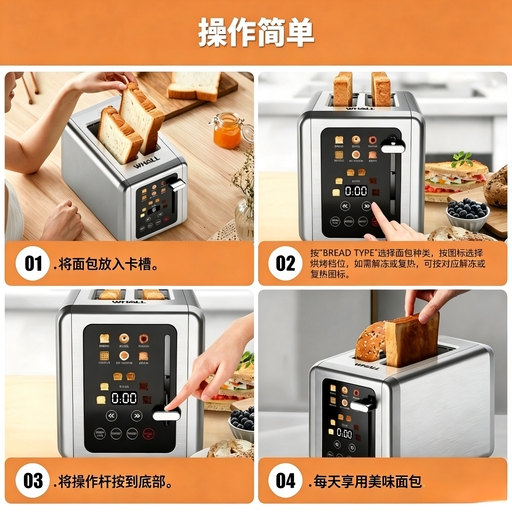
Why This Fits Their Persona: For users who value aesthetics, modern controls, and precise results. The brushed stainless steel housing and touch display make it a standout piece in any modern kitchen.
This model combines smart features with solid hardware. The 1.5-inch wide slots and efficient heating technology ensure even browning, while the touch display allows for intuitive control of useful programs (e.g., for bagels, waffles).
The high-resolution LED color display with a countdown timer and the memory function for preferred settings offer superior user convenience. Six predefined bread modes deliver consistent results for various baked goods.
We have compiled a complete, up-to-date list of products that fully meet these strict selection criteria and adhere to all relevant safety standards.
1. How do you clean a toaster correctly and safely? Always unplug the toaster and let it cool down completely before cleaning. Remove and empty the crumb tray. Then, turn the toaster upside down over a sink or bin and shake it gently to dislodge any stuck crumbs. Wipe the housing with a slightly damp cloth. Never immerse the appliance in water.
2. What is the difference between a long-slot toaster and a 4-slice toaster? A classic 4-slice toaster has four separate, short slots. A long-slot toaster, on the other hand, has two very long slots. The advantage of the long-slot model is its flexibility: you can toast either four standard slices of toast or two long slices from a loaf of bread (e.g., rustic bread), which is not possible with a standard 4-slice toaster.
3. Why does my toaster brown unevenly? Uneven browning can have several causes. It is often due to uneven heat distribution from the heating elements. Many appliances also lack an automatic bread-centring mechanism, which ensures the slice is positioned centrally between the heating elements. The type of bread and its moisture content can also affect the result. In higher-quality models, this problem is minimised through better design and construction.