
Lieferung heute & morgen

Qualitätsgarantie

Willkommens-Angebote freischalten: KOSTENLOSE Lieferung | Bis zu 80 % RABATT | Kostenlose 30-Tage-JoyPlus-Testphase
App herunterladen
A toaster is part of the daily kitchen equipment in many households. Even so, it is often only after buying one that you discover whether a model suits your preferred bread, available worktop space and usage habits. Common problems are not usually caused by missing features, but by choosing the wrong model.
Three common buying misconceptions:
Before buying, it is therefore worth comparing your own habits with the technical specifications.
A 2-slice toaster is usually sufficient for singles, couples and smaller kitchens. If you regularly prepare breakfast for several people, choose a model with a higher capacity. A 4-slice toaster often has four individual slots. A long-slot toaster, on the other hand, can accommodate up to four smaller slices in two long slots.
Extra-wide slots are important for thickly sliced farmhouse bread, bagels or bread rolls. The width should be explicitly stated in the product specifications. For example, the ProfiCook PC TA 1279 has slots measuring 40 mm wide, while the Dreame ToastControl Smart Toaster has 38 mm wide slots. Such details are more meaningful than general marketing claims such as ‘suitable for all types of bread’.
The amount of worktop space required is also important. A long-slot toaster may look narrower, but is often longer. Check the width, depth and height, including the clearance needed from walls or wall units.
A toaster with adjustable browning allows you to adapt the result to different types of bread and personal preferences. However, the number of settings alone does not tell you everything. It is important to know whether the adjustment is continuous or uses fixed levels, and whether the bread is automatically centred.
A defrost function is useful when using bread straight from the freezer. The reheat function is suitable for warming slices that have already been toasted, without starting a full toasting cycle. If you often prepare bagels, look for a clearly stated bagel function. This is not included with every toaster featuring extra-wide slots.
A toaster with a bun warmer extends its use to bread rolls, croissants and similar baked goods. Check whether the rack is removable or integrated, and whether it appears sufficiently stable. For everyday use, an automatic switch-off, a stop button and enough lift to raise smaller slices are also useful.
A removable crumb tray makes regular cleaning easier. It should be easy to access and fully removable. Otherwise, crumbs can accumulate inside the appliance and make cleaning more difficult.
A metal or stainless-steel housing can complement a modern kitchen. However, the material alone is not proof of a particular service life. Also look for non-slip feet, a heat-insulated outer surface and clear operating instructions.
For use in Germany, the mains voltage and frequency must be compatible with the power supply. The product specifications should state 220–240 V or suitable electrical values. As a general rule, only use a toaster on a stable, dry and heat-resistant surface, do not clean it with water and never insert metal objects into the slots.
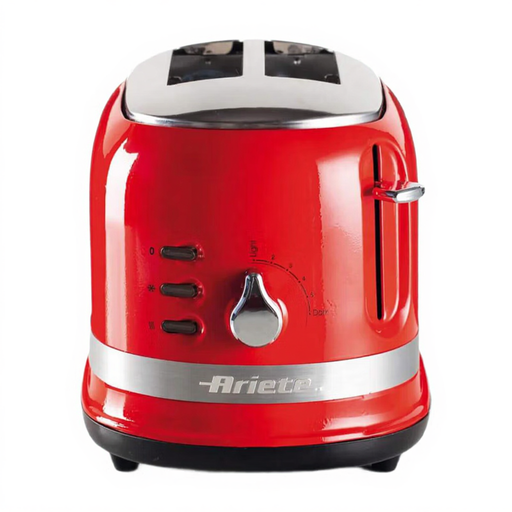
Why this product suits this profile: This compact model is ideal for households that want to toast two slices and prefer straightforward controls.
The removable crumb tray helps avoid laborious cleaning inside the appliance. Adjustable browning means you are not limited to a single fixed toast setting.
2-slice design, 815 W power consumption and product dimensions of 29 × 19 × 21 cm.
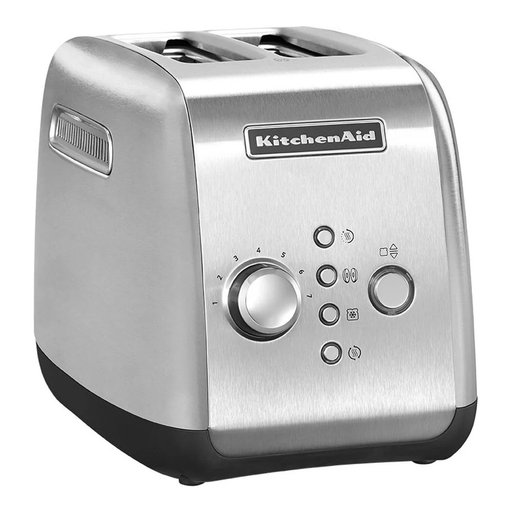
Why this product suits this profile: This model is aimed at buyers looking for a metal housing, precise settings and additional programmes in a 2-slice toaster.
The features are clearly specified: seven browning levels, extra-wide slots, plus bagel, defrost and keep-warm functions.
All-metal housing, 1,100 W, and automatic lowering and raising of the toast.
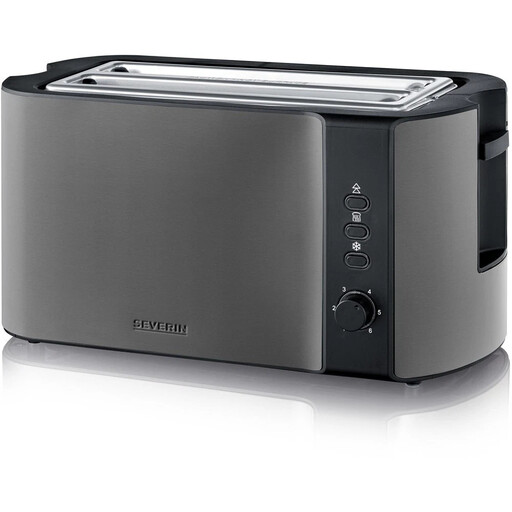
Why this product suits this profile: For families or frequent users, the long-slot design provides space for up to four smaller slices of bread, as well as an integrated bun warmer.
The capacity is clearly stated, so ‘long-slot’ cannot be confused with four separate slots. The rack is integrated.
Two long slots, 1,400 W, defrost and reheat functions, plus a removable crumb tray.
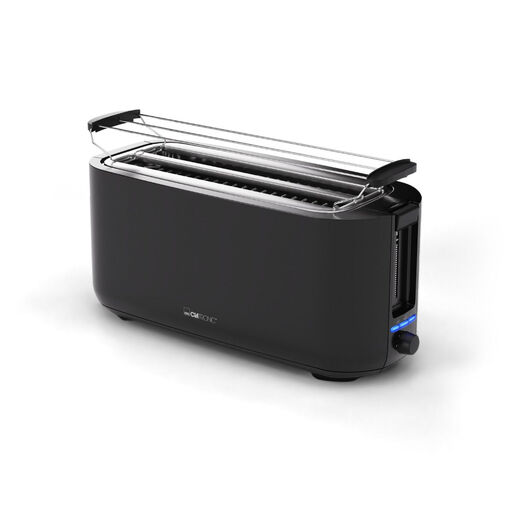
Why this product suits this profile: The 4-slice design is ideal for households where several slices of toast need to be prepared at the same time.
The capacity is clearly stated as a 4-slice toaster with long slots. Defrosting, reheating and quick-stop functions are listed separately.
Four-slice capacity, removable bun warmer, crumb tray and continuously adjustable browning.
We have put together a complete, regularly updated list of products that fully meet these strict selection criteria and the safety regulations applicable in the EU.
Its service life depends on how intensively it is used, how well it is cleaned, the quality of its materials and whether it is operated correctly. A blanket figure in years would not be reliable. Regularly emptying the crumb tray, ensuring sufficient ventilation and disconnecting the appliance from the mains after use can help support day-to-day operation. If the cable is damaged, you notice an unusual smell or the appliance malfunctions, stop using it.
Consumption depends on the appliance’s power rating and its actual operating time. A 1,000 W appliance uses approximately 0.167 kWh when operated for ten minutes. The actual cost depends on your electricity tariff and how long you use it. A higher wattage may allow for shorter toasting times, but it is not the only measure of the final result.
That depends on your breakfast routine. If you regularly warm bread rolls, croissants or waffles and would rather not use the oven, a toaster with a bun warmer could be a useful choice. For households that only prepare thin slices of toast, a compact toaster without this accessory is often sufficient. A stable rack, enough clearance from flammable objects and easy cleaning are the key considerations.