
Lieferung heute & morgen

Qualitätsgarantie

Willkommens-Angebote freischalten: KOSTENLOSE Lieferung | Bis zu 80 % RABATT | Kostenlose 30-Tage-JoyPlus-Testphase
App herunterladen
A toaster is a daily kitchen essential in many British households. Yet it’s often only after you’ve bought one that you realise whether it actually suits your habits. A compact 2-slice toaster can be enough for singles and couples, while families will benefit from a 4-slice toaster or a long-slot toaster.
What really matters isn’t just the wattage or the design. Before you buy, you should think about which types of bread you toast regularly, how much worktop space you have, and whether cleaning and everyday operation will be straightforward.
A toaster with 8 browning levels gives you more choice when setting it. That’s handy, but it doesn’t replace the right slot size and even centring. Thin slices of toast, thick farmhouse bread or bagels all need different conditions. So also look for automatic bread centring and the shape of the slots.
The description may only refer to parts of the casing. Often the controls, base or internal components are made of plastic or other materials. So check the specific material details. A stainless steel casing can be easy to clean and look the part, but it shouldn’t be taken as the sole sign of quality.
A toaster with a bun warmer is worthwhile if you regularly heat up rolls, croissants or other baked goods. The defrost function is ideal for frozen bread, while the reheat function warms already toasted slices without browning them further. If you rarely use these features, you probably don’t need a complicated model.
A 2-slice toaster usually takes up less worktop space and fits well in smaller kitchens. A 4-slice toaster or a model with long slots can handle several slices at once. With a long-slot toaster, though, the actual slot length is key: it needs to suit the bread slices you use.
For thick slices, bagels or artisan bread, extra-wide slots are very practical. The Dreame model, according to the product details, has 38-millimetre-wide, self-centring slots. For standard toast, a classic format is often sufficient.
The power rating in watts describes the electrical connection value, not automatically the speed or evenness of toasting. Models in our selection range from 700, 830, 900 to 1,200 watts, for example. More important for daily use are:
A toaster with 8 browning levels allows finer adjustment than one with six levels. However, the right setting depends on the type of bread, slice thickness and moisture content.
A removable crumb tray makes regular cleaning much easier. Crumbs shouldn’t be left inside the toaster for long, as they can cause unpleasant smells or smoke when reheated. The main casing must not be immersed in water.
Also look out for:
During operation, the casing, heating elements and baked goods become very hot. Never use knives or other metal objects to remove stuck bread. Unplug the toaster first and let it cool down completely.
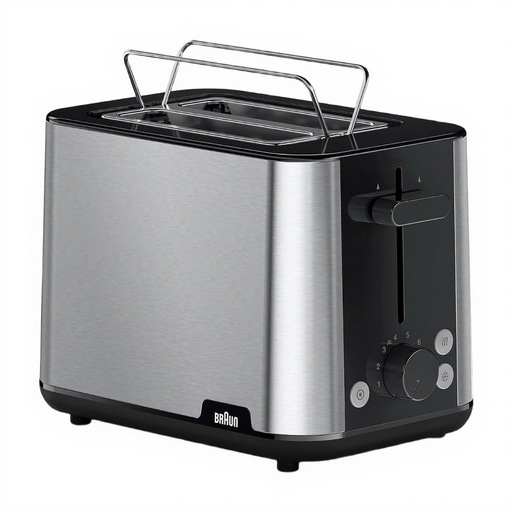
Why this product fits the profile: This compact 2-slice toaster runs at 900 watts and offers eight adjustable browning levels to suit different preferences.
The combination of eight levels, bread centring, plus defrost and reheat functions reduces reliance on a single standard setting.
900 watts, eight browning levels, integrated bun warmer and removable crumb tray.
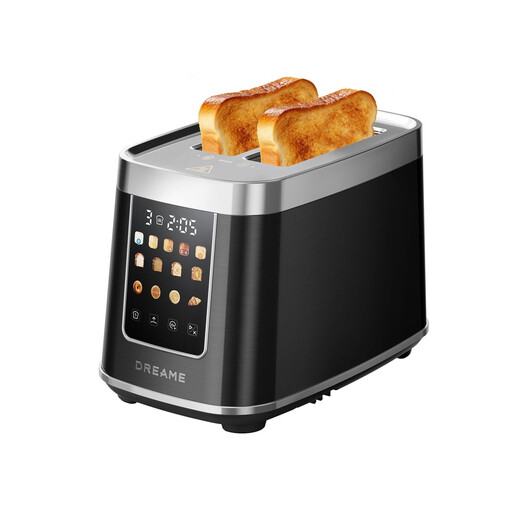
Why this product fits the profile: This model combines a stainless steel casing with touchscreen controls, six browning levels and eight pre-set bread programmes.
The 38-millimetre-wide slots address the issue of different thicknesses of baked goods. Quick-Check and a motorised lift mechanism allow controlled operation.
1,200 watts rated power, 38-millimetre slots, memory function, defrost, reheat and removable crumb tray.
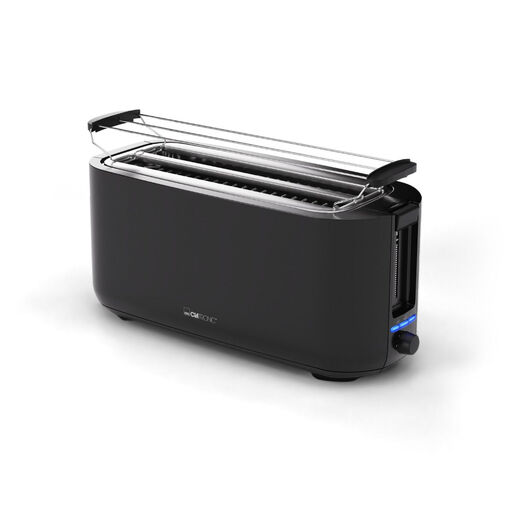
Why this product fits the profile: The four-slice capacity and long slots are designed for families or households where several baked goods need to be prepared at the same time.
The format cuts down waiting time when there are several people. The removable bun warmer is intended for rolls and irregularly shaped baked goods.
Four slices, long slots, variable browning control, defrost, reheat and quick-stop functions, plus crumb tray.
We’ve put together a full, regularly updated list of products that fully meet these strict selection criteria and the safety regulations in force across the EU.
The lifespan depends on how often you use it, how well you clean it, where you store it and the strain on the heating elements. Empty the crumb tray regularly, avoid getting baked goods stuck, and unplug the toaster when not in use. If you notice smoke, an unusual smell or a damaged cable, stop using the appliance.
The consumption depends on the power rating and how long it runs. A 900-watt appliance running for ten minutes would theoretically use about 0.15 kilowatt-hours. In practice, a toaster usually runs for much less time. To work out the cost, multiply the consumption by your personal electricity rate.
Yes, provided the model has a defrost function and the user manual says it’s suitable for the type of baked goods you’re using. Remove all packaging completely. Filled, coated or wrapped foods should not be placed in the toaster.