
Lieferung heute & morgen

Qualitätsgarantie

Willkommens-Angebote freischalten: KOSTENLOSE Lieferung | Bis zu 80 % RABATT | Kostenlose 30-Tage-JoyPlus-Testphase
App herunterladen
A toaster is part of the daily kitchen setup in many German households. Even so, unclear product details and overemphasised features can quickly lead to the wrong purchase. It is not just the wattage or a stainless steel body that matters, but the combination of slot size, browning control, cleaning and safety features.
High power can shorten heating time, but on its own says little about how evenly the toast will brown. Other important factors include automatic bread centring, suitably positioned heating elements and a clearly adjustable browning setting. A 750-watt 2-slice toaster may be sufficient for a small household, while a higher-powered 4-slice toaster may be more practical for several people.
A long-slot toaster or a model with wide-slot openings can accommodate thicker slices of bread, bagels or bread rolls. However, buyers should pay attention to the precise dimensions. For example, the ProfiCook PC TA 1279 specifies 40 mm-wide toast slots. For particularly large bagels, filled baked goods or products with very uneven shapes, suitability still depends on the instruction manual.
A toaster with a defrost or reheat function is practical for everyday use. However, crumb build-up is often underestimated. A toaster with a crumb tray is easier to clean than a model in which crumbs remain inside the housing. The tray should be emptied regularly, as accumulated residue makes cleaning more difficult and may create an additional safety risk.
A toaster with an adjustable browning level should offer several clearly graduated settings or continuous adjustment. Actual browning also depends on the type of bread, moisture content, thickness and starting temperature. This is why settings such as “1 to 7” cannot be compared across different brands.
Useful additional functions include:
A stainless steel toaster can be easy to wipe clean and complements many kitchen styles. However, stainless steel does not automatically mean that all external surfaces stay cool. A heat-insulated housing, non-slip feet and an easily accessible cancel function are also important for everyday use.
For use in Germany, the appliance should be designed for 220–240 volts and comply with the relevant European safety requirements. Before buying, it is advisable to check the instruction manual, manufacturer’s information and included accessories. Knives, forks or other metal objects must never be inserted into the slots. Before cleaning, the toaster must be disconnected from the mains and allowed to cool completely.
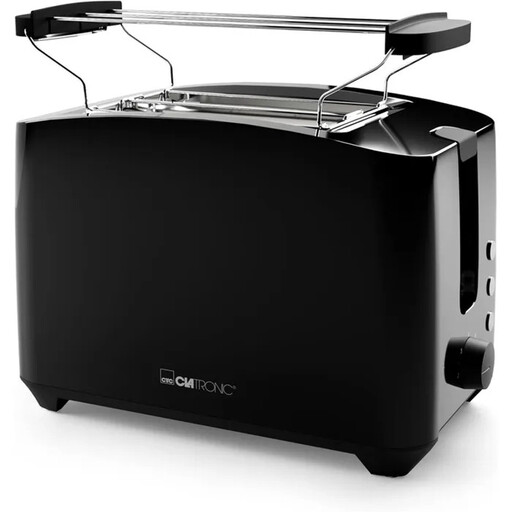
Why this product suits the profile: This 2-slice toaster is designed for smaller households and combines 750 watts with seven adjustable browning levels, an integrated bun warmer and compact controls.
The product details specify concrete features rather than simply making design claims: browning control, centring, a crumb tray and automatic safety switch-off.
Seven browning levels, defrost, reheat and quick-stop functions, plus a cable tidy.
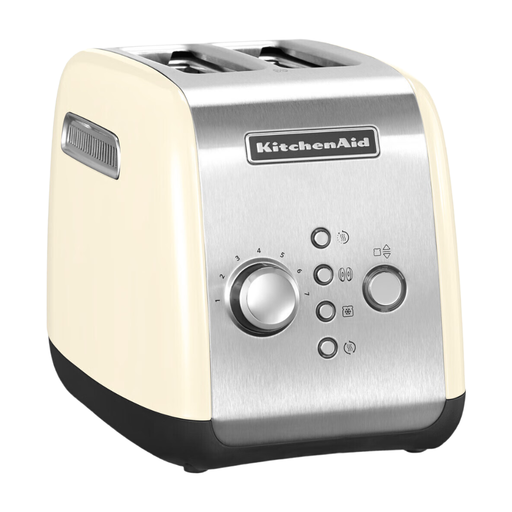
Why this product suits the profile: This model offers two extra-wide slots, seven browning levels and dedicated programmes for bagels, frozen bread and keeping toast warm.
The specific slot width and separate programmes make it easier to assess whether the toaster is suitable for different baked goods before buying.
Bagel, defrost and keep-warm functions, two wide slots and a removable crumb tray.
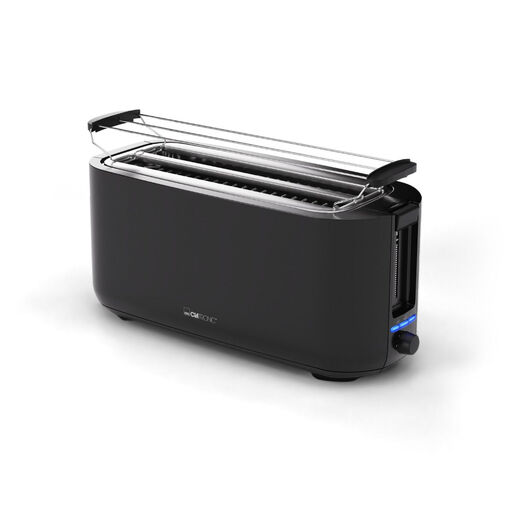
Why this product suits the profile: Four slices and long slots are designed for family breakfasts or several portions prepared one after another. The bun warmer extends its use to bread rolls and ready-made waffles.
The capacity is clearly specified as a 4-slice design. The cool-touch housing, non-slip feet and automatic switch-off add to its features.
1200–1400 watts, continuously adjustable browning level, defrost, reheat and quick-stop functions, plus a crumb tray.
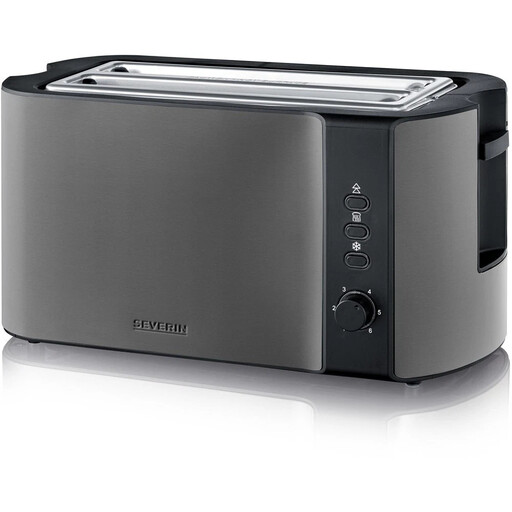
Why this product suits the profile: According to the product description, the two extra-long slots can accommodate up to four slices of bread. This is useful when worktop space is limited but you still want to toast different bread sizes.
This design combines a stated capacity with automatic bread centring. You therefore do not necessarily need to choose a wide 4-slice toaster.
1400 watts, integrated stainless steel bun warmer, defrost and reheat functions, plus a removable crumb tray.
We have put together a complete, regularly updated list of products that fully meet these strict selection criteria and the safety regulations applicable in the EU.
A toaster should be placed on a level, dry and heat-resistant surface. Keep it away from curtains, paper and other flammable materials. The crumb tray should be emptied regularly; external surfaces can generally be cleaned with a slightly damp cloth. The appliance must not be immersed in water.
If bread becomes stuck, remember: unplug the appliance, allow it to cool and do not use metal objects. Children should only operate a toaster under supervision. After use, it is advisable to switch the appliance off and disconnect it from the mains.
Many 2-slice toaster models have a power rating of around 700 to 1100 watts. 4-slice toasters and more powerful long-slot models can reach 1200 to 1600 watts. Wattage mainly affects the available heating power; it is not the only measure of even browning.
Its service life depends on how often it is used, cleaning, material quality and proper operation. Regularly removing crumbs, keeping the toaster in a dry location and following the manufacturer’s instructions can help prolong its use. If the cable is damaged, the appliance becomes unusually hot or develops a fault, it should no longer be used.
A toaster usually runs for only a few minutes per use. Actual consumption depends on its power rating, operating time and frequency of use. A higher-wattage model may work more quickly, but it draws correspondingly more power while operating. Some appliances specify a standby consumption of no more than 0.5 watts; the relevant manufacturer’s data is decisive.