
Lieferung heute & morgen

Qualitätsgarantie

Willkommens-Angebote freischalten: KOSTENLOSE Lieferung | Bis zu 80 % RABATT | Kostenlose 30-Tage-JoyPlus-Testphase
App herunterladen
A toaster is part of the everyday kitchen set-up in many British homes. But eye-catching designs, lots of programmes and high wattage don’t automatically make for the right buying decision. If you’re looking to buy a toaster, focus above all on how you’ll use it, the slot width and how easy it is to clean.
Higher power can shorten the heating time, but it doesn’t tell you much on its own about how evenly the bread will brown. The distribution of the heating elements, how well the bread is centred and the available browning settings also matter. A 1,400-watt appliance won’t make sense for every household if you usually toast just two thin slices.
Standard slots can be too narrow for thick farmhouse bread, bagels or bread rolls. If the bread gets stuck or sticks out a long way, it’s more likely to heat unevenly. If you eat different types of bread, extra-wide toaster slots or a long-slot toaster are often a more practical choice.
Defrost, reheat and bagel functions sound useful, but not every household needs them regularly. It’s important that the buttons are clearly separated and that there’s a stop function. A warming rack should also sit securely and leave enough space between the bread and the heating elements.
A 2-slice toaster usually fits better in smaller kitchens and is enough for singles, couples or an individual breakfast. For families or larger households, a 4-slice toaster can speed up breakfast preparation. A long-slot toaster is another option: depending on the design, its two long slots can hold up to four standard slices, while taking up less space than four separate slots.
Also look for independent controls. Some 4-slice models let you set each pair of slots separately. This is handy if you want different browning levels.
Standard slots are fine for ordinary sliced bread. If you regularly toast bagels, thick slices, waffles or bread rolls, check the measurements. Extra-wide slots of around 38 to 40 millimetres can accommodate a range of baked goods. However, suitability depends on the shape and height of the food, as well as the manufacturer’s guidance.
Toasters are designed for suitable, dry baked goods. Butter, cheese, jam, sugar coatings and filled products can melt, drip and dirty the heating elements. Don’t put these foods directly into the toaster slots.
Variable browning settings make it easier to adjust the toaster to the type of bread and your personal preference. Depending on the model, there may be six, seven or eight settings. More settings don’t automatically mean more precise control if the differences between them are barely noticeable in practice.
These functions can be useful:
A stainless-steel toaster isn’t automatically easier to look after than a plastic model. Fingerprints can show up more clearly on smooth metal surfaces. What matters is a removable crumb tray, easily accessible controls and a casing that can be wiped clean with a slightly damp cloth.
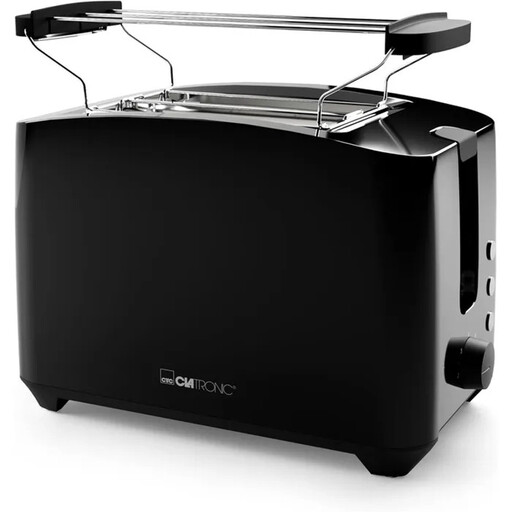
Why this product suits this type of household: This 2-slice toaster has seven browning settings, reheat, defrost and quick-stop functions, plus an integrated bun warmer for everyday use.
The controls for defrosting, reheating and stopping are separate. The crumb tray makes regular cleaning easier.
750 watts, seven browning settings, automatic safety shut-off, non-slip feet and cord storage.
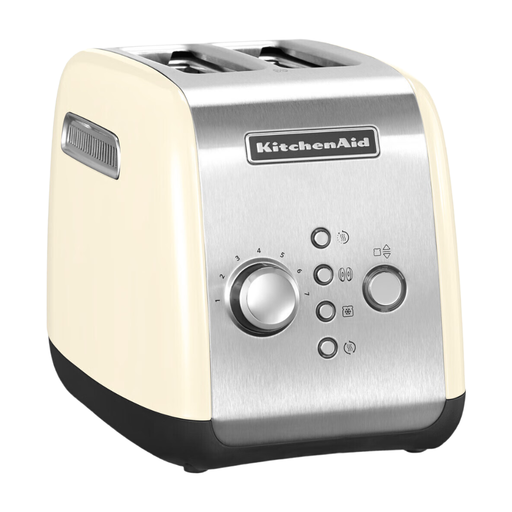
Why this product suits this type of household: This model combines a stainless-steel casing with two extra-wide slots, seven browning settings and an automatic lift mechanism.
The wide slots are designed for thicker slices of bread, bagels and a range of baked goods. The high-lift function makes smaller pieces easier to remove.
1,100 watts, bagel, defrost and keep-warm functions for up to three minutes, plus seven browning settings.
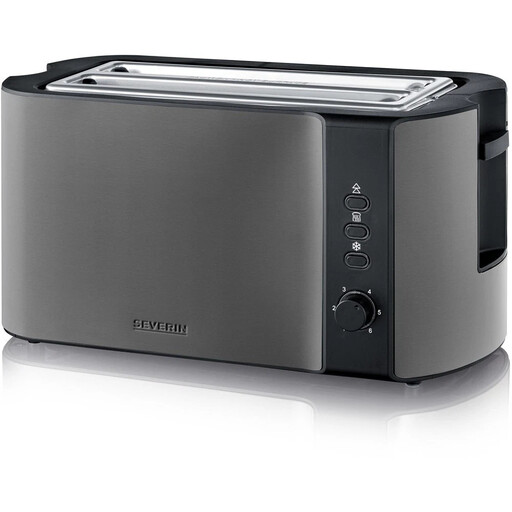
Why this product suits this type of household: According to the product details, the two long slots can hold up to four slices of bread. The integrated bun warmer is handy for regular breakfasts with several people.
The long slots make it easier to toast more than narrow standard slices. Bread-centering and adjustable browning help you get more even results.
1,400 watts, defrost and reheat functions, a heat-insulated stainless-steel casing and a removable crumb tray.
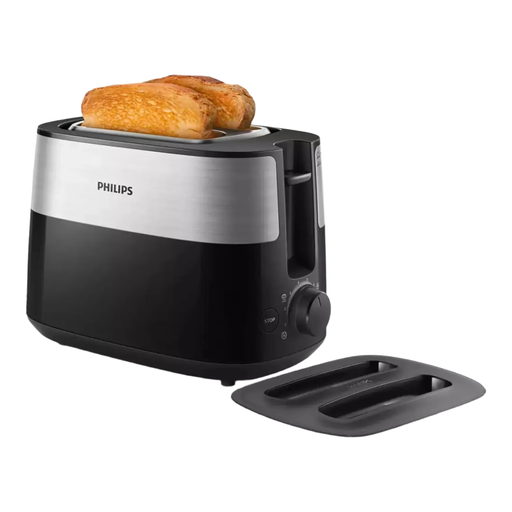
Why this product suits this type of household: Two large variable-width slots, eight browning settings and a bun warmer cater for different types of bread and ways of toasting.
The eight settings let you fine-tune the browning. High-lift, a dust cover and a crumb tray make it easier to use, store and clean.
830 watts, defrost and reheat functions, automatic shut-off, cord storage and a heat-insulated casing.
We’ve put together a complete, regularly updated list of products that meet these strict selection criteria and the safety regulations in force in the EU.
Place your toaster on a stable, dry, heat-resistant surface. Leave enough space between it and walls, wall units, curtains and other flammable materials. The cord must not touch hot surfaces.
For safe use, also follow these points:
Keeping your toaster clean can reduce the build-up of crumbs, but it doesn’t replace using the appliance properly. If you have a retro or stainless-steel toaster, follow the manufacturer’s care instructions too, as coated surfaces can vary in how delicate they are.
A standard 2-slice toaster is often rated at around 700 to 1,100 watts. 4-slice toasters and long-slot models may use 1,200 to 1,600 watts. The right power rating depends on capacity, the heating system and how often you plan to use it.
There’s no single answer. It depends on build quality, daily use, cleaning and correct operation. Emptying the crumb tray regularly, avoiding unsuitable foods and unplugging the toaster after use can help keep it working well.
Electricity use depends on the power rating and how long the toaster runs. A 1,000-watt appliance running for six minutes uses around 0.1 kilowatt-hours. Ideally, don’t leave your toaster plugged in when it’s not in use. Running costs therefore depend mainly on how long and how often you use it, and whether it has an automatic shut-off.