
Lieferung heute & morgen

Qualitätsgarantie

Willkommens-Angebote freischalten: KOSTENLOSE Lieferung | Bis zu 80 % RABATT | Kostenlose 30-Tage-JoyPlus-Testphase
App herunterladen
A toaster is part of the everyday kitchen kit in many homes. Yet unclear product details and overhyped convenience features often lead to the wrong purchase. What matters isn’t how many programmes are listed on the box, but whether the design, slot size, capacity and cleaning requirements suit your everyday routine.
A high wattage can mean the toaster heats up quickly. But it doesn’t tell you how evenly it browns your bread. Reliable bread centring, well-positioned heating elements and adjustable browning are important too.
A 4-slice toaster usually has four separate slots. A long-slot toaster, on the other hand, may have two longer slots, each wide enough for two smaller slices. So check the actual slot layout and the toaster’s overall dimensions. In a small kitchen, a 2-slice toaster or a compact long-slot model may be more practical than a wide toaster with four separate chambers.
A toaster with defrost or reheat functions is useful if you regularly use frozen bread or toast that has gone cold. But for bagels, thick slices of bread and waffles, wide slots are more important. If you’re looking for a toaster for bagels and buns, also check whether it comes with a bun warming rack or a dedicated bagel programme.
A 2-slice toaster is often enough for one person or a two-person household. Families and larger households may prefer a 4-slice toaster or a long-slot toaster that can hold up to four slices.
Look out for:
A toaster with adjustable browning should offer several clearly distinct settings or continuous adjustment. The actual level of browning can vary depending on the type of bread, its moisture content and the thickness of the slice.
Standard slots are often fine for everyday sliced bread. If you like to warm bagels, thick-cut farmhouse bread, toast buns or waffles, look for a model with a clearly stated wider slot. For example, the ProfiCook PC TA 1279 has 40 mm-wide slots. This is a specific, verifiable measurement that’s easier to assess than a general claim such as “suitable for all types of bread”.
A toaster with a bun warming rack heats buns, croissants and pastries above the slots. The rack should be removable, so the appliance takes up less space when not in use and is easier to clean.
A removable crumb tray makes regular cleaning easier. Don’t leave crumbs inside the toaster for long periods, as they can heat up. The toaster must never be immersed in water. Before cleaning, unplug it from the mains and allow it to cool completely.
Also look for:
Never put knives, forks or other metal objects into the slots. If bread gets stuck, unplug the toaster and wait for it to cool down.
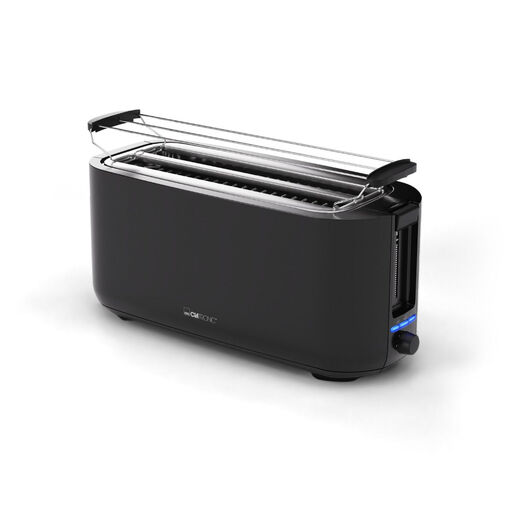
Why it suits this profile: Four toast slots and a removable bun warming rack make it a good choice for family breakfasts and a variety of baked treats.
Adjustable browning, a crumb tray and defrost, reheat and stop functions make the features clear and easy to assess.
Four-slice capacity, automatic shut-off, heat-insulated housing and a stated power rating of 1,200–1,400 W.
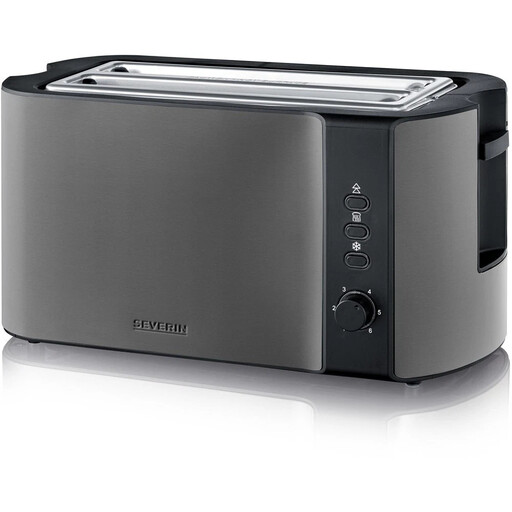
Why it suits this profile: Its long design holds up to four slices of bread while remaining narrower than many toasters with four separate slots.
Automatic bread centring, adjustable browning and a removable crumb tray address the practical details that matter day to day.
Stainless steel housing, integrated bun warming rack, defrost and reheat functions; rated at 1,400 W.
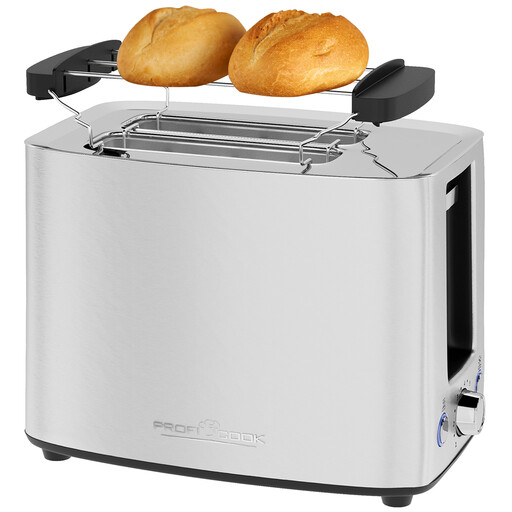
Why it suits this profile: This 2-slice toaster is for anyone who wants to warm bagels, toast buns and waffles in a compact appliance.
The stated 40 mm slot width means its suitability for thicker baked goods is backed up by a specific measurement, rather than a general claim.
Stainless steel housing, continuously adjustable browning, centring function, defrost/reheat function and removable bun warming rack.
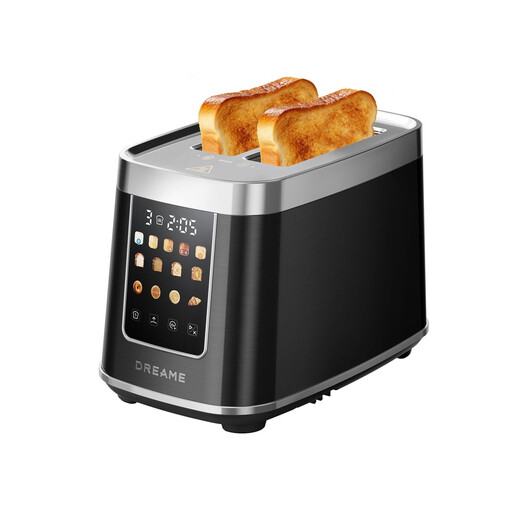
Why it suits this profile: A touchscreen, eight bread programmes and six browning levels appeal to anyone who prefers to choose settings digitally.
The 38 mm slots, countdown and Quick-Check function are specific features, not just a vague promise of “smart” controls.
Motorised lift function, memory function, defrost and reheat programmes, plus a removable crumb tray.
We’ve put together a comprehensive, regularly updated list of products that meet these strict selection criteria and fully comply with the safety regulations in force in the EU.
Its lifespan depends on how often you use it, how well you clean it and the quality of its materials. Emptying the crumb tray regularly, keeping the toaster in a dry place and following the instructions can all help it last longer. If the cable is damaged, the toaster gives off an unusual smell or it stops working properly, don’t use it.
Electricity use depends on the toaster’s power rating and how long it runs. A 1,000-watt toaster running for five minutes uses around 0.083 kWh in theory. Actual consumption depends on the browning setting, heating time and how you use it. To work out the running cost, multiply the energy used by your current electricity rate.
Only warm buns, croissants and similar baked goods on a bun warming rack designed for the purpose, and only if the manufacturer allows it. Fat, fillings or sugar can drip into the slots and create a safety risk. Always follow the instructions for your particular toaster.