Fans of long rye bread slices
If you mainly toast bread that may not fit in standard slots, measure your slices and compare them with the toaster slot dimensions.


Choose a toaster based first on the length, height and thickness of the rye bread you usually toast. For longer slices, a suitably long slot matters more than a high wattage; shorter slices may fit in a compact two-slot toaster. Then look for adjustable browning, a stop button and an easy-to-remove crumb tray. Extra capacity or a defrost function is only worth it if you’ll actually use it.
If you mainly toast bread that may not fit in standard slots, measure your slices and compare them with the toaster slot dimensions.
If you want to toast a small portion just the way you like it in the afternoon, adjustable browning and the option to stop the cycle are important features to look for. The ETM TESTMAGAZIN buying guide highlights browning control as a key criterion.
If you sometimes make several portions or toast frozen bread, compare capacity and footprint, and check whether a defrost function suits the way you use your toaster.
A good fit if: Your slices fit after you’ve checked the measurements and you usually toast just one or two slices.
The trade-off: Long or unusually shaped slices may not fit the slots.
A good fit if: Your usual slices are longer than standard toast, but you generally only make a small portion.
The trade-off: A long slot alone doesn’t tell you whether it’s wide or deep enough.
A good fit if: Several people regularly toast at the same time, or you want to toast several slices in one cycle.
The trade-off: More capacity can take up more worktop space. A manufacturer’s claim that it holds four slices doesn’t confirm that four large rye bread slices will fit.
| What matters | What to check before buying | Who will find this important? |
|---|---|---|
| Slice fit | Measure a typical slice for length, height and thickness, then compare the measurements with those given for the specific toaster slot. | If I want to toast my usual rye bread slices without having to cut them, I’ll first check that they really fit. Around 36% of consumers put fit first. |
| Controlled browning | Check for a browning control and stop button. The German Federal Institute for Risk Assessment explains that acrylamide can form when foods rich in carbohydrates are heated intensely; no particular toaster setting guarantees a specific acrylamide level. | If I prefer my rye bread lightly toasted and want to stop the cycle when needed, I’ll look for easy-to-adjust browning. Around 29% of consumers give this the highest priority. |
| Portion size | Compare the number of slices you usually toast with the stated capacity. If you toast frozen bread, also look for a defrost function. | If I regularly prepare several portions, I want to know how many suitable slices can be toasted at once. Around 21% of consumers base their choice first on portion size. |
| Placement and cleaning | Check the appliance dimensions, crumb tray, and the instructions for positioning and cleaning the specific model. | If I have limited worktop space, I want to use the appliance in a suitable spot and remove crumbs without hassle. Around 14% of consumers put placement and maintenance first. |
A long toaster slot may still not be wide or deep enough for a thick slice of rye bread.
Measure a typical slice and check that the slot dimensions are suitable before you buy.
The ETM TESTMAGAZIN buying guide points out that wattage alone says little about browning quality. A browning control also can’t replace a test of the results from the exact model you’re considering.
Check that you can adjust the browning and stop the cycle. Start with a light setting and see how your bread turns out.
Severin’s capacity claim for the AT 2509 refers to suitable bread slices, not the dimensions of your rye bread slices.
Compare the stated capacity with your usual slices, and take the appliance dimensions and available space into account too.
The 3810 long-slot toaster may appeal if you’re looking for a model for unusually shaped slices, as well as a function the manufacturer calls a ‘brown bread’ setting.
The AT 2515 has one long slot, while the AT 2509 has two long slots and, according to the manufacturer, can hold up to four suitable slices.
According to the manufacturer, the KÜCHENminis long-slot toaster is designed for those looking to toast one long slice or two XXL slices in a compact long-slot model.
The German product range includes the Daily Collection HD2590/00, with a long toast chamber, as well as models with two extra-wide chambers.
The DesignLine TAT5P425DE is a two-slot alternative if your rye bread slices fit in a compact appliance.
This Joybuy selection includes toasters with long or wide slots, as well as models with adjustable browning for small portions. Before buying, check that the dimensions of your rye bread slices are suitable for the specific toaster slot.
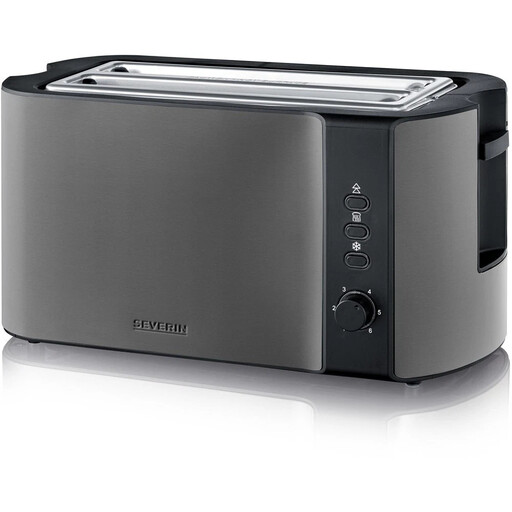 No image available
The long slot may suit longer slices; compare your bread’s dimensions with the appliance specifications.
1400 W; defrost function; bun warmer.
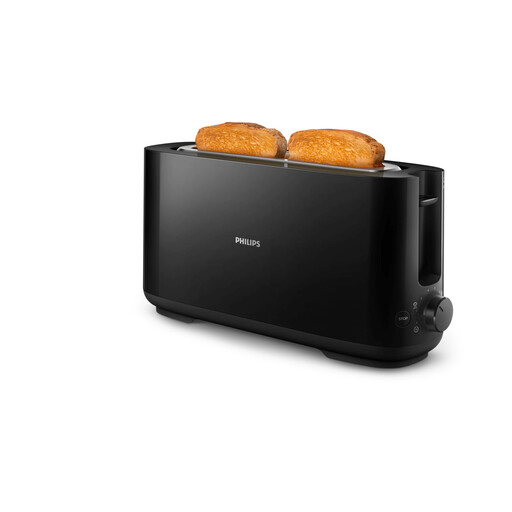 No image available
The long slot is an option for longer slices and small portions, provided your bread fits the dimensions.
Long slot.
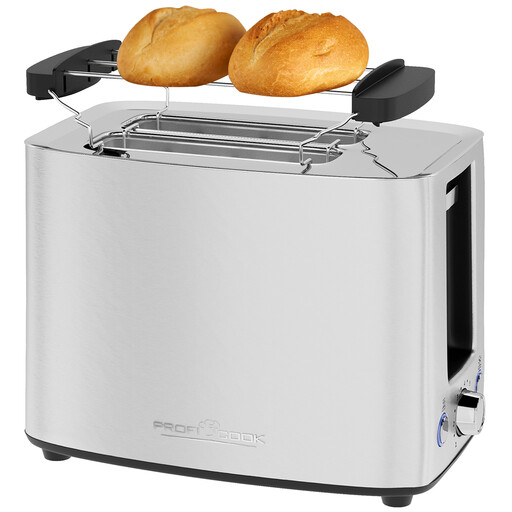 No image available
Described as a two-slice toaster with extra-wide slots; check that they’re wide enough for your slices.
For two slices; extra-wide slots.
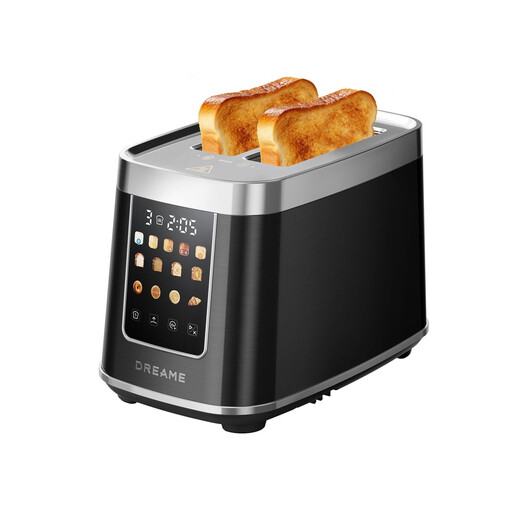 No image available
The extra-wide slots may suit thicker slices; check the dimensions before you buy.
38 mm-wide slots; six browning settings; 1200 W; defrost function.
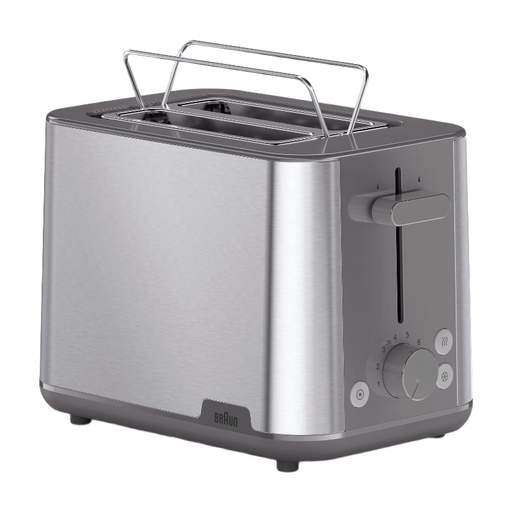 No image available
An option for a small portion, provided your slices fit in the two slots.
Eight browning settings; 900 W; defrost and reheat functions; crumb tray.
Don’t rely on the description alone: measure the height and thickness of your slices too, and compare them with the specifications for the particular toaster slot. A long toast chamber doesn’t, by itself, mean it’s wide enough.
Start with a light browning setting, check the result on your bread and use the stop button if needed. The German Federal Institute for Risk Assessment explains that acrylamide can form when foods rich in carbohydrates are heated intensely. However, no particular toaster setting guarantees a specific acrylamide level.
Follow the instructions for your model. Severin’s instructions for the AT 2515 warn against using the appliance near or underneath curtains or other flammable materials, and mention a crumb tray. Unplug the toaster before cleaning, as instructed, and allow it to cool.
For consumer purchases in Germany, the seller is generally responsible for the statutory guarantee. The Verbraucherzentrale (German consumer advice centre) gives a period of two years from delivery; this is separate from any voluntary manufacturer’s warranty.
For mains-powered toasters covered by the EU Low Voltage Directive, the relevant requirements and CE marking apply at voltages from 50 to 1,000 V AC. The European Commission outlines the scope of the directive; the German Federal Network Agency lists the marking, identifiable products and manufacturer details among the points to check. Check the details on the specific appliance: CE marking isn’t an endorsement of its toasting performance.