
Lieferung heute & morgen

Qualitätsgarantie

Willkommens-Angebote freischalten: KOSTENLOSE Lieferung | Bis zu 80 % RABATT | Kostenlose 30-Tage-JoyPlus-Testphase
App herunterladen
A toddler learning tower can help young children become more independent when washing their hands, brushing their teeth or helping out in the kitchen. But how practical one is for everyday use depends on its construction, dimensions and the supervision it requires. A low price or attractive colour tells you little about whether a model will suit your household in the long term.
Wide feet, side handles and a generously sized standing platform can help reduce the risk of the tower tipping sideways. What matters, though, is whether these features are described clearly. If details such as the base dimensions, material thickness, joints or maximum load are missing, it’s hard to assess the marketing claims.
Even a sturdy step stool is no substitute for supervision. Children should not climb on the outside or lean too far over the sides. Place the learning tower on a flat, dry surface, away from hobs, stairs and sharp objects.
A height-adjustable learning tower won’t necessarily suit every child’s height. Check which parts can actually be adjusted: some models only change the height of the standing platform, while others also let you reposition the step or platform. The available dimensions need to work with your sink or worktop.
“Wood” could mean solid wood, bamboo or an engineered wood board. For making a choice, the specific material, its finish and the care instructions are more useful than broad sustainability claims. Read product descriptions carefully when they mention water-based paint; this alone doesn’t justify a blanket claim that a product is free from harmful substances.
A sturdy children’s step stool should have a wide base and a generously sized surface that’s easy to use without slipping. Side handles can also help children find their way as they climb up and down. Look out for:
A stated maximum load doesn’t automatically tell you how well a tower will resist tipping during everyday use. Weight distribution and your child’s movements matter too.
In the bathroom, choose a standing height that lets your child reach the sink without leaning too far forwards. A bathroom step stool also needs to cope with splashes and be easy to clean. In the kitchen, make sure the learning tower is kept well away from hot surfaces.
Before buying, check:
Smooth, well-painted surfaces can be wiped clean with a damp cloth. This is particularly useful for a children’s sink step stool. However, don’t leave water standing on engineered wood or bamboo. Abrasive cleaners and soaking the product in water can damage its finish.
For an FSC bamboo learning tower, the product description should also make clear what the FSC claim applies to. The roba model is described as being made from FSC-certified bamboo; however, the product information available doesn’t include a specific certificate number. This distinction helps you assess sustainability claims on a factual basis.
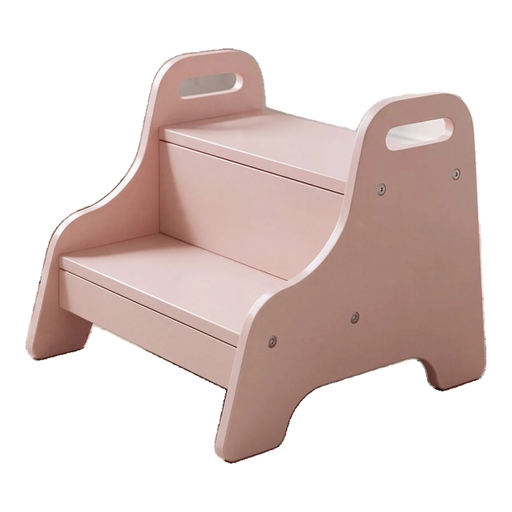
Why this product suits this profile: This model is designed for everyday tasks such as washing hands, brushing teeth and reaching higher-up objects. It’s a good fit for families looking for a compact children’s step that’s easy to assemble.
The description mentions a wide standing platform, integrated side handles and reinforced mortise-and-tenon joints. This gives you specific details about the construction, rather than just a general claim about stability.
Engineered wood boards with a water-based finish; smooth surface; described as suitable for bathrooms, kitchens and children’s bedrooms.
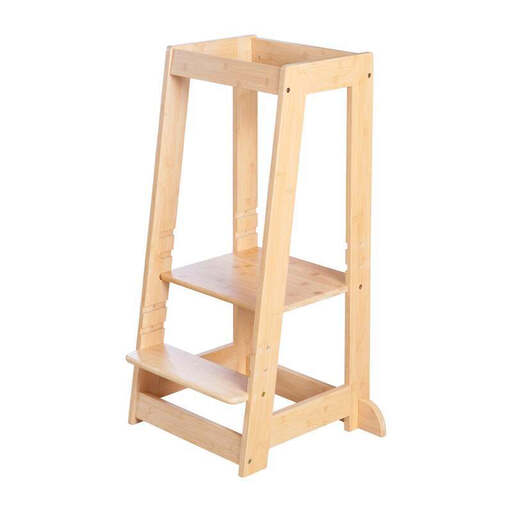
Why this product suits this profile: This learning tower is aimed at families looking for an adjustable bamboo kitchen helper with several height settings, and who want to incorporate Montessori principles into everyday life.
The product details give specific step and adjustment heights, as well as feet that extend out at the sides. This makes it easier to compare the dimensions with your sink and worktop.
Described as made from FSC-certified bamboo; three main height settings from 34,5 to 44,5 cm; stated maximum load of up to 80 kg.
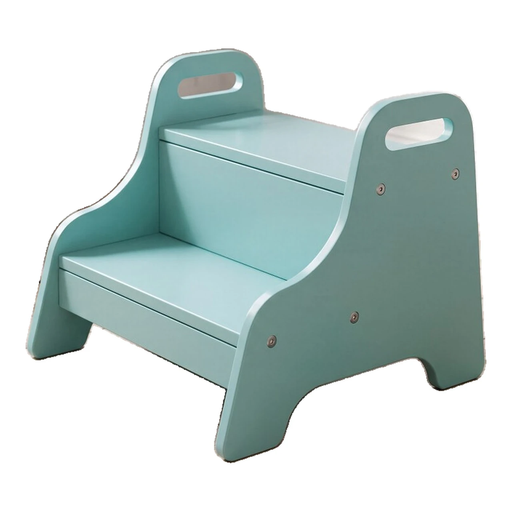
Why this product suits this profile: The blue version may appeal to households looking to use a children’s step in different areas of the home, such as by the sink, at the kitchen worktop or in a child’s bedroom.
The description mentions wide feet, side handles and reinforced slot or mortise-and-tenon construction. It also says the surface can be cleaned with a damp cloth.
Water-based finish according to the product description; wide step; designed for use in different areas of the home.
We’ve put together a complete, regularly updated list of products that meet these strict selection criteria and fully comply with the safety regulations in force in the EU.
This depends on the model, your child’s height and their motor development. You can’t determine a general age recommendation from the product category alone. The manufacturer’s guidance, a secure stance on the platform and your child’s ability to hold on in a controlled way are all important. Always supervise your child while they’re using it.
An adjustable model may suit your child for longer if you can adapt the base and platform to their height. Check the screws, joints, painted finish and for any cracks regularly. The stated maximum load and the manufacturer’s usage instructions remain the key points to follow.
That depends on the material and care instructions. Wipe off splashes promptly; don’t leave wooden products standing in water or exposed to high humidity for long periods. After use, keep a children’s step stool dry and check it regularly for swollen edges, loose joints or damage.