What should you look for when buying?
Check the shape and texture of the pieces first. Once you’ve established that the specific snack is safe for your child to eat, you can use the ingredients, nutrition information and portion size to help you decide.
| Criteria |
What to check |
Who it matters most to |
| Shape and texture of the pieces |
Look out for whole or chopped nuts and other small, hard pieces; with a mix, consider every ingredient it contains. |
If my child is not yet chewing confidently, I don’t want to miss any hard pieces in a mix. This safety concern is the top priority for around 36% of consumers. |
| Sugar and salt |
Compare the nutrition information per 100 g and the ingredients list rather than choosing based only on the calorie figure or a claim on the front of the pack. |
For a regular snack break, a low calorie count shouldn’t be the only deciding factor; I pay particular attention to sugar and salt. This is the main concern for around 36% of consumers. |
| Portion size and taking it out |
Check whether the snack can be portioned out for a smaller snack and offered appropriately when you’re out and about. |
For nursery or a day out, I need a manageable portion that won’t encourage constant grazing. Around 18% of consumers put this kind of everyday practicality first. |
| Ingredients and allergens |
Read the current ingredients and allergen information on the pack you’re buying; consider any claims on the front alongside the full product information. |
When a mix contains lots of different ingredients, I want to know exactly what’s in the pack. This check takes priority for around 10% of consumers. |
For an everyday snack, advice from Netzwerk Gesund ins Leben recommends age-appropriate foods and limiting salt, sugar and snack products. Soft fruit, vegetables or grains may therefore be a better choice than a traditional savoury snack mix. If you need a packaged snack that’s easy to take with you, you should still check whether that particular product is suitable, including the shape and texture of its pieces.
Brands and own-label products to consider
These examples show why familiar savoury snacks shouldn’t automatically be considered regular toddler snacks just because of their brand or packaging. The information relates to the specific product named, not the brand’s entire range.
Lorenz
Lorenz Snack-Hits is a traditional mix of savoury snacks for adults, including NicNac’s, ErdnußLocken and Saltletts.
- You can check the specific product to see the different ingredients and snack textures it contains.
- According to Lorenz, Snack-Hits contains peanuts and provides 477 kcal and 2,1 g of salt per 100 g. Because it contains nuts, this mix is not suitable as a snack for toddlers.
funny-frisch
funny-frisch makes savoury snacks. Protein Chips Paprika Style are crisps, not a snack mix; they’re included here only to show that a protein claim doesn’t tell you everything else you need to know about a product.
- The manufacturer provides nutrition information per 100 g for this product.
- According to funny-frisch, Protein Chips Paprika Style provide 444 kcal and 1,9 g of salt per 100 g. The manufacturer’s information for a 30-g portion is based on adults and doesn’t show that the product is suitable as a regular snack for toddlers.
EDEKA / GUT&GÜNSTIG
GUT&GÜNSTIG Snack-Mix is a mix of eight savoury snack ingredients.
- EDEKA provides nutrition and ingredients information for this product, helping you assess the mix before you buy it.
- According to EDEKA, Snack-Mix provides 452 kcal and 2,9 g of salt per 100 g. The product information lists wheat, sesame, barley and milk, among other ingredients; always check the current information on the pack.
REWE / ja!
REWE sells a 300 g pack of ja! Knabberbox, a packaged savoury snack product.
- The product information mentions that it may contain traces of sesame.
- To assess the sugar, salt and shape and texture of the pieces, check the nutrition information, ingredients and contents of the specific pack. The product name alone doesn’t tell you whether it’s suitable for toddlers.
Joybuy products for snack time
This fruit purée is a soft alternative to a crunchy snack mix. If you’re looking for something to nibble on, it’s not the same kind of product. And with this alternative, you should still check the ingredients and nutrition information, and consider how to serve it to your child.
 No image available
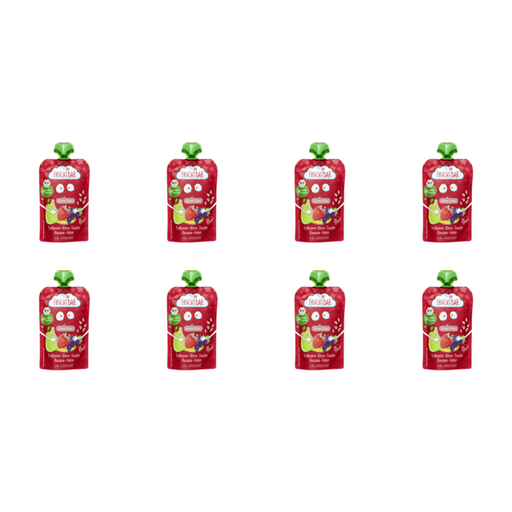
FruchtBar organic fruit purée with strawberry, pear, grape, banana and 4% oats, 8 × 100 g
As a purée, this product could be an option for a soft snack instead of a mix containing hard snack pieces. The product name indicates that it’s suitable from 6 months; this doesn’t replace checking whether the way it’s served is right for your child.
The pack contains 8 pouches of 100 g each. To help you choose, check the current ingredients list and nutrition information, particularly the sugar per 100 g.
View at Joybuy
Frequently asked questions
Can a toddler eat a nut mix or trail mix?
A mix containing whole or chopped nuts or almonds isn’t suitable for toddlers. Netzwerk Gesund ins Leben also warns against other hard pieces of food that could be swallowed whole. Choose an age-appropriate form of food instead.
Is a low-calorie snack automatically suitable for toddlers?
No. The calorie figure alone doesn’t tell you about the shape and texture of the pieces, or the sugar, salt and ingredients. First check whether your child can eat the snack safely, then assess all the information on the pack and consider how it fits into their mealtime routine.
Where can I find sugar, salt and allergen information on a packaged snack mix?
You’ll find sugar and salt in the nutrition information, and declared allergens in the information on the pack. Verbraucherzentrale recommends checking the ingredients list too. When comparing similar products, the information per 100 g is more helpful than a single claim on the front of the pack.
Does my toddler need special snacks for children?
Special snacks for children aren’t essential for a snack between meals. Age-appropriate foods from the family meal may also be suitable. A market review by Verbraucherzentrale also found that many products sold as children’s snacks contain a lot of sugar or salt.
Can a savoury snack mix replace a daily snack between meals?
A traditional salty snack mix shouldn’t become the usual between-meal snack. Netzwerk Gesund ins Leben recommends a regular mealtime routine with smaller snacks and limiting snack products. It’s also important to check that the pieces in any mix are safe for toddlers to eat.


