Keeping a toilet consistently clean and fresh often requires more than just a weekly deep clean. In between cleaning sessions, limescale, grime, and unpleasant odours can quickly build up. A toilet bowl cleaner is a practical solution for continuously maintaining hygiene and freshness in your bathroom.
However, the market offers a wide variety of options: classic rim blocks, discreet in-cistern blocks, or modern toilet gels. This article serves as your guide. We will introduce different types of toilet cleaners and explain how they work, enabling you to make an informed purchasing decision that suits your household's needs.
What to Look for When Buying a Toilet Bowl Cleaner
Choosing the right product depends on personal preferences regarding application, effectiveness, and fragrance. Here are some objective criteria to help you decide.
1. Product Type: Rim Block, In-Cistern Block, or Gel Disc?
The three most common forms of automatic toilet bowl cleaners each have distinct advantages and disadvantages in terms of application and performance.
- Rim Blocks: This is the traditional option, where a small cage containing a solid cleaning block is hung on the rim of the toilet bowl. With every flush, water flows over the block, releasing active ingredients that clean and provide fragrance. They are easy to replace, and their foaming action makes their effect immediately visible.
- In-Cistern Blocks: These blocks are placed directly into the toilet cistern. There, they slowly dissolve, enriching the flush water with cleaning agents. The main advantage is their discreet application, with no cage visible in the bowl. They also help clean the cistern itself. They often colour the water, which serves as an indicator of their effectiveness.
- Toilet Gels and Freshness Discs: With this method, a gel stamp is applied directly to the inside of the toilet bowl. The gel adheres to the ceramic and releases active ingredients with each flush. This method is considered particularly hygienic as it requires no cage where germs could accumulate. The application is contact-free and discreet.
2. Ingredients and Cleaning Performance
The primary function of a toilet bowl cleaner is to keep the toilet clean and fresh. Pay close attention to the product's declared features.
- Anti-Limescale Action: Products specifically designed to combat limescale and urine scale typically contain anionic or non-ionic surfactants. These substances help prevent build-up and dissolve existing stains.
- Long-Lasting Freshness: A toilet freshener uses fragrances to create a pleasant bathroom atmosphere. The intensity and longevity of the scent vary by product. Individuals with allergies should check the ingredients list for potentially allergenic fragrances like limonene or linalool.
3. Longevity and Efficiency
The lifespan of a toilet bowl cleaner is often stated as a number of flushes. Claims like "lasts up to 300 flushes" provide a good benchmark for efficiency. However, the actual duration depends on the frequency of use and the water hardness in your area.
Top Toilet Cleaner Picks
Based on the different product types and applications, we have compiled a selection of various toilet bowl cleaners.
Duck Blue Bloc Intank 2 x 50 g
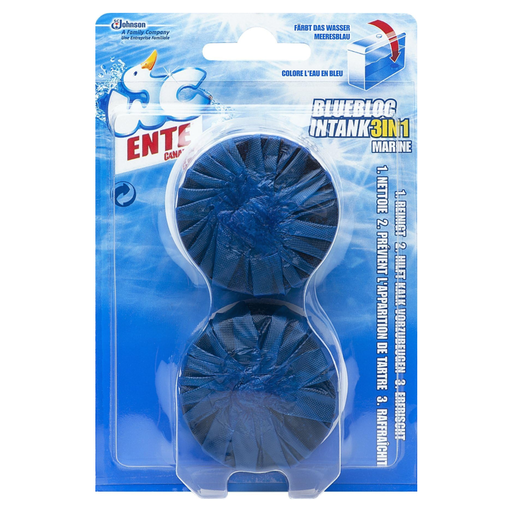
- Why it stands out: As an in-cistern block, the Blue Bloc offers a discreet cleaning solution. The block is placed directly in the cistern and turns the water blue with every flush. This not only serves as a freshness indicator but also shows that both the cistern and the bowl are being actively cleaned.
- Advantages:
- Discreet application with no cage in the toilet bowl.
- Cleans both the cistern and the bowl with every flush.
- The water-soluble wrapper does not need to be removed, simplifying handling.
- Who it's for: Households that prefer a subtle yet effective cleaning solution and want to avoid a visible cage in the toilet bowl.
Duck Fresh Disc Hibiscus Hyperspace New Formula
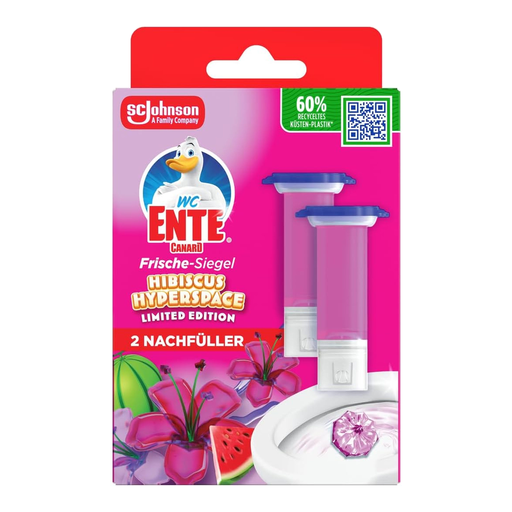
- Why it stands out: The Fresh Disc from Duck is a toilet gel that is stamped directly into the bowl. It requires no holder and dissolves completely over time. The formula is designed to create a protective film with each flush, which helps prevent limescale build-up.
- Advantages:
- Hygienic application with no cage that could collect germs.
- Discreet gel dots that are barely noticeable.
- According to the manufacturer, SC Johnson, a full dispenser provides up to 8 weeks of freshness.
- Who it's for: Users who place the highest value on hygiene and are looking for a modern, cageless alternative to the classic toilet block.
Domestos Power 5 Ocean Toilet Block 50 g
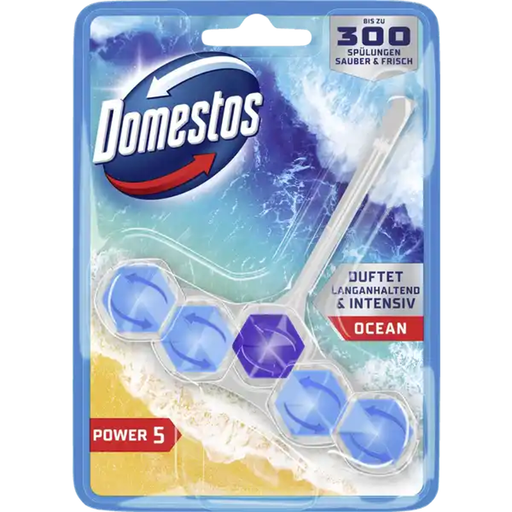
- Why it stands out: This classic rim block from Domestos features a 5-in-1 formula. With every flush, it generates a rich foam that removes dirt and leaves a shine. The formula is designed to prevent limescale and release a long-lasting ocean fragrance.
- Advantages:
- Powerful foaming action for visible cleaning performance.
- Simple to use: unfold the cage and hang it on the bowl rim.
- According to the manufacturer, Unilever, it provides cleaning and freshness for up to 300 flushes.
- Who it's for: Users looking for a proven, high-performance, and easy-to-use solution with an intense fragrance and visible cleaning action.
Discover More Options
If the products featured here don't quite meet your needs, or if you'd like to compare other fragrances and brands, you're sure to find the right product in our wider selection.
? Explore the full range of toilet blocks here
Frequently Asked Questions (FAQ)
1. How often should you replace a toilet bowl cleaner? The replacement frequency depends on the product and usage. For in-cistern blocks, the fading of the water's colour is a clear sign. Gel discs visibly dissolve. With rim blocks, the cleaning block will eventually be used up. Manufacturers often provide a guideline in terms of the number of flushes (e.g., "up to 300 flushes"), which can correspond to several weeks depending on the size of the household.
2. Are in-cistern blocks safe for the toilet mechanism? When used correctly according to the product instructions, in-cistern blocks are safe for standard toilet cisterns. It is important to place the block on the side opposite the water inlet to avoid direct, concentrated exposure to the mechanism. As instructed by the manufacturer, the water-soluble protective wrapper should not be removed.
3. What is the difference between a rim block and a freshness disc? The main difference lies in the application method and hygiene. A rim block is a plastic cage containing the cleaning block that hangs on the rim of the bowl. A freshness disc is a gel that is applied directly to the inner surface of the toilet bowl. As there is no cage, this method is often considered more hygienic because germs cannot accumulate in a holder.


