For cooks serving at different times
If you’re making chutney ahead of time but won’t be serving every portion at once, plan how you’ll keep it hot, or chill and reheat it later. The BfR sets out specific temperature requirements.


Choose your hob based on whether you need just one extra space for a pan or several zones you can use at the same time, and whether the pan, available space and connection suit the hob’s design. If you’re serving at different times, the German Federal Institute for Risk Assessment (BfR) recommends either keeping food hot at a minimum of 60 °C throughout or cooling it quickly to below 7 °C for longer storage, then reheating it later. A keep-warm setting alone doesn’t confirm the temperature of the chutney.
If you’re making chutney ahead of time but won’t be serving every portion at once, plan how you’ll keep it hot, or chill and reheat it later. The BfR sets out specific temperature requirements.
If you’ll be cooking other dishes while the chutney simmers, consider the number, size and layout of the usable zones. Manufacturers’ information on portable double hobs and built-in models shows the range of designs and zone configurations available.
If you’re looking for an extra hob or want to keep using your existing cookware, check the heating technology, pan base, available space and connection against the specific model. Haus & Garten Test points out that induction requires a magnetic pan base.
First, decide how you’ll handle the finished chutney until it’s time to serve. Then consider adjustable simmering, how many pans you’ll need at once, and whether the hob suits your cookware and kitchen.
| What you need | What to check before buying | Who is this important for? |
|---|---|---|
| Serving at different times | Keep-warm setting and available cooking zone; check the food’s temperature separately. | If I’m serving chutney at different times, I need to plan to keep it hot or reheat it later. Around 33% of consumers prioritise serving at different times. |
| Controlled simmering | Check the power settings and pan compatibility for the specific model. | If I want to simmer chutney gently after bringing it to the boil, having the right settings is important. Around 27% of consumers prioritise adjustable simmering. |
| Cooking at the same time | Check that the usable zones can accommodate your pans side by side; for portable double hobs, take the total combined power into account. | If I want to have another pan on the hob alongside the chutney, I need enough space for both. Around 20% of consumers focus mainly on cooking zones they can use at the same time. |
| Pan and kitchen | Check the pan base, permitted pan size, space or cut-out dimensions, and type of connection. | If I want to use my existing cookware or a particular spot in my kitchen, both need to suit the heating technology and hob design. Around 20% of consumers prioritise compatibility with their pan and kitchen. |
The BfR’s recommendation for keeping food hot is to maintain at least 60 °C throughout the food, not simply to use a hob setting with a particular name.
Check the temperature of the chutney, or plan to chill it quickly and reheat it later if you need to store it for longer.
It’s the heating technology that matters: induction requires compatible cookware with a magnetic base.
Check the pan base and the size requirements for the specific hob. If your pan isn’t suitable for induction, a radiant hob could be an alternative.
You may need suitable cookware for induction if your existing pan isn’t compatible.
The Siemens EX975LXC1E is a built-in model with no mains plug and requires a suitable cut-out. Work on fixed electrical installations is subject to the requirements of § 13 NAV.
Before choosing a model, check the cut-out, connection and installation requirements. If you’re not planning a built-in installation, compare portable models instead.
For the CASO S-Line 3500, the manufacturer specifies a maximum of 3,500 W across both zones. You can’t simply add the power of both cooking zones together to calculate the total power available at the same time.
If you’re cooking two dishes at once, check the combined power limit and make sure both pans fit on the hob.
Built-in induction hobs for using several pans at once; the EX975LXC1E is a 90 cm example.
Portable double induction hobs such as the S-Line 3500 offer two cooking zones without the need for a permanent installation.
Portable single hobs with different heating technologies, including induction and HiLight radiant heating.
Built-in radiant glass-ceramic hobs; the GH646FFX is a four-zone example.
Built-in induction hobs; the PIE61RBB5E is a 60 cm example with four round zones.
This selection includes portable and built-in hobs for controlled simmering and cooking at the same time. Check that the heating technology and design suit your pan and kitchen.
 No image available
Described as a tabletop hob, with eight temperature and power settings to help you adjust the heat for simmering.
The product title lists 800–3,500 W, a timer and overheat protection. According to the description, the hob is suitable only for iron and stainless-steel cookware.
 No image available
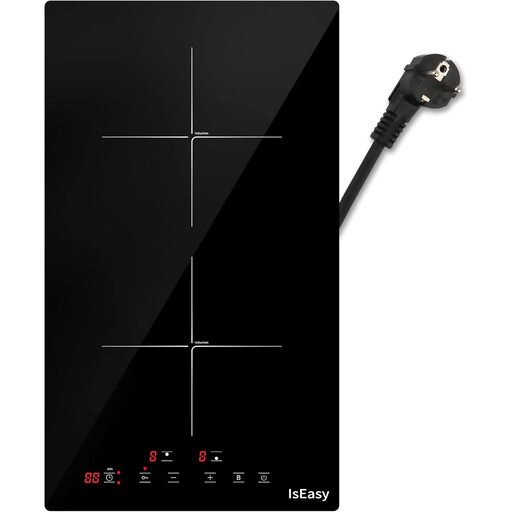
Its two zones and nine heat settings may be useful for cooking at the same time and adjusting the heat as needed.
The product title lists 3,400 W, 29.5 cm, a timer and a child lock. For built-in use, the cut-out needs to be the right size; induction-compatible cookware is required.
 No image available
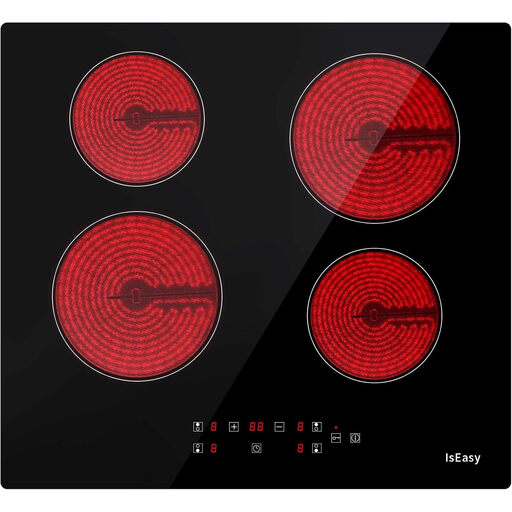
Four zones are specified. Described as a built-in hob, this model may be worth considering if you need to use several pans.
The product title lists 6,000 W and nine heat settings. The description specifies a cut-out size of 57 × 49.5 cm for installation.
 No image available
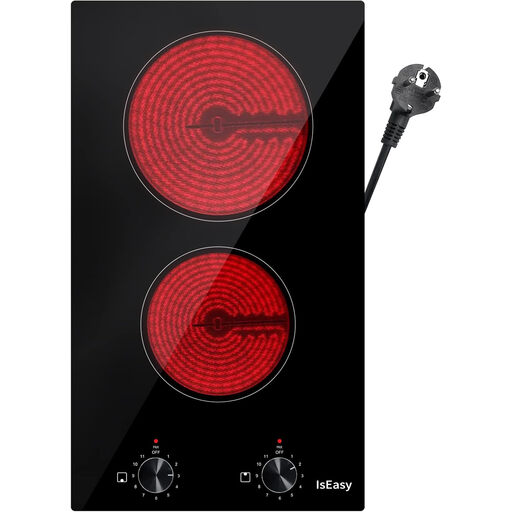
The product title specifies two cooking plates and eleven power settings. Before buying, check that your cookware and the space you have in mind are suitable.
The title lists 3,200 W, 29.5 cm and rotary controls. For built-in use, the description specifies a cut-out of 49 × 27 cm.
 No image available
Two independently controlled zones are specified, giving you space for two pans. You’ll need to check the actual temperature of the chutney separately.
The product title lists five temperature settings and a keep-warm function. This function doesn’t confirm that the chutney reaches at least 60 °C throughout.
Not based on the function’s name alone. To keep food hot continuously, the BfR recommends maintaining at least 60 °C throughout; you’ll need to check the temperature accordingly. For longer storage, the BfR recommends cooling hot food quickly to below 7 °C.
The pan base needs to be magnetic and suitable for induction. A magnet can give you a quick indication; also check the base diameter recommended by the manufacturer for your specific hob.
For work on an electrical installation, § 13 NAV generally requires an installation company registered with the network operator; the regulation includes an exception for certain maintenance work. Siemens says that connecting the plugless EX975LXC1E should be carried out by a qualified electrician. This is different from a portable hob designed to plug in.
According to information from the consumer advice centre, consumers buying faulty new goods can generally claim their statutory rights from the seller within two years of delivery. A voluntary manufacturer’s guarantee is separate; check delivery, connection and service arrangements separately.
No. According to the consumer advice centre, the energy label for a combined cooker applies to the oven, not the hob.