What should you look for when buying one?
First, think about how many slices you want to lay out per batch. Then check the space you have, the timer and the operating instructions for the model you’re considering.
| What matters when buying |
What to check |
Who is this most important for? |
| Planned drying time |
Timer range, temperature control, how the appliance switches off and the manual’s guidance on operation. |
If you’re starting late, you’ll want to plan when the cycle ends without mistaking the timer for a check of how dry the slices are. Around 36% of consumers prioritise being able to plan the drying time. |
| Space for a batch of tomatoes |
Compare the usable rack area and tray dimensions with the usual quantity and size of your slices. |
If you have a larger harvest, you’ll want to space the slices out rather than crowding the racks. Around 29% of consumers prioritise having enough space for each batch. |
| Space and noise |
Check the space available and the clearances required in the manual; only compare noise figures when they’re based on comparable test conditions. |
In a small kitchen, you’ll want to know whether the appliance will fit and whether its noise level in the evening is acceptable to you. Around 21% of consumers place particular importance on the space it takes up and its operating noise. |
| Overall cost |
Weigh up how often you’ll use it and the running costs against the cost of buying another appliance. |
If you only dry food occasionally, you’ll want to weigh up the cost of another appliance against using your existing oven. Around 14% of consumers put the purchase price and running costs first. |
Food dehydrators at Joybuy
The Joybuy appliances below are food dehydrators with timers; the temperature range and number of trays vary by model.
 No image available
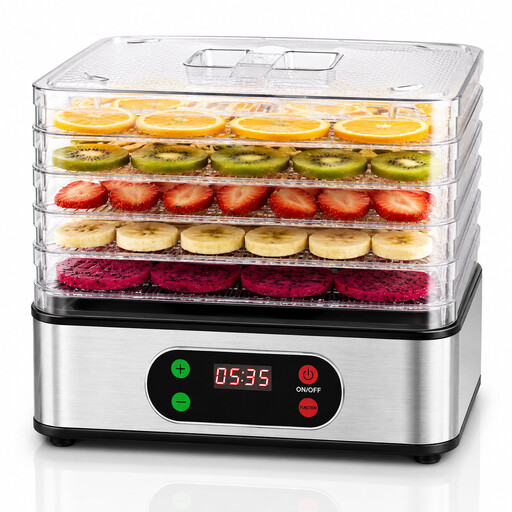
Food dehydrator with LED display, 35–70 °C
The adjustable timer lets you plan a batch; the stated distance between the tiers is worth considering when laying out the slices.
Temperature range: 35–70 °C. Timer: 0,5–72 hours in 30-minute increments. Distance between tiers: 3,5 cm. Power rating: 350 W.
View at Joybuy
 No image available
Havenwell stainless steel food dehydrator, 10 trays
The ten trays provide several levels for drying a batch; before buying, check that the overall dimensions will fit the space you have in mind.
10 stainless steel trays. Timer: 48 hours. 10 programmes. Power rating: 850 W.
View at Joybuy
 No image available
Havenwell food dehydrator, 8 stainless steel racks
The 48-hour timer helps you plan when to run it, while the eight racks provide several levels for preparing a batch.
Temperature range: 35–85 °C. Timer: 48 hours. Touch display and interior light. Power rating: 650 W.
View at Joybuy
 No image available
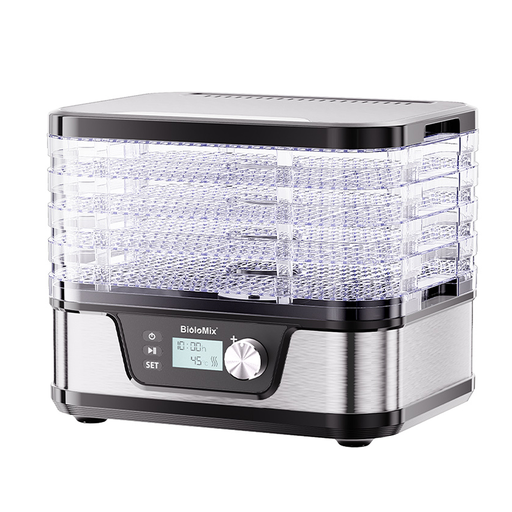
BioloMix BFD1300, five trays
The adjustable 24-hour timer helps you plan a batch; compare the five trays with the quantity you want to lay out each time.
Temperature range: 35–75 °C. Timer: 24 hours. Five trays. Power rating: 360° hot air circulation.
View at Joybuy
Frequently asked questions
Are tomato slices automatically dry enough when the timer ends?
No. The timer ending on its own doesn’t prove that they’re dry enough. The German Federal Centre for Nutrition notes that drying time depends on factors including the size and thickness of the pieces. Check the slices after drying, and only store them once they’re sufficiently dry and have cooled.
Can I leave the food dehydrator running while I sleep after a late shift?
You can’t assume this is safe for every model based on its timer or an advertising claim. The Rommelsbacher DA 650 manual expressly prohibits leaving the appliance unattended, even while it is plugged in. Before using your appliance, read the safety instructions for your specific model.
How should I prepare particularly juicy tomatoes for the racks?
Cut the pieces as evenly as possible and space them out on the racks. For very juicy tomatoes, Severin recommends draining them on kitchen paper first or removing the seeds and juice. This is a manufacturer’s tip, not a requirement for every recipe.
When can my existing oven be an alternative to a food dehydrator?
For small batches made occasionally, an oven may save you from buying another appliance, provided it can maintain a low temperature and moisture can escape. The German Federal Centre for Nutrition describes drying food in an oven as energy-intensive; also check your oven’s manual.
Can I simply preserve my home-dried tomatoes in oil for later use?
Preserving tomatoes in oil is not the same as storing them dry. The German Federal Institute for Risk Assessment advises against making and storing homemade vegetables in oil for later use at home. For dried tomatoes in oil with garlic or herbs, Oregon State University Extension recommends refrigeration and using them within four days, or freezing them.


