Freezing leftovers occasionally
If you want to keep a few portions after a meal with friends or family, first check whether there’s enough free space in your existing freezer compartment.


If you only occasionally have tomato sauce left over after a meal with friends or family, and there’s enough room in your existing freezer compartment, you don’t need an extra appliance just for that. If you regularly freeze several portions or other food, first work out how much usable capacity you need and where the appliance could go. Then compare annual energy consumption, the layout inside and the effort involved in defrosting. According to the German Consumer Advice Centre, chest freezers tend to be more energy-efficient, while drawers make it easier to access individual portions.
If you want to keep a few portions after a meal with friends or family, first check whether there’s enough free space in your existing freezer compartment.
If you regularly freeze several portions, you’ll need storage space you can plan around and an interior layout that makes it easy to find and remove containers.
If you want to store other food as well as sauce, consider drawers for organised access or a chest freezer for larger quantities.
First check whether you need an extra appliance. Then consider space for your portions, annual energy consumption, and the effort involved in installation and maintenance.
| Consideration | What to check before buying | Who it matters most to |
|---|---|---|
| Do you need an extra appliance? | Check how much free space there is in your existing freezer compartment and how many portions you regularly need to freeze. | If I only freeze sauce occasionally, I want to know whether my existing compartment is big enough. Around 40% of consumers put the question of whether an extra appliance is needed at the top of their list. |
| Space for portions | Compare your containers with the usable drawer dimensions, the usable capacity and the space available for the appliance. | If I regularly freeze several portions, I need accessible storage that suits my containers and the space I have. Around 30% of consumers prioritise the space needed for their portions. |
| Annual energy consumption | For appliances of a suitable size, compare the figure in kWh per year on the energy label. | If the appliance is going to run continuously, I want to put its stated annual energy consumption into context rather than deciding on size alone. Around 20% of consumers put comparing energy consumption first. |
| Installation and defrosting | Measure the floor space and the clearance needed to open the door. Check whether the specific model has NoFrost or needs manual defrosting. | If my kitchen is small or I regularly take out individual portions, the appliance and its door need to be easy to access where they’re installed. Around 10% of consumers prioritise convenience when it comes to installation and maintenance. |
Your existing freezer compartment may be enough if you only freeze food occasionally. According to the German Consumer Advice Centre, an appliance that’s too large uses electricity unnecessarily.
First check how much space you already have and how often you actually need to freeze several portions.
The German Consumer Advice Centre says chest freezers tend to be more energy-efficient. Drawers, on the other hand, can make it easier to access individual portions of sauce.
Weigh up energy consumption and the space you have against how often you take out individual portions.
A container filled with liquid can crack when its contents freeze.
Use suitable freezer containers and leave room if you’re storing liquid. The German Consumer Advice Centre recommends filling containers with liquid to only three-quarters full.
Annual energy consumption, defrosting method and dimensions vary by model. A compact appliance isn’t necessarily more energy-efficient.
Check the product specifications for the full model name, including kWh per year, defrosting method and the space needed with the door open.
The GS 2186.1 and GS 7343 differ in usable capacity and defrosting method.
The GS111-041E, with a capacity of 60 l, and the GS81-051C inoxlook-az, with 85 l, are freestanding models in different sizes.
According to the manufacturer, the FS127940N is designed for larger quantities, with a capacity of 237 l.
According to the manufacturer, the H4F272WDH1 is a freestanding freezer with a capacity of 276 l that can be switched between freezer and fridge modes.
The GN 46Vd25 is a freestanding freezer with NoFrost and a stated capacity of 199 l, according to the manufacturer.
These Joybuy appliances offer extra freezer space in compact designs. They may suit you if you want to store individual portions or smaller quantities separately.
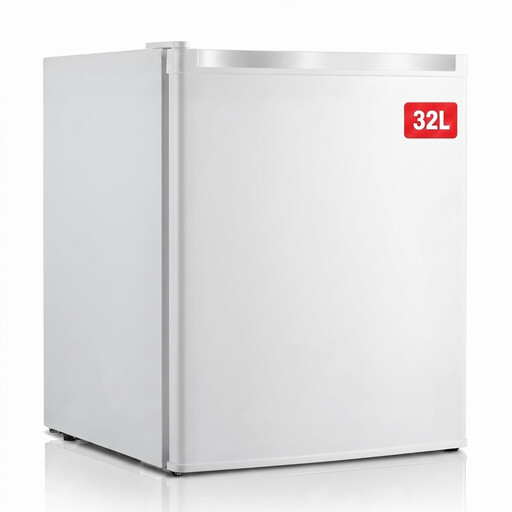 No image available
Could provide extra freezer space for individual portions when space is limited.
32 l; seven temperature settings from −10 °C to −22 °C; reversible door and removable glass shelves.
 No image available
A compact option if you want room for other small food items as well as sauce.
35 l usable capacity; 4-star freezer rating; temperature range from −21 °C to −8 °C; removable inner compartment and reversible door.
 No image available
A good option for smaller extra quantities if you’re looking for a compact freestanding appliance.
31 l usable capacity; 4-star freezer rating; freezing capacity of 2 kg in 24 hours; 147 kWh per year; adjustable feet and reversible door hinge.
 No image available
Three drawers can help you keep several portions separate and neatly organised.
85 l usable capacity; three drawers; freezing capacity of 4 kg in 24 hours; height 84,5 cm; reversible door.
Manual defrosting is required.
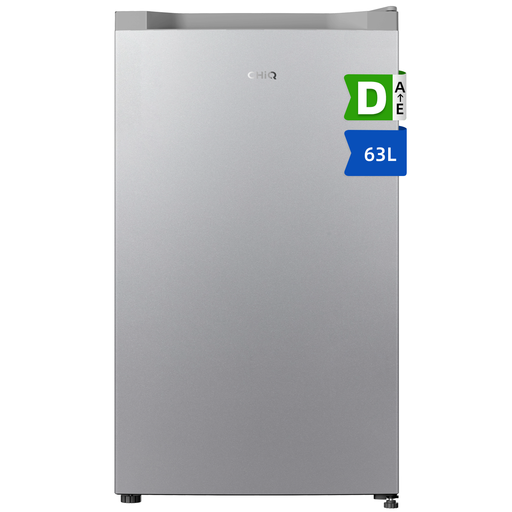 No image available
The drawers can be useful for keeping sauce and other portions separate.
63 l usable capacity; two adjustable drawers; 4-star freezer rating; 47 cm wide; energy class D.
Manual defrosting is required.
Not necessarily. If there’s enough room in your existing freezer compartment and you only have portions left over occasionally, it may be all you need. If you batch cook regularly, compare the storage space you need with the space available for an appliance.
Drawers can make it easier to access individual portions. The German Consumer Advice Centre says chest freezers tend to be more energy-efficient. They’re a better fit if you’re storing larger quantities, have enough floor space and can open the lid easily.
According to the German Federal Institute for Risk Assessment, cool hot food quickly to below 7 °C if you plan to store it for longer. Transfer the sauce to suitable, labelled freezer containers and leave some room. The German Consumer Advice Centre recommends filling containers with liquid to only three-quarters full.
The German Consumer Advice Centre recommends −18 °C as the ideal freezing temperature. Check how to adjust the temperature on the appliance you’re considering, and whether it needs manual defrosting or has NoFrost.
Compare the usable capacity with the amount you plan to store regularly, and measure the space available as well as the clearance needed to open the door. Also check the specific model’s annual energy consumption in kWh and its defrosting method.