
Lieferung heute & morgen

Qualitätsgarantie

Willkommens-Angebote freischalten: KOSTENLOSE Lieferung | Bis zu 80 % RABATT | Kostenlose 30-Tage-JoyPlus-Testphase
App herunterladen
Tonkotsu ramen stands for a rich, creamy noodle soup traditionally associated with a pork-bone broth simmered for many hours. With instant products, however, “tonkotsu” does not always mean that an actual broth has been cooked. It often refers to a seasoning powder, concentrate or plant-based flavour profile.
If you want to buy tonkotsu ramen online in Germany, you should therefore look beyond product images and terms such as “rich”. The key factors are the ingredients list, allergens, preparation method, pack size and whether the product is intended as a meal, snack or soup base.
The front of the pack may say “tonkotsu”, while the ingredients list only mentions pork-bone flavouring, extract powder or seasonings. This is common with instant ramen and is not necessarily a sign of poor quality, but it should match your expectations. If you are looking for ramen made with pork-bone broth, check the ingredients list for terms such as Pork Bone Extract, Pork Bone Broth or equivalent wording in German.
With plant-based versions, the flavour is recreated instead. Examples include IRAGASHI SEIMEN Plant-Based Tonkotsu Ramen and ITSUKI Osaka Shoyu Tonkotsu Ramen.
A multi-pack of ramen often reduces the price per serving, but it ties up money and requires dry storage space. For occasional meals, a single ramen cup may be more practical. Regular ramen eaters are more likely to benefit from packs of 5 or 12, provided they already know and enjoy the flavour and spice level.
Spicy tonkotsu ramen may contain chilli, garlic, pepper or fermented miso paste. You cannot reliably determine the actual heat level from the product name alone. If you prefer milder flavours, a classic tonkotsu version without chilli oil is a sensible choice. Fans of more intense seasoning can opt for products with a separate oil sachet, as this makes it easier to adjust the amount.
The following details are particularly important when making an informed choice:
Values per 100 g can be compared between products, but they do not always refer to the same serving size. One portion may contain around 80 g, 108 g, 176 g or more. Buyers should therefore consider the pack contents and the actual serving size together.
Examples from the selection include Hikari Miso Menraku Cup Ramen Tonkotsu Taste, which lists 5.1 g of salt per 100 g, while Higashimaru Tonkotsu Kagoshima Ramen lists 5.5 g per 100 g. These figures are intended as a guide and do not replace checking the label on the product supplied.
A ramen cup usually requires only boiling water and a few minutes to stand. With products in sachets, however, the noodles need to be cooked in a saucepan. Daisho Hakata Ramen Tonkotsu, for example, is prepared with around 500 ml of boiling water and a short cooking time. According to the product description, IRAGASHI SEIMEN Plant-Based Tonkotsu Ramen requires around five minutes of cooking.
For the office, travelling or camping, a cup with a fill line and integrated container is practical. At home, sachet products and soup concentrates offer more scope for adding vegetables, tofu, egg or extra noodles.
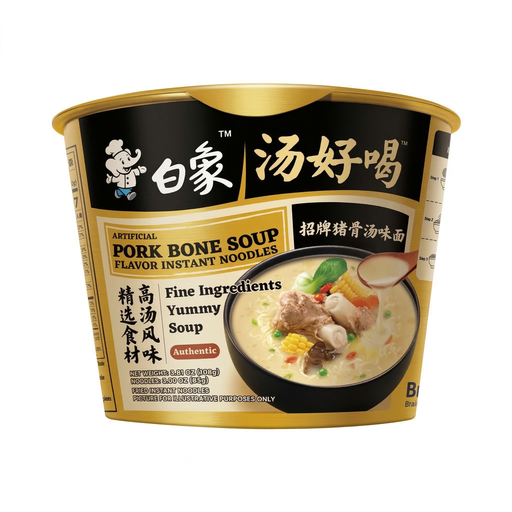
Why this product suits the profile: The 108 g bowl is designed for a single meal at home, in the office or on the go, and does not require separate tableware.
The product details clearly state the ingredients, allergens, origin and nutritional values. This makes it possible to identify the product as a seasoned ramen rather than relying on the name alone.
Bowl packaging, 108 g contents and preparation according to the pack instructions. Contains wheat, soya and celery.
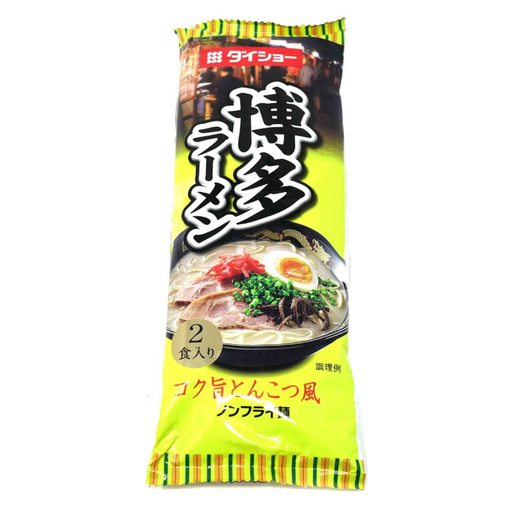
Why this product suits the profile: This Hakata-style ramen combines chewy wheat noodles with a soup base made from pork-bone, soya sauce and seasoning components.
The product details list its Japanese origin, ingredients and allergens. This links the Hakata designation to specific product characteristics.
188 g total contents, Japanese origin and clear allergen information for wheat, soya and sesame.
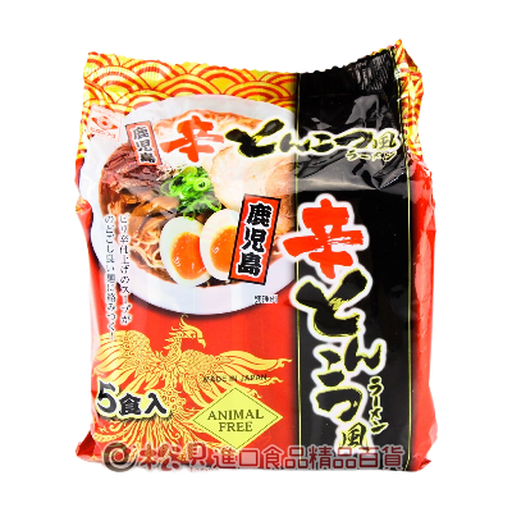
Why this product suits the profile: This multi-pack is aimed at households and ramen fans who want to prepare a spicy noodle soup with chilli, garlic and sesame on a regular basis.
The spice indication appears directly in the product name. Buyers can compare the pack of 5 with their needs and tolerance for chilli before purchasing.
5 servings, Japanese origin and declared allergens: wheat and sesame.
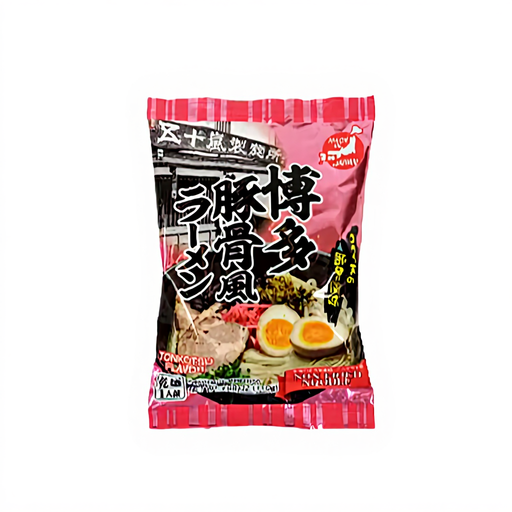
Why this product suits the profile: According to the product description, this Hakata-inspired version is plant-based and comes with non-fried, slowly dried wheat noodles.
The plant-based classification is supported by a specific ingredients list. Nevertheless, allergy sufferers should check the packaging for wheat and soya information before eating.
Japanese origin, 110 g contents, vegan product information and non-fried wheat noodles.
We have put together a complete, regularly updated list of products that fully meet these strict selection criteria and the safety regulations applicable in the EU.
With instant ramen, use the amount of water stated on the packaging. Too much water dilutes the broth, while too little intensifies the salt and seasoning. Egg, spring onions, sweetcorn, pak choi, mushrooms or tofu make tasty additions to Japanese noodle soup. With sachets containing separate oil or seasoning packets, you can initially use less of individual ingredients and add more later to taste.
A soup concentrate such as Marutomo Ramen Soup Tonkotsu 500 ml is better suited to several meals than to spontaneous single servings. According to the product information, it should be diluted at a ratio of 1:5 to 1:6 and refrigerated after opening. With a high salt content of 10.6 g per 100 g of concentrate, careful dosing is particularly important.
No. Some products contain pork-bone or pork flavouring, while others are plant-based tonkotsu versions. The ingredients list, allergen labelling and, where applicable, vegan labelling on the packaging provide the definitive guidance.
Store unopened products in a dry, cool place away from direct sunlight. The specific best-before date is shown on the packaging. Once opened, seasoning and oil sachets should be used promptly. Prepared noodles should be eaten immediately.
The price per serving depends on the pack size, origin, packaging format and ingredients. A pack of 5 or 12 may work out cheaper per serving than a ramen cup. For a fair comparison, look not only at the pack price but also at the price per 100 g or per serving.