
Lieferung heute & morgen

Qualitätsgarantie

Willkommens-Angebote freischalten: KOSTENLOSE Lieferung | Bis zu 80 % RABATT | Kostenlose 30-Tage-JoyPlus-Testphase
App herunterladen
A tool box should protect your tools, keep them neatly organised and allow you to transport them safely wherever they are needed. In practice, however, the right choice is determined by more than just the price or exterior colour. The design, dimensions, material and day-to-day use are all important factors.
A compact tool box may appear large enough from the outside, while handles, dividers or padding significantly reduce the available interior space. Before buying, you should therefore compare the internal dimensions with the measurements of your own tools. Power tools, measuring instruments and long screwdrivers in particular require sufficient depth and height.
A tool cabinet with several drawers makes it easier to organise your workshop. However, pulling out several compartments at the same time can shift the centre of gravity. With a drawer cabinet, full-extension drawers, guide rails and anti-tip protection are therefore important features. The actual load capacity should be stated in the product details rather than inferred from marketing wording alone.
Castors make it easier to move a tool cabinet, but they do not replace stability. Castors with brakes are practical for garages and workshops. On building sites or in shared spaces, however, a lockable tool box may be the more suitable option. An integrated lock only provides appropriate protection against unauthorised access if the lid, doors and fastenings are robustly made.
Steel constructions can provide a suitable foundation for regular workshop use. Look for details concerning powder coating, rust protection and surface care. Plastic cases are often lighter and easier to carry. With a model such as the Makita MAKPAC, you should also check whether it is compatible with any system cases you already own.
Water resistance should never be assumed automatically. A tool bag with a water-repellent base is not the same as a completely waterproof container. For damp environments, the fastening, base plate and manufacturer’s information should all be considered together.
The following details are particularly relevant when making your choice:
The following recommendations match different designs to specific user profiles.
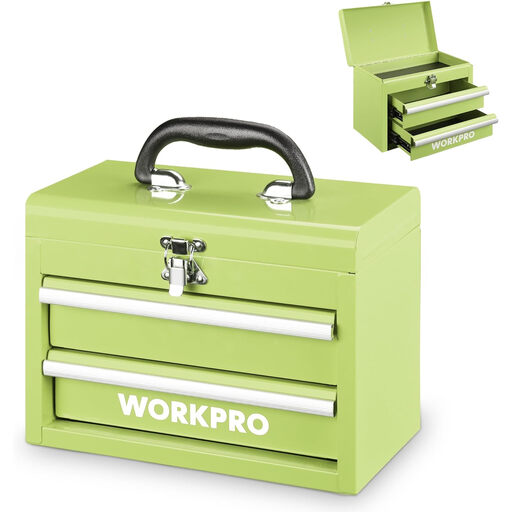
Why this product suits this profile: This compact metal tool box is suitable for smaller hand-tool collections, office supplies or use around the home. Two drawers and a top compartment divide the storage space into three sections.
The dimensions of 27,43 × 14,99 × 20,83 cm make the space requirements clear. Removable PVC mats reduce direct contact between the contents and the metal surfaces.
Metal housing, carry handle, fastening and ball-bearing drawers. The stated weight is 2,6 kg.
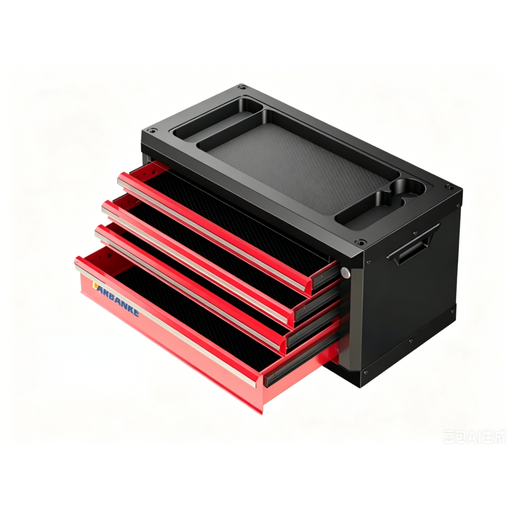
Why this product suits this profile: The four drawers are designed for long-term workshop organisation. Small tools and larger equipment can be separated according to drawer height.
The dimensions of 62,5 × 33 × 31,7 cm and the consistent depth of 11,5 inches make it easier to plan the required space in advance. Anti-tip protection and fully extendable drawers are specified.
Steel construction, ABS work surface, interior padding and a shared locking system for compatible LARBANKE series models.
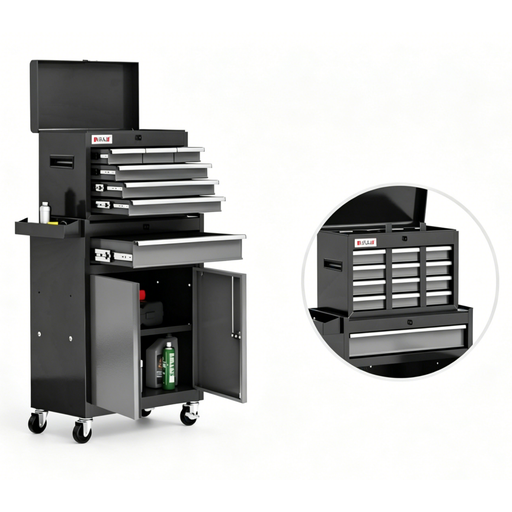
Why this product suits this profile: This rolling tool cabinet is aimed at workshop owners, fitters and frequent users who need to move several groups of tools around a fixed workplace.
Four castors, two of them with brakes, combine mobility with a secure, lockable position. Lockable doors and seven compartments help prevent untidy storage.
Powder-coated cold-rolled steel, one large, three medium and three small drawers, plus castors and handles included in the delivery.
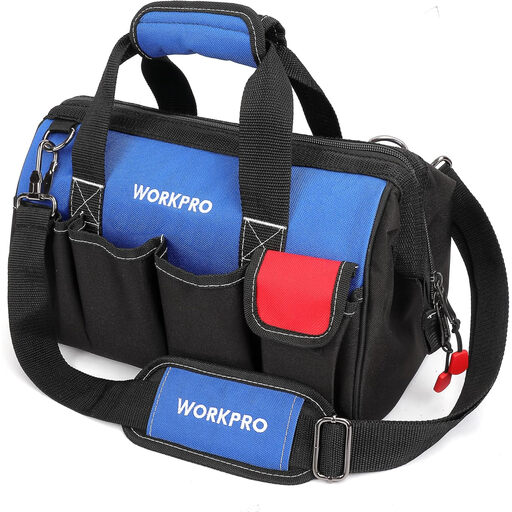
Why this product suits this profile: This tool bag is designed for frequent travel between locations. Interior and exterior pockets make it easier to access hand tools and accessories.
The bag has a wide opening, six interior pockets and seven exterior pockets. The PE base is described as water-repellent and non-slip; complete waterproofing should not be assumed.
500D polyester, padded handle, adjustable shoulder strap and dimensions of 35,6 × 24 × 19 cm.
We have put together a complete, regularly updated list of products that fully meet these strict selection criteria and the safety regulations applicable in the EU.
Service life depends largely on the load, environment and level of care. Metal surfaces should be kept dry, and the coating should be checked for visible damage. Drawer runners benefit from being cleaned in accordance with the manufacturer’s instructions. Do not overload compartments, and keep heavy tools as low as possible so that the centre of gravity remains low.
With a plastic tool case, hinges, fastenings and stacking connections should be checked regularly for cracks or excessive play. A tool bag should be allowed to dry completely after coming into contact with moisture. This helps prevent odours, material changes and damage to the contents.
For occasional repairs, a compact tool box or small tool case is often sufficient. Models with a carry handle and just a few compartments take up little storage space. Before buying, check that the essential tools will fit inside without putting strain on the fastening.
Yes, if tools regularly need to be moved between the workbench, vehicle and storage area. Castors with brakes help when positioning the cabinet. For uneven floors, you should consider the castor size, ground clearance and overall weight. A lock is useful if several people have access to the garage.
The cost depends on the material, size, number of drawers, locking system and mobility. A tool bag or compact box usually requires a smaller budget than a multi-section tool cabinet. Do not compare only the purchase price; also consider the interior space, availability of spare parts, maintenance requirements and compatibility with your existing storage systems.