
Lieferung heute & morgen

Qualitätsgarantie

Willkommens-Angebote freischalten: KOSTENLOSE Lieferung | Bis zu 80 % RABATT | Kostenlose 30-Tage-JoyPlus-Testphase
App herunterladen
A well-organized workshop is the foundation for efficient and safe work. However, valuable time and patience are often lost when the right tool isn't within reach. A cluttered workspace can not only be frustrating but also increase the risk of accidents. A mobile tool chest provides a solution by bringing order, clarity, and mobility to your garage or workspace.
This article serves as a guide. We will introduce you to various models and explain the key features that will help you make an informed decision—without the marketing hype. Find the solution that truly fits your needs for organized garage tool storage.
Selecting the right model depends on your individual needs. Three key criteria will help you separate the best from the rest.
The durability of a tool chest is largely determined by the material used. Models made from cold-rolled steel offer high strength and stability, which is essential for storing heavy tools. A powder coating on the surface provides additional protection against rust and scratches, significantly extending the chest's lifespan in a harsh workshop environment. Pay attention to the specified maximum load capacity to ensure the cart can safely support all your equipment.
A key advantage is mobility. A good rolling workshop cart features smooth-gliding universal casters that allow for quiet and effortless movement. For stability, locking brakes on at least two of the casters are essential. These prevent the cart from rolling away on uneven floors. If you store valuable or hazardous tools, a lockable tool chest is a smart choice. Central locking systems or lockable doors protect the contents from unauthorized access and keep tools away from children.
The internal layout is crucial for efficiency. A tool chest with drawers of various sizes allows for the systematic sorting of tools by type and frequency of use. Small drawers are suitable for screwdrivers and pliers, while larger compartments provide space for power tools. Additional features like pegboards on the sides with hooks or integrated storage trays on top maximize available space and ensure frequently used tools are always within reach.
Based on the criteria mentioned, we have compiled a selection of products that meet different needs for organization and mobility.
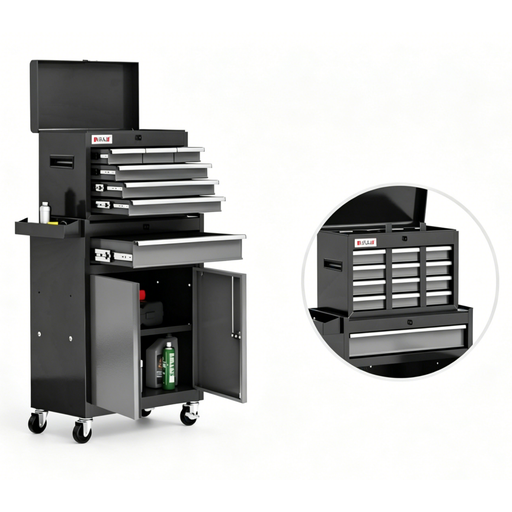
What sets it apart This model combines mobility with a well-designed security concept. The construction of cold-rolled steel with a powder-coated finish ensures robustness and rust protection. A special feature is the double-door design of the lower cabinet, which, along with the integrated lock, allows for secure tool storage.
Advantages
Who is it for? This tool chest is an excellent choice for DIY enthusiasts and hobbyists looking for a versatile and secure solution to organize their workshop equipment.
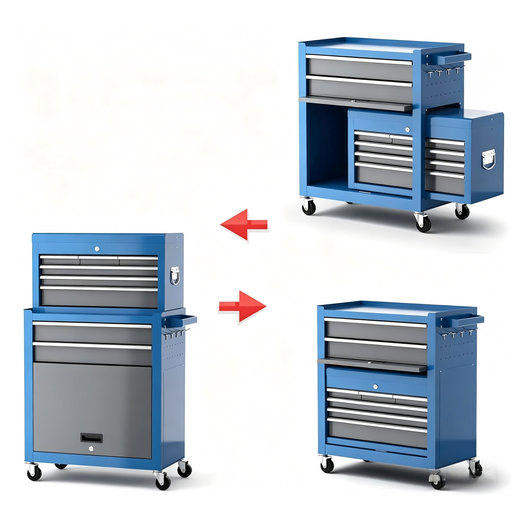
What sets it apart This model is designed for heavy loads and maximum efficiency. With a load capacity of up to 550 pounds (approx. 250 kg) and a robust construction of cold-rolled steel, it is also suitable for heavy tools. A practical detail is the perforated side panels with 10 removable hooks, which provide additional space for frequently used tools like pliers or wrenches.
Advantages
Who is it for? Ideal for professional craftspeople or ambitious DIYers who need a heavy-duty, mobile storage solution with maximum space and quick access to their equipment.
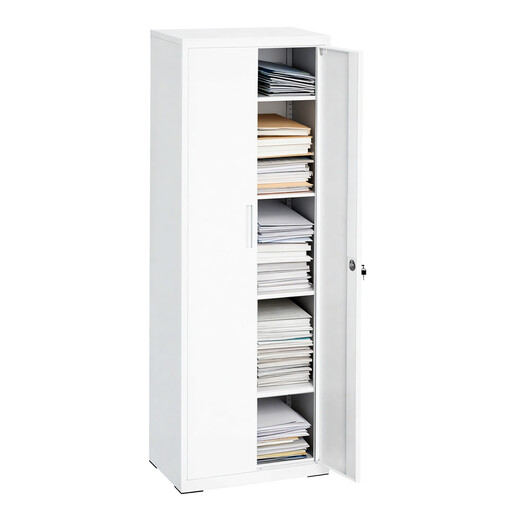
What sets it apart As a stationary alternative to a mobile cart, this tall tool cabinet (non-rolling) offers maximum vertical storage. Its four height-adjustable shelves allow for flexible storage of larger items, power tools in cases, or consumables. The robust steel construction and steel lock ensure security and durability.
Advantages
Who is it for? This cabinet is the right solution for workshops, garages, or storage rooms that require secure and spacious stationary storage for materials, tool cases, and less frequently used equipment.
Are your requirements highly specific, or would you simply like to compare more models? Discover a wider range of organizational solutions in our Metal Tool Storage Cabinet category and find the perfect addition to your workshop.
1. What is the difference between a tool chest and a toolbox? A tool chest is a mobile storage unit on wheels, designed for use within a workshop or garage. It offers ample storage space and keeps a large number of tools organized and readily accessible. A toolbox, on the other hand, is designed for portability and is used to transport a smaller, specific selection of tools to a job site outside the workshop.
2. How much weight can a tool chest support? The maximum load capacity varies greatly depending on the model, construction, and material. Basic models for home use often support around 100 kg, while professional versions made of cold-rolled steel can be designed for loads of 250 kg or more. You can find the exact load capacity in the manufacturer's product specifications.