
Lieferung heute & morgen

Qualitätsgarantie

Willkommens-Angebote freischalten: KOSTENLOSE Lieferung | Bis zu 80 % RABATT | Kostenlose 30-Tage-JoyPlus-Testphase
App herunterladen
A well-organized workshop or garage is the foundation for efficient and safe work. We’ve all been there: searching for the right wrench or pliers wastes valuable time and causes frustration. A tool chest provides a solution by not only keeping tools neatly stored but also mobile and within easy reach.
This guide is here to help. It highlights the key features to consider when choosing a tool chest and presents a selection of models with different attributes. The goal is to provide you with a solid basis for making an informed decision that meets your workshop and garage needs.
The right model depends on your individual needs. The following points will help you better evaluate the features of different tool chests.
A tool chest's longevity is largely determined by its material. Cold-rolled steel is a common choice as it offers high stability and resistance to mechanical stress. A powder coating provides additional protection against rust and scratches.
The maximum load capacity is a critical factor. It indicates how much weight the chest and its individual drawers can safely hold. For occasional DIY use, a model with a total load capacity of 150 kg might be sufficient. Professional users with heavy equipment should look for models with a capacity of 250 kg or more. Always check the manufacturer's specifications for the load-bearing capacity of the shelves and the tool cabinet with drawers.
A key advantage of a tool chest is its mobility. Pay attention to the quality of the casters. Rubberized universal casters are often quiet and gentle on floors. At least two of the casters should be equipped with locking brakes so the rolling tool cabinet remains mobile but stands securely in place when needed.
Having a lockable tool chest is an important security feature. A central lock secures all drawers simultaneously, protecting valuable tools from unauthorized access. This is especially relevant in shared workshops or if children have access to the garage.
The internal layout determines how neatly your tools are stored. A combination of drawers with different heights is ideal for accommodating both flat tools like wrenches and larger equipment like drills.
Additional features like foam or rubber drawer liners prevent tools from sliding around and making noise during transport. Some models offer pegboards on the sides, where frequently used tools can be hung with hooks. This turns the mobile tool box into an extended workstation.
Here is a selection of models that stand out for their unique features and are suitable for various applications.
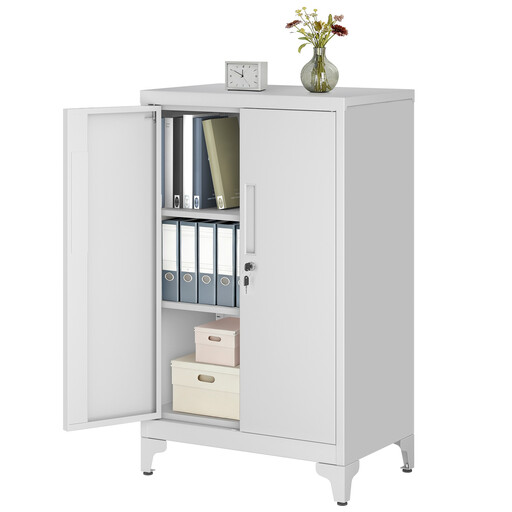
Why This Model Stands Out This cabinet combines the function of a secure storage unit with a discreet design. Instead of drawers, it offers two adjustable shelves, making it particularly flexible for storing larger items, tool cases, or consumables.
Advantages:
Who It's For For users who need a lockable and flexible storage solution for items of various sizes and place less emphasis on detailed sorting in drawers.
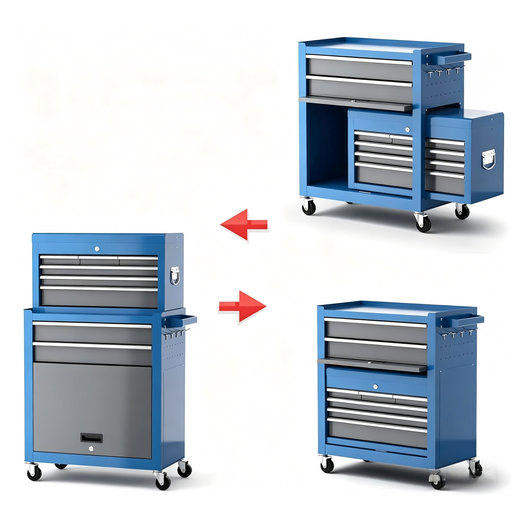
Why This Model Stands Out This model is designed for heavy loads and maximum organization. With a load capacity of up to 249 kg (550 lbs) and a cold-rolled steel construction, it's built for demanding tasks. The side pegboards with hooks provide additional, quickly accessible storage space.
Advantages:
Who It's For For ambitious DIYers and professional craftspeople who require a high load capacity and want to keep frequently used tools within easy reach on the outside of the chest.
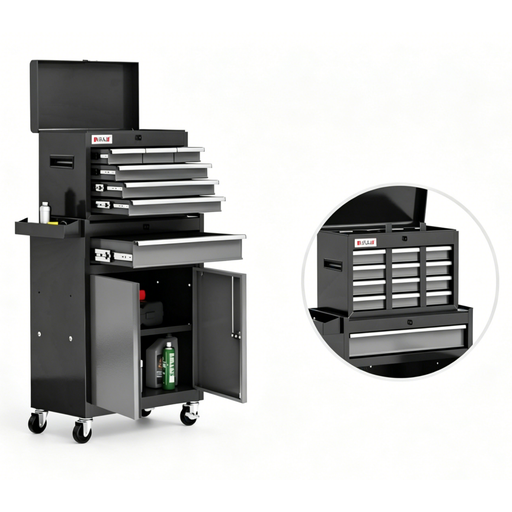
Why This Model Stands Out The focus here is on detailed organization. With a variety of drawers in three different sizes (large, medium, small), this tool chest allows for precise sorting of tools and small parts. The lockable double door in the lower section provides additional protection.
Advantages:
Who It's For For users who own a large number of different tools and accessories and prefer precise, clear organization.
The models featured here cover common requirements, but the market offers an even wider variety. If you're looking for different sizes, configurations, or specific features, you can find more solutions in our category.
? Discover more durable garage storage containers here.
A tool chest is essentially a rolling tool cabinet designed for use in a fixed location like a workshop or garage. It offers a large storage capacity and serves as a mobile workstation. A toolbox, on the other hand, is intended for transporting tools to different job sites and is carried by hand.
The load capacity varies greatly depending on the model, material, and construction. Basic models for home use often hold around 100–150 kg. Professional tool chests made of thick-gauge steel, however, can support total weights of 500 kg or more. The exact specifications for the maximum load per drawer and overall can always be found in the manufacturer's product details.
A locking mechanism is recommended if the chest is in a shared workshop to prevent theft. It is even more important for safety reasons, to keep sharp or dangerous tools securely away from children. For a private, locked garage, it is a useful but not strictly necessary feature.