
Lieferung heute & morgen

Qualitätsgarantie

Willkommens-Angebote freischalten: KOSTENLOSE Lieferung | Bis zu 80 % RABATT | Kostenlose 30-Tage-JoyPlus-Testphase
App herunterladen
As a Joybuy Product Recommendation Officer, I see daily how a well-organised workspace boosts efficiency and safety. A cluttered area, scattered tools, and the constant search for the right wrench not only cost time but also cause frustration. A thoughtfully designed tool chest is a functional solution to this problem. It consolidates tools in one mobile, orderly place and doubles as a flexible work surface.
This article serves as a guide. It highlights the essential features you should look for when making your selection and presents various models to help you make an informed decision for your workshop, garage, or warehouse.
Selecting the right model depends on your individual needs. The following three criteria will help you narrow down your options.
The durability of a tool chest is largely determined by the material used and its craftsmanship. Models made from cold-rolled steel offer high stability and resilience against the daily demands of a workshop. Pay close attention to the specified maximum load capacity. While a lower capacity is often sufficient for occasional home use, professional users typically need a rolling tool cabinet that can safely store and move several hundred kilograms of tools. A powder-coated finish provides additional protection against scratches and rust.
A good tool chest with drawers is distinguished by a smart layout. A combination of shallow drawers for hand tools like screwdrivers and pliers, along with deeper compartments for power tools or larger equipment, is ideal. Features like ball-bearing slides ensure smooth opening and closing, even when fully loaded. Additional features such as non-slip drawer liners protect both the tools and the drawers from damage and reduce noise. Pegboards on the sides offer a practical way to hang frequently used tools for easy access, further optimising your garage tool storage.
Mobility is the core feature of a rolling tool cart. Check the quality of the casters. Smooth-gliding universal wheels, ideally made of rubber, allow for quiet and floor-friendly movement. At least two of the wheels should be equipped with locking brakes to securely position the cart at your workstation. For the security of your equipment, a lockable tool chest is advantageous. Depending on the model, there are central locking systems that secure all drawers at once, or separately lockable compartments and doors. This is particularly relevant in shared workshops or for child safety.
Based on the criteria mentioned, we have compiled a selection of models that cover different needs for capacity, security, and portability.

Why it stands out: This model combines a very high load capacity with thoughtful details like an integrated pegboard and protective mats, making it a robust and flexible solution for demanding environments.
Pros:
Who is it for? Ideal for professional mechanics and ambitious DIYers who need mobile tool storage with high load capacity and flexible organisational options for a fully equipped workshop.

Why it stands out: The focus of this cart is on security and systematic organisation. The lockable double doors in the lower section and the versatile drawer arrangement allow for secure and clearly structured tool storage.
Pros:
Who is it for? Suitable for users in workshops and garages who place a high value on theft-proof storage for their equipment and prefer clear sorting by tool type and size.
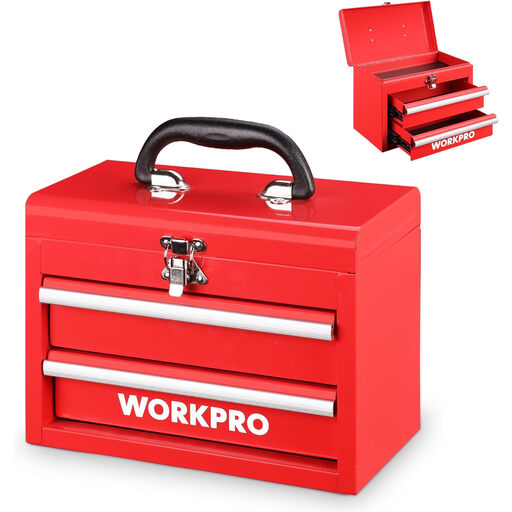
Why it stands out: This box is a compact and portable alternative to the classic tool chest. With its ball-bearing drawers and sturdy handle, it is excellent as a tabletop organiser or for smaller, mobile tasks.
Pros:
Who is it for? Perfect for DIY enthusiasts, hobbyists, or even for the office, who are looking for a space-saving, stylish, and portable alternative to a tool box with wheels for organising smaller tools, materials, or office supplies.
Haven't found the right model for your specific needs yet? The requirements for tool organisation are as varied as the projects themselves. Sometimes a large, stationary chest or a specialised case is the better choice.
Discover more solutions and compare different formats in our Tool Boxes & Chests category.
The main difference lies in capacity and mobility. A tool chest is essentially a mobile tool cabinet on wheels that can hold a large quantity of tools and often provides an additional work surface. A tool box is designed for maximum portability, has a smaller capacity, and is carried to different job sites.
The load capacity varies greatly depending on the model, material thickness, and construction. Simpler models for home use are often designed for a total load of about 100 to 150 kg. Professional tool chests made of thick-gauge steel, on the other hand, can easily hold 500 kg or more of tools. The exact specification can be found in the manufacturer's technical data.
Many models are designed as a lockable tool chest to protect the contents from unauthorised access. There are various systems: some chests have a central locking mechanism that secures all drawers simultaneously with one key. Others offer separately lockable doors or compartments. This feature is especially important in shared workshops or for keeping tools away from children.