
Lieferung heute & morgen

Qualitätsgarantie

Willkommens-Angebote freischalten: KOSTENLOSE Lieferung | Bis zu 80 % RABATT | Kostenlose 30-Tage-JoyPlus-Testphase
App herunterladen
For many home and garden owners, having the right DIY tools is the foundation for successful repair, maintenance, and creative projects. But the market is confusing and filled with marketing promises that often obscure more than they clarify. The result is frequently buyer's remorse: tools that fail after a short time, are unsuitable for their intended purpose, or pose a safety risk. This guide will help you identify the crucial quality features and make an informed choice.
Before we dive into the technical details, it's important to know the most common traps that lead to unsatisfying results and unnecessary expenses.
To avoid these pitfalls, you should focus on a few, but decisive, technical parameters. These provide insight into the actual quality and suitability of a tool for your DIY needs.
For any power tool, especially cordless tools, the drive system is the heart. There are significant differences here:
With a hand tool set or automotive tools, the material determines durability and safety.
Instead of making a blanket recommendation, we have identified products tailored to specific user profiles.

Why it's a great fit: Ideal for anyone who needs a solid basic kit for occasional household repairs without investing in an overloaded set. It covers the most common use cases.
This set bypasses the "all-in-one" myth by focusing on four essential, high-quality pliers instead of an overwhelming amount of filler items.
The heat-treated alloy steel construction ensures durability, while the ergonomic grips allow for comfortable work.

Why it's a great fit: A versatile and powerful cordless drill for more demanding tasks. Ideal for drilling in wood and metal, as well as for precise screwdriving in furniture assembly or renovations.
It counters the trap of unrealistic battery claims by being part of the 18V POWER FOR ALL ALLIANCE. The battery is compatible with many other tools and stands for reliable, tested performance.
The 2-speed gearbox and 20 torque settings allow for precise power adjustment for any task—from powerful screwdriving to high-speed drilling.
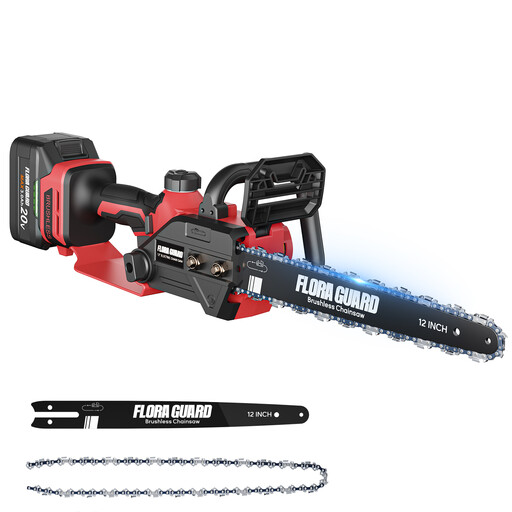
Why it's a great fit: For homeowners who regularly prune trees and shrubs or cut firewood. The cordless freedom combined with high power makes garden work significantly easier.
It addresses the pitfall of neglected quality and safety with a powerful 1200W brushless motor and an integrated automatic lubrication system that extends the life of the chain and bar.
Two included 4000mAh batteries provide extended runtime, allowing larger projects to be completed without constant charging interruptions.
We've compiled a complete, up-to-date list of products that fully meet these strict selection criteria and safety regulations.
1. What should I look for in the battery performance of cordless tools? Pay attention to the interplay of voltage (V) and capacity (Ah). Voltage (e.g., 18V) determines the device's maximum power. Capacity (e.g., 4.0 Ah) indicates how long the battery will last under load. For short, powerful tasks, a high voltage with lower capacity may suffice. For endurance work like mowing or hedge trimming, high capacity is crucial.
2. What is the difference between a brushed motor and a brushless motor? A brushed motor uses carbon brushes to transfer power, which wear down due to friction. A brushless motor is electronically controlled, resulting in less friction, lower heat generation, higher efficiency, and a longer motor lifespan. For tools you use regularly and intensively, a brushless motor is a worthwhile investment.
3. Do I need a complete tool set, or is buying individual tools better? For beginners, a small, high-quality basic set (e.g., a pliers and screwdriver set) can be a good foundation. However, avoid oversized, cheap sets. It's often better to selectively buy high-quality individual tools for the tasks you actually perform. This way, you gradually build a kit that meets your needs and that you can rely on.