
Lieferung heute & morgen

Qualitätsgarantie

Willkommens-Angebote freischalten: KOSTENLOSE Lieferung | Bis zu 80 % RABATT | Kostenlose 30-Tage-JoyPlus-Testphase
App herunterladen
The selection of tool sets can be overwhelming. Whether for a quick repair at home, bicycle maintenance, or creative DIY projects – the right set saves time, money, and frustration. But the market is flooded with offers that promise more than they deliver. Many buyers invest in extensive cases, only to find that the tools are impractical or fail after a short time.
As your Joybuy Product Recommendation Officer, I'm here to help you navigate the marketing noise. Instead of falling for empty promises, we'll focus on the facts. This guide reveals the three most common traps when buying a tool set and what you should look for instead to make an informed decision.
Before you invest, you should be aware of the typical weaknesses that often only become apparent after the purchase.
To avoid these traps, you should focus on verifiable quality features. These three parameters are decisive for the longevity and functionality of your tools.
The durability of a screwdriver set or its bits depends directly on the steel used.
In a ratchet set, the internal mechanism is crucial. The number of teeth in the ratchet head determines the swing arc – how little you need to move the handle to get to the next "click."
A well-designed tool case is more than just a storage box. Ensure that every part has a fixed, clearly labelled spot. Magnetic holders or custom-fit inserts prevent bits and sockets from getting jumbled during transport. A compact and well-organised repair kit is ready for action the moment you need it.
Instead of making a one-size-fits-all recommendation, we have identified tools tailored to specific user profiles.
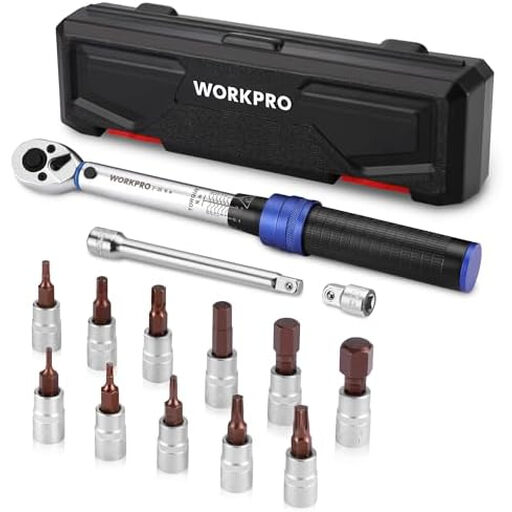
Why This Fits Their Persona: Ideal for users who need to adhere to exact torque values for bicycle or motorcycle maintenance. This set is not a jack-of-all-trades but a specialist for tasks where precision is crucial to prevent damage to sensitive components.
It bypasses the quantity trap by focusing on a single, high-quality function: precise screw tightening. Instead of unnecessary parts, it offers a calibrated mechanism for a specific task.
The torque range of 2-26 Nm with ±3% accuracy and the audible "click" signal upon reaching the value prevent over-tightening of screws. Includes an extension bar for hard-to-reach places.
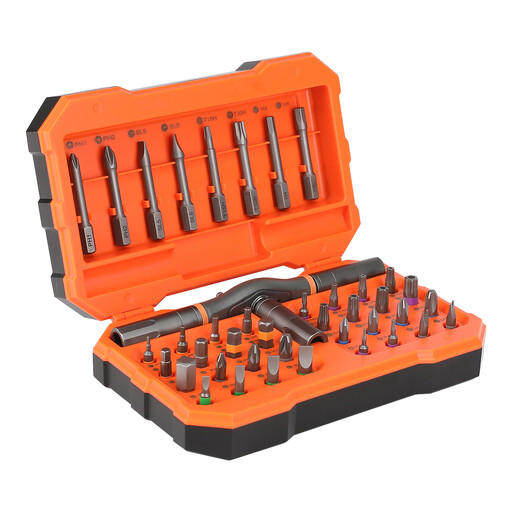
Why This Fits Their Persona: Perfect for the all-rounder who needs a compact and versatile repair kit for furniture assembly, minor electronics repairs, and general household tasks. The focus is on flexibility and space-saving organisation.
This set directly addresses the material trap by using bits made of S2 tool steel. The compact, magnetic case also solves the problem of impractical storage.
The multifunctional handle can be used as a ratchet screwdriver and a wrench. The set includes 40 different bits, including 8 extended bits for deep-set screws.
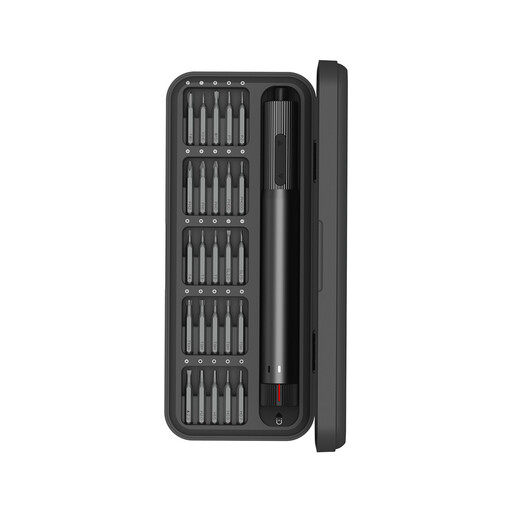
Why This Fits Their Persona: Designed for tech enthusiasts and hobbyists who regularly work on laptops, smartphones, drones, or other small devices. The electric function significantly speeds up work involving many small screws.
This set is the opposite of a bulky, all-purpose case. It is extremely compact, highly specialised, and solves a specific problem (efficiently driving small screws) without any unnecessary filler.
The mini-portable design and electric drive make it ideal for precision work. With 25 specialised bits and a long battery life, it's an efficient tool for the modern DIY tool assortment.
We have compiled a complete, up-to-date list of products that fully meet these strict selection criteria and German safety regulations.
S2 tool steel is a harder and more wear-resistant alloy than standard Chrome Vanadium steel (CR-V). While CR-V is sufficient for many general-purpose tools like pliers or wrenches, S2 steel offers significantly longer life for screwdriver bits that must withstand high torque, and it protects screw heads from stripping.
Quality over quantity. Instead of a 200-piece case with many filler items, a well-curated set with 30 to 50 high-quality, relevant parts is often the better choice. Such a set should include a good ratchet, the most common sockets, an assortment of durable bits (Phillips, flathead, Torx), and possibly an extension.
For occasional work in easily accessible areas, it's not essential. However, as soon as you work in confined spaces – such as behind a cabinet, in a car's engine bay, or during bicycle repair – a finer ratchet mechanism with 72 teeth pays off. The small 5-degree swing arc allows for continuous work where coarser ratchets would hit their limits.