
Lieferung heute & morgen

Qualitätsgarantie

Willkommens-Angebote freischalten: KOSTENLOSE Lieferung | Bis zu 80 % RABATT | Kostenlose 30-Tage-JoyPlus-Testphase
App herunterladen
A tool set should make repairs easier, rather than becoming unusable and gathering dust in a cupboard after a short time. That is why the number printed on the packaging is not the only thing that matters when buying one. Many shoppers look for “100-in-1” or particularly low prices, overlooking the fact that a large proportion of the tools included may not be suitable for their needs.
Three common buying misconceptions occur particularly often:
The right choice therefore depends on the jobs you actually need to do: assembling furniture, household repairs, bicycle maintenance, electronics, DIY projects or vehicle maintenance.
For general household repairs, a combination of a screwdriver set, bits, a small ratchet set and several sockets is usually a sensible choice. Pay attention to the sizes and profiles included:
A socket set with a 1/4-, 3/8- or 1/2-inch drive covers different levels of force. A compact set is often sufficient for furniture and bicycles. Larger drives and suitable levers are needed for wheel nuts or seized screws.
For tools that are used frequently, specific material details are more helpful than general advertising claims. Chrome vanadium steel (Cr-V) is commonly used for sockets, spanners and ratchets. S2 steel is often found in bits and is designed for precise screw profiles.
A coating can help protect the surface, but it does not replace proper storage. Black oxide, phosphating or a chrome-plated surface are technical details describing how the material has been treated. After use, tools should be cleaned of dirt and moisture and stored in a dry place.
Fit is also important: a bit or socket must match the screw head exactly. An insert that is too small or worn can slip, damaging both the tool and the fastener.
A non-slip handle, an easily accessible direction switch and a clearly organised storage case make everyday jobs easier. In a tool case, every piece should have its own dedicated place. This reduces the time spent searching and makes it easier to spot missing inserts early.
The stated load limits are important for ratchets and breaker bars. A model with several drive sizes is flexible, but it must not be used beyond the specified maximum torque. When working on vehicles, always use suitable sockets and replace damaged inserts. Metal power tools are not suitable for work on live parts unless they have the appropriate insulation and certification.
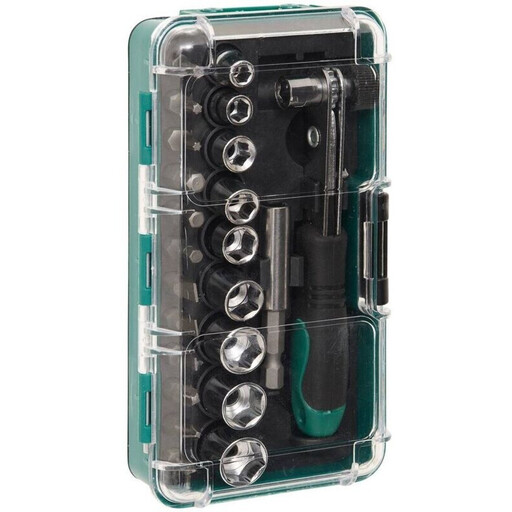
Why this product suits this profile: This compact set combines a 1/4-inch ratchet with 11 bits, 9 sockets from 4 to 12 mm and a magnetic adapter. It is suitable for smaller jobs around the home, in the garage or in the bicycle shed.
The number of pieces can be verified through the specific bit and socket sizes. The sturdy case helps keep everything neatly organised.
Compact dimensions of 8.5 × 3.5 × 15.5 cm and a weight of 0.375 kg.
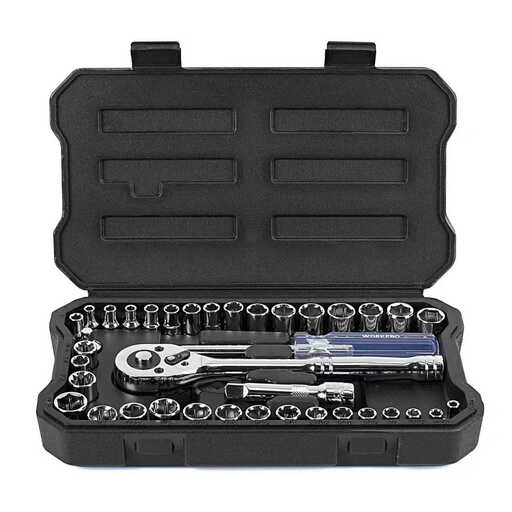
Why this product suits this profile: This set combines metric and imperial sockets with 1/4- and 3/8-inch drives. That is useful when you want one tool case to cover household repairs, bicycles and occasional car work.
The CR-V material specification and the included drive sizes are clearly stated. This makes it easier to assess the intended uses before buying.
39 pieces, quick-release ratchet, compact storage, plus metric and SAE sockets.
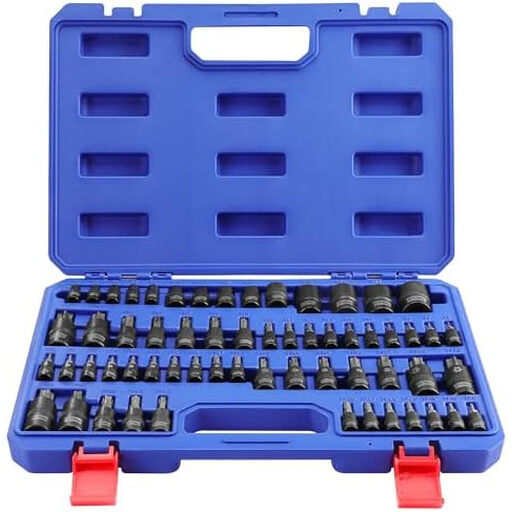
Why this product suits this profile: For hobby mechanics and repairs to vehicles, machinery or garden equipment, this Torx bit set offers a range of Torx, Torx Plus and security profiles.
The profiles and sizes are listed individually: E4–E24, T6–T70, plus security and Torx Plus variants.
S2 steel bits, Cr-V steel sockets and a labelled storage case.
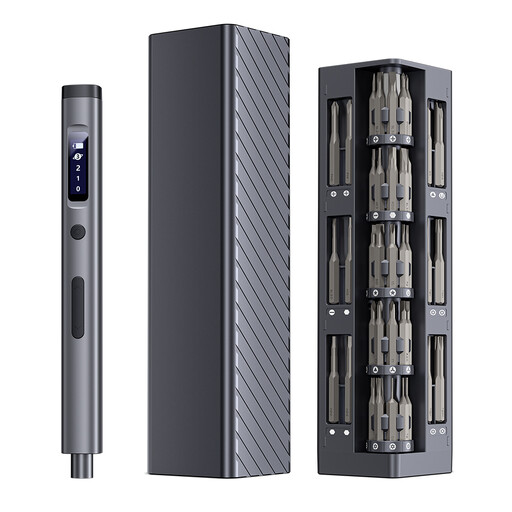
Why this product suits this profile: This set is designed for small screws in electronics, household items and DIY projects. Its electric torque range is 0.1 to 0.35 Nm, while the manual torque is 3 Nm.
The low torque range is suitable for precision work and should not be compared with an automotive tool set designed for high forces.
52 bits, 500-mAh battery, charging time of under 90 minutes, plus accessories such as tweezers and a demagnetiser.
We have put together a complete, regularly updated list of products that fully meet these strict selection criteria and the safety regulations applicable in the EU.
Before starting any job, select the correct insert and place it fully onto the screw head. With a ratchet, a quick check of the direction switch is helpful. Do not use damaged sockets, and do not use a ratchet as a hammer or lever unless it has been designed for that purpose.
For safe working, safety glasses and suitable gloves are recommended. The power supply must be disconnected when working on electrical equipment. After use, remove oil, dust and moisture with a dry cloth. Storing tools in a dry place inside the tool case helps prevent unnecessary corrosion and stops small bits from getting lost.
For both areas, a set with screwdrivers, bits, a ratchet and metric sockets provides a practical foundation. For regular vehicle maintenance, it should also include larger sockets, extensions and a robust drive. A small precision set remains useful for electronics and fine screws.
Its lifespan depends on the material, the load placed on it, care and storage. Properly fitting inserts that are not overloaded generally last longer than tools that are used incorrectly or are damaged. Rust, chipped bit tips, loose ratchet mechanisms and visible cracks are all reasons to replace a tool.
A large tool case is worthwhile if you regularly carry out different types of repair and genuinely need the sizes included. For occasional furniture assembly, a compact ratchet set or screwdriver set may be more economical and easier to store. The key is matching the contents of the set to your personal requirements.