
Lieferung heute & morgen

Qualitätsgarantie

Willkommens-Angebote freischalten: KOSTENLOSE Lieferung | Bis zu 80 % RABATT | Kostenlose 30-Tage-JoyPlus-Testphase
App herunterladen
A tool set can provide a practical starting point for assembly, flat-pack furniture and minor repairs. But a high piece count, shiny finish and impressive product images can quickly lead you to choose the wrong set. A 450-piece tool case isn’t automatically more useful than a compact hand tool set with six carefully chosen tools.
Before you buy, think about the jobs you’ll actually be doing, how easy the tools are to access and whether the sizes included will fit your screws, nuts and components.
When choosing a tool box, it’s not just the number of pieces that matters, but how they’re distributed. Some sets contain lots of almost identical bits or small accessories, but lack a suitable hammer, combination pliers or certain socket sizes.
For occasional jobs around the house, screwdrivers, pliers, a hammer, a tape measure and a small set of bits are often enough. If you also work on a bicycle, motorbike or car, you’ll usually need a ratchet set, a socket set and a wider range of metric sizes.
A tool set for home and car can include a versatile selection, but it won’t automatically replace specialist tools. For example, electrical work requires insulated tools with the appropriate markings. Work on safety-critical vehicle components should only be carried out using suitable tools and with sufficient expertise.
Also check whether the set includes metric sizes, SAE sizes or both. Metric measurements are especially relevant for everyday use in Germany. SAE sockets can still be useful for certain vehicles or imported machinery.
A tool set with a case should be easy to carry and well organised. Check whether every piece has its own place, whether the case closes securely and whether tools fall out when you open it. A poorly fitting insert makes it harder to find what you need and can make missing pieces harder to spot.
Chrome vanadium steel, often referred to as Cr-V, is a common material for hand tools that see regular use. However, the way each tool is made matters too: heat treatment, fit, handle design and surface finish all affect how it performs.
A chrome-plated or otherwise coated surface can make cleaning easier and reduce exposure to moisture. It won’t, however, protect a tool from poor storage. After use, wipe your tools dry and store them somewhere dry.
When comparing tool cases, look beyond the total piece count and check which categories are included:
A screwdriver set with several bit types can be useful for assembling furniture and working on electronics casings. For stubborn screws, a sturdy handle with the right bit matters more than an especially long list of accessories.
With a ratchet set, consider the direction switch, release mechanism and swing angle required. A fine-tooth mechanism can make it easier to work in tight spaces because the ratchet doesn’t need to move as far. That doesn’t mean every model is suitable for high torque.
For car repairs, also look for extensions, joints and suitable socket sizes. A small repair kit for the boot serves a different purpose from a heavy-duty workshop case with lots of sockets.
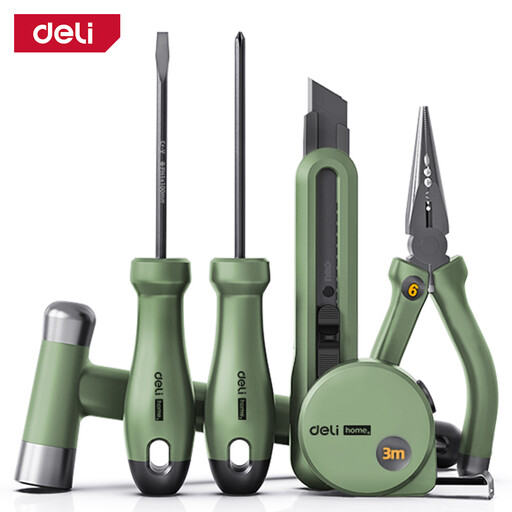
Why this product suits this profile: This compact set covers common quick repairs in a flat, student accommodation or office, while taking up very little storage space.
The number of pieces is kept manageable, so beginners don’t pay for lots of rarely needed bits or duplicate sizes.
The set includes a hammer, tape measure, screwdriver, pliers and spanner, among other tools. Its compact storage makes everything easy to access.
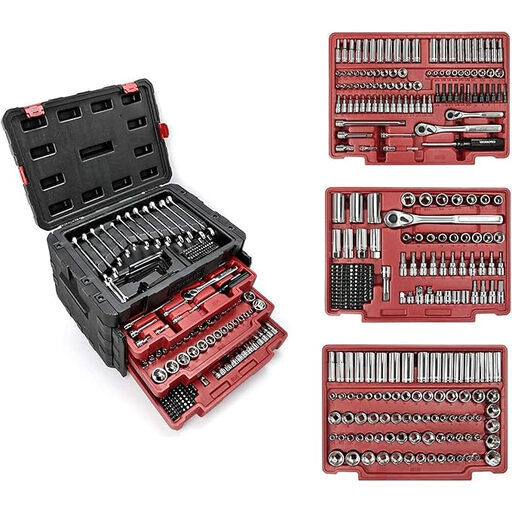
Why this product suits this profile: For homeowners, workshop users and car owners, this case offers a wide selection for regular assembly and maintenance jobs.
The product details list four case inserts, dedicated slots and locking clips. This makes it easier to keep track of the extensive contents.
According to the product description, the set includes 450 pieces, Cr-V steel tools and metric and SAE sockets. It weighs 19.7 kg.
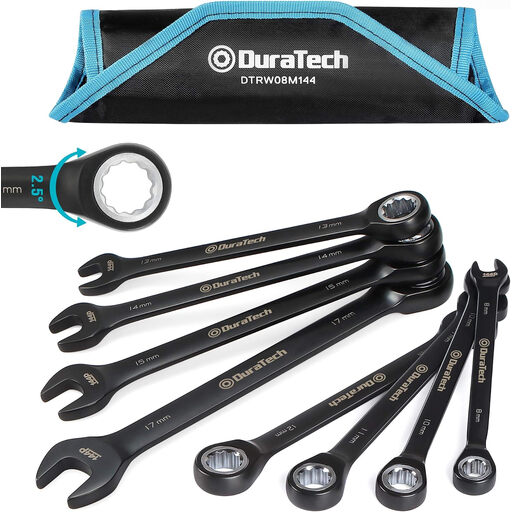
Why this product suits this profile: This set is designed for people who regularly work on vehicles, machinery or fastenings in hard-to-reach places.
Rather than including lots of unused accessories, the selection focuses on eight specific metric sizes, from 8 to 17 mm.
The product description lists a 144-tooth mechanism with a 2.5° swing angle, plus a roll-up pouch for the vehicle or workshop.
We’ve put together a complete, regularly updated list of products that meet these strict selection criteria and fully comply with the safety regulations in force in the EU.
Even a well-chosen tool set needs regular care. Wipe metal surfaces dry after use and remove dirt from ratchets or sockets. Don’t leave the set permanently in a damp cellar or unprotected in your vehicle.
Only use each tool for its intended purpose. A screwdriver isn’t a chisel, and a ratchet shouldn’t be used as a lever unless it’s designed for that. Replace tools with visible cracks, bent parts or damaged handles. Wear suitable safety goggles when carrying out work that could cause splinters or breakages.
For typical household jobs, a hammer, tape measure, screwdriver, combination pliers, a small set of bits and, where needed, a spirit level are usually enough. A compact household tool set takes up less space than a large tool case, making it a good choice for rented homes and students.
How long it lasts depends on the materials, how heavily it’s used, how well it’s cared for and how it’s stored. Cr-V steel tools are designed for many assembly and repair jobs. However, overloading, using the wrong sizes and exposure to moisture can all cause premature wear, whatever the material.
For occasional work on a vehicle, a car tool set with metric sockets, a ratchet, extensions and suitable spanners is a good starting point. Before you buy, check that it includes the sizes and drive types you need. Specialist repairs may require additional torque tools or other specialist equipment.