
Lieferung heute & morgen

Qualitätsgarantie

Willkommens-Angebote freischalten: KOSTENLOSE Lieferung | Bis zu 80 % RABATT | Kostenlose 30-Tage-JoyPlus-Testphase
App herunterladen
A tool set can make repairs around the home, on your bike or on your car much easier. However, extensive product descriptions do not automatically guarantee that a set contains the right equipment. Many buyers initially focus on the number of pieces and overlook whether the tools included are suitable for the job they actually need to do.
Three common buying misconceptions are particularly widespread:
Before buying, you should therefore consider not only the price, but above all how and where you plan to use the set.
For a tool set for household repairs and DIY, screwdrivers, bits, pliers, a hammer, a tape measure and a few Allen keys are often sufficient. For vehicle repairs, on the other hand, a socket set with several drive sizes is a sensible choice.
Common drive sizes include:
A ratchet case with metric and SAE sockets offers additional flexibility. In Germany, metric sizes are generally more important for everyday use. SAE sizes can nevertheless be useful when servicing American vehicles, older machinery or imported products.
For frequently used DIY tools, the material specification is an important point of comparison. Chrome vanadium steel, commonly abbreviated to Cr-V, is often used for sockets, spanners and ratchets. Other important features include:
A polished or chrome-plated surface can make cleaning easier and help protect against corrosion. Even so, tools should be wiped down after use and stored in a dry place. Moisture, road salt and dirt can eventually damage coated surfaces too.
A torque wrench is useful for bicycle components, sensitive bolted connections and certain vehicle repairs. The key specification is the torque range in Newton metres (Nm).
A smaller range, such as 2 to 20 Nm, is more suitable for bicycle components and smaller fastenings. Larger vehicle repairs require a different range. A tool with a minimum setting that is too high may be impractical for sensitive components.
With electronic models, buyers should check the display units, alarm function, direction of rotation and power supply. A stated accuracy is a product characteristic based on the manufacturer’s specifications and should not be taken as a guarantee of permanent calibration. The instruction manual, storage conditions and proper use remain essential.
The following products meet different requirements – from a compact household repair set to a torque tool for bicycle and mechanical work.
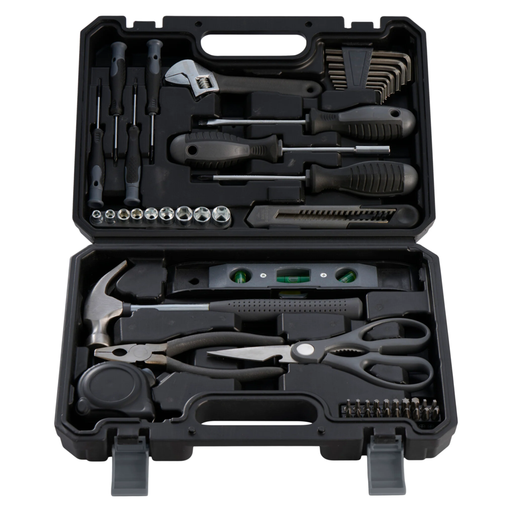
Why this product suits this profile: This 57-piece set is designed for typical household repairs, furniture assembly and straightforward DIY tasks. With a net weight of 1.9 kg, it remains comparatively easy to handle.
The contents focus on frequently needed tools instead of inflating the piece count with multiple identical bits. The case keeps everything securely organised.
Includes, among other things, a spirit level, tape measure, hammer, pliers, screwdrivers, precision screwdrivers, bits and sockets from 5 to 13 mm.
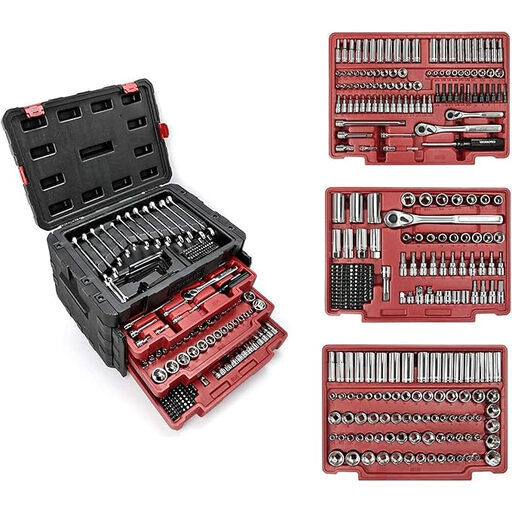
Why this product suits this profile: This comprehensive tool set is aimed at users who want to keep a broad socket set for car, workshop and household jobs in one case.
The set includes three drive sizes as well as metric and SAE sockets. This makes it easier to check before buying whether the sizes you need are covered.
450 pieces, Cr-V steel, quick-release ratchets and a case with four storage trays. The tools are intended for manual applications.
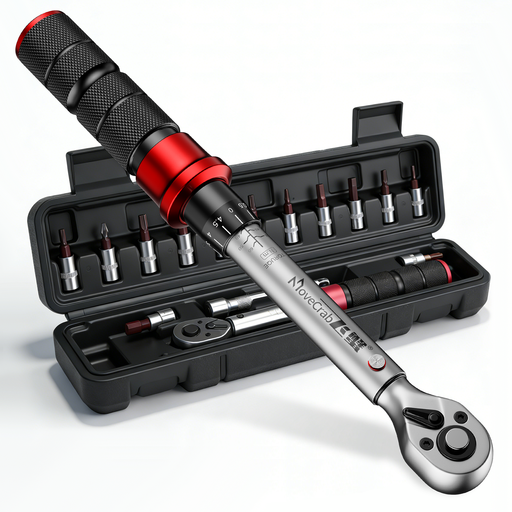
Why this product suits this profile: With a range of 2.0 to 20.0 Nm, it is suitable for bicycle maintenance and smaller precision jobs. The word “Professional” is part of the product name.
The defined torque range and increments down to 0.2 Nm make controlled adjustment easier. According to the product description, a click indicates that the set value has been reached.
15-piece set with seven hex bits, two Phillips bits and four Torx bits, plus a ratchet head for both directions of rotation.
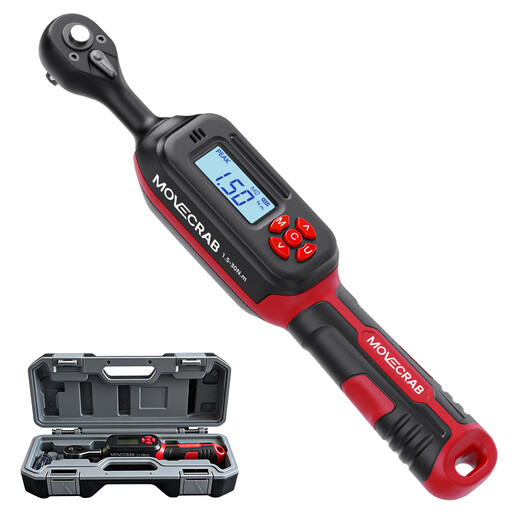
Why this product suits this profile: This digital model is ideal for users who want to read torque values and save recurring settings – for example when working on bicycles, motorbikes or carrying out smaller assembly jobs.
The torque range starts at 0.6 Nm. The display, vibration, audible signal and LED indicator make the set target value clear during use.
According to the product information, the accuracy is ±2%. There are also ten memory slots, plus Track and Peak modes with data storage.
A tool case is ideal when you need to transport your equipment and keep it protected. A toolbox often provides more open storage space and can be expanded later. For a permanent workshop setup, buying tools individually may make sense if you already own a large selection.
Before placing your order, it is worth running through this quick checklist:
For bicycle owners, a precise torque wrench is often more relevant than a comprehensive car tool case. If you assemble furniture, repair household appliances and occasionally work on your vehicle, however, a broad basic tool set could be a worthwhile investment.
We have put together a complete, regularly updated list of products that fully meet these strict selection criteria and the safety regulations applicable in the EU.
For typical household jobs, screwdrivers, bits, pliers, a hammer, tape measure, spirit level, Allen keys and a small socket set are useful. A 57-piece repair set can cover these basic tasks. For work on cars or machinery, the equipment should be expanded to meet the specific requirements.
Its service life depends on the materials, workload, care and storage conditions. Tools should only be used for their intended purpose, cleaned after use and stored somewhere dry. Damaged handles, worn ratchets or used-up bits should not be used any further.
A torque wrench is useful when the component manufacturer specifies a particular tightening torque. This often applies to bicycle parts, motorbike components and certain vehicle fastenings. The key point is that the tool’s torque range must match the specified value and that force is applied evenly.