
Lieferung heute & morgen

Qualitätsgarantie

Willkommens-Angebote freischalten: KOSTENLOSE Lieferung | Bis zu 80 % RABATT | Kostenlose 30-Tage-JoyPlus-Testphase
App herunterladen
A tool set for household and DIY can make repairs, assembly work and renovation tasks much easier. At the same time, unclear product specifications, unsuitable set sizes and overstated load ratings can quickly lead to poor purchases. Whether you are a tenant, homeowner, DIY enthusiast or installer, it is therefore worth checking the intended use, materials, storage and safety features carefully before buying.
A comprehensive tool case may sound practical at first. However, if it contains numerous variations that are rarely needed around the home, it may still lack important tools. For occasional repairs, a hammer, pliers, tape measure, screwdriver and adjustable spanner are often enough. If you regularly assemble furniture or carry out renovations, you will need a wider selection of bits, cutting tools or specialist accessories.
With a vacuum lifter for glass and tiles, the stated load capacity applies only under certain conditions. The surface must be clean, smooth and non-porous. Textured, dirty or damaged surfaces can affect the grip. A maximum load capacity is therefore not a blanket value for every situation and does not replace additional securing measures or compliance with the operating instructions.
A rechargeable electric cleaning brush can be suitable for tiles, grout, bathrooms, kitchens or vehicle care. However, statements such as “up to 90 minutes of runtime” depend on the speed, brush head and workload. An IPX7 rating also does not mean that every device may be operated permanently under water. Always follow the specific manufacturer’s instructions before cleaning.
Do not compare only the number of pieces, but also what they are designed to do. A 16-piece tool set may be sufficient for minor repairs if the included bits match the screws you have. A 29-piece tool set offers greater choice and is useful if you need to assemble furniture, tighten fittings or maintain a variety of household items.
Pay particular attention to:
For hand tools, steel components, properly fitted tool heads and secure connections are important points to check. Plastic handles should feel secure in the hand, even when dry. For a household tool set intended for occasional tasks, compact storage is practical. For regular use, the case should also protect against tools shifting around and becoming damaged.
With a wallpaper tool set, the combination of tools matters more than the number of pieces. Squeegees with different levels of rigidity can smooth delicate wallpaper and vinyl materials or press air bubbles out of more robust coverings. A safety lock on the utility knife and spare blades are important details, as blades must only be used by adults and with appropriate care.
With a tile lifter or glass lifter, the surface, weight, dimensions and working position must all be compatible. The product specifications for the manual SEESII vacuum lifter state a maximum load capacity of 200 kg and suitability for smooth, non-porous materials. This should be understood as the manufacturer’s specification and depends on the suction surface being correctly cleaned and undamaged.
According to the product description, the rechargeable model has a maximum suction force of around 272 kg, a digital vacuum display and four batteries, each with a capacity of 2,400 mAh. Before use, such figures should be checked against the actual weight of the material and the relevant safety requirements.
The following selection assigns different solutions to specific use cases. The information is based on the respective product descriptions.
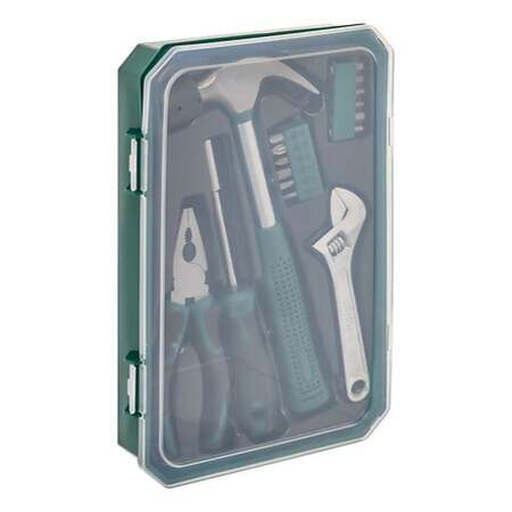
Why this product suits this profile: This compact hand tool set covers typical tasks in flats, cellars or garages and can be stored neatly without taking up much space.
The set focuses on pliers, a hammer, an adjustable spanner and 12 bits rather than specialist accessories that are difficult to use.
Compact case, ergonomic handles and slotted, Phillips, hex and Torx bits.
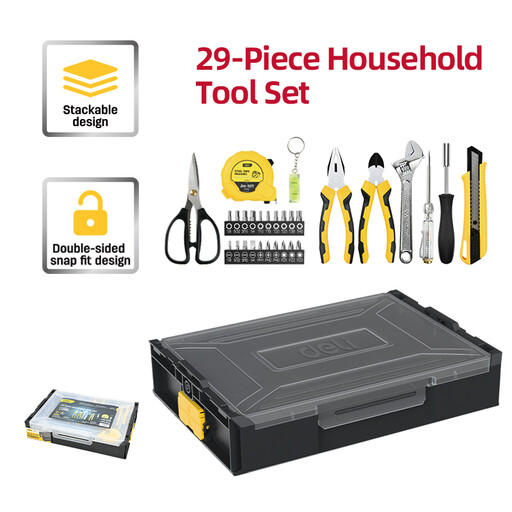
Why this product suits this profile: The wider selection is ideal for households where assembly, repairs and adjustments are carried out regularly.
The transparent case makes it easier to check the contents and reduces the risk of misplacing individual tools after use.
29 pieces, soft-grip surfaces and portable storage with a modular design.
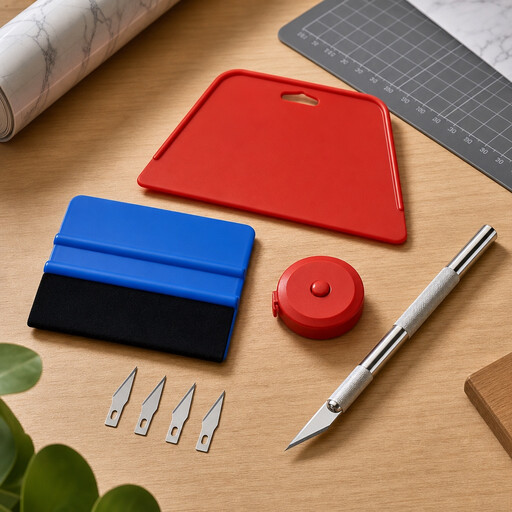
Why this product suits this profile: Renovators receive accessories for wallpaper, vinyl tiles, window film and similar DIY installation tasks.
Two silicone squeegees with different levels of rigidity are designed for delicate and more robust materials respectively; four spare blades help minimise interruptions when cutting.
10-in-1 selection, 1.5 m tape measure and utility knife with a safety lock.
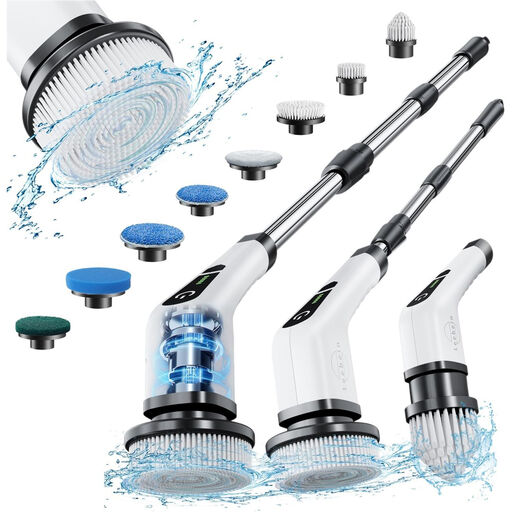
Why this product suits this profile: For regular cleaning of bathrooms, kitchens, tiles, grout and vehicle surfaces, this rechargeable solution offers several attachments.
It is not limited to a single brush head. The telescopic handle also reduces the need to bend frequently when cleaning floors and tiles.
Eight interchangeable brush heads, two speeds, USB-C charging and an adjustable handle extending up to 137 cm.
We have put together a complete, regularly updated list of products that fully meet these strict selection criteria and the safety regulations applicable in the EU.
To keep a repair tool in good working order for as long as possible, wipe it dry after use and store it in a dry place. Moving parts can be maintained in accordance with the instructions when used regularly. Visible damage to cutting blades, hammer heads or pliers is a reason to stop using the tool.
For rechargeable scrubbers:
For glass and tile lifters, the suction pads must be clean, undamaged and free from dust or grease. Large or heavy materials should ideally be moved by two people.
For typical tasks, a compact tool set with a hammer, pliers, tape measure, adjustable spanner and several screwdriver bits is often sufficient. The key is to choose a case that takes up little space and covers the most common screw profiles.
Its lifespan depends on the materials, load, storage conditions and frequency of use. Dry storage, choosing the right tool and avoiding excessive force help protect connections and surfaces. With rechargeable devices, charging cycles and storage conditions also affect the service life.
Running costs depend on the battery capacity, charging frequency and electricity tariff. With a USB-C rechargeable device, the direct charging costs are usually manageable. You should also factor in potential expenses for replacement brushes, batteries and other wear parts.