
Lieferung heute & morgen

Qualitätsgarantie

Willkommens-Angebote freischalten: KOSTENLOSE Lieferung | Bis zu 80 % RABATT | Kostenlose 30-Tage-JoyPlus-Testphase
App herunterladen
A tool set should make repairs easier, not turn into a confusing collection of unsuitable parts after just a few uses. Whether it is for the home, vehicle, workshop or assembly work, the key considerations are not simply the highest possible number of pieces, but the right sizes, secure storage and the intended area of use.
A tool case containing many pieces may seem versatile at first glance. In practice, however, duplicate bits, rarely needed sizes or low-quality accessories can reduce the usefulness of the contents. Before buying, check whether the tools included cover your most common tasks:
For UK households and many vehicle repairs, a metric socket set is generally more important than a large selection of imperial sizes. A ratchet set with a 1/4-, 3/8- or 1/2-inch drive can be useful depending on the task.
The term chrome vanadium steel describes the material, but on its own it does not prove that a tool is suitable for every application. Processing, surface treatment, precision of fit and load limits are also important.
A chrome-plated surface can make cleaning easier and limit contact with moisture. However, it does not automatically make a tool corrosion-proof. After working outdoors or on a vehicle, tools should be dried and stored in a dry place. Moving parts such as a ratchet may benefit from occasional light maintenance in accordance with the manufacturer’s instructions.
Loose tools can quickly disappear into drawers or the boot of your car. A tool bag with compartments or a tool case with dedicated slots saves time searching and prevents parts from knocking against one another. Look for:
A bag with a large capacity is not automatically practical if small bits and sockets are left loose at the bottom.
The drive size determines which sockets and extension bars can be used together. 1/4 inch is often suitable for smaller screws and confined spaces, while 3/8 inch offers a versatile middle ground for maintenance and assembly work. 1/2 inch is generally used for larger fasteners and higher manual forces.
Check the sizes included and whether adapters are supplied. A comprehensive mechanic’s tool set is only suitable if the ratchet, sockets and accessories are genuinely compatible.
A ratchet with a high tooth count only requires a small movement angle when tightening. This can be useful in confined areas. A quick-release button makes changing sockets easier. Nevertheless, do not use extension pipes or other levers unless the manufacturer permits this. Always observe the permitted load.
For vehicle maintenance and frequent assembly work, a cordless ratchet wrench can reduce manual effort. However, it does not automatically replace manual torque control. When finally tightening safety-critical fasteners, follow the vehicle or equipment manufacturer’s instructions.
For a cordless screwdriver or electric screwdriver, voltage, battery capacity, torque settings and bit holder are important specifications. A compact 3.7-volt screwdriver is intended for light assembly and repair work. It should not be equated with a more powerful electric tool designed for drilling.
Also check the charging time, stated operating time, items included and replacement battery availability. Electrical tools must not be used in damp environments unless they are expressly designed for this purpose. A tool with LED lighting improves visibility of the work area, but it does not replace a safe working environment.
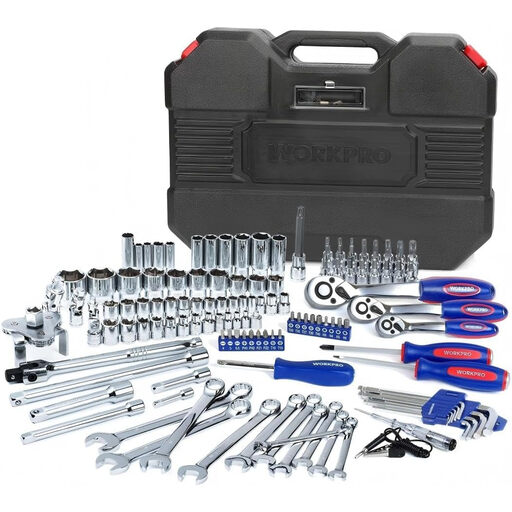
Why this product suits this profile: This set combines sockets, a ratchet, screwdriver, bits, spanners and hex keys for typical household and vehicle-related tasks.
The parts are stored in a moulded case with dedicated slots and fastening clips. This keeps frequently used tools organised.
123 pieces, metric and SAE sockets, plus a triple-chrome-plated finish according to the product description.
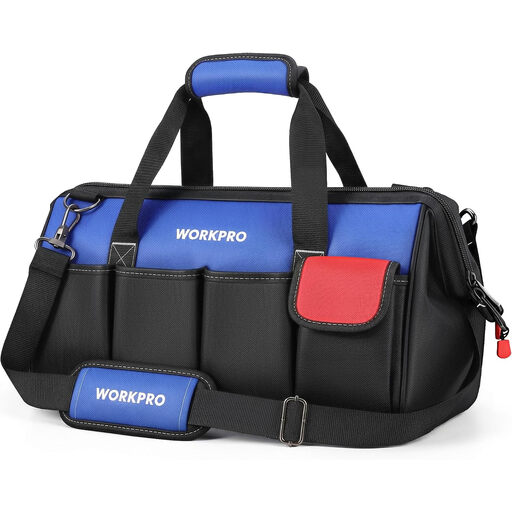
Why this product suits this profile: This tool bag is designed for users who regularly transport tools and value clear, convenient access.
The wide opening, multiple pockets and reinforced PE base help prevent the contents from becoming loose and difficult to access.
600D polyester, internal and external pockets, a metal frame around the opening and an adjustable shoulder strap.
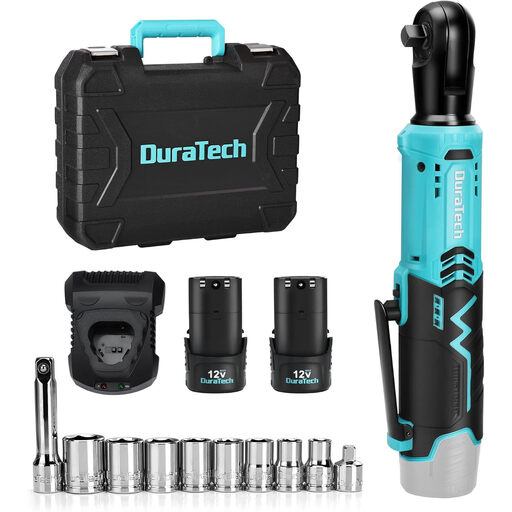
Why this product suits this profile: For vehicle maintenance, assembly work and repeated fastening tasks, the cordless ratchet wrench provides convenient cordless power.
Two 2.0 Ah batteries reduce longer interruptions for charging. The 3/8-inch drive and eight sockets also clearly define the tool’s intended applications.
According to the product description: 12 V, 65 Nm maximum torque, LED work light, charger and storage case.
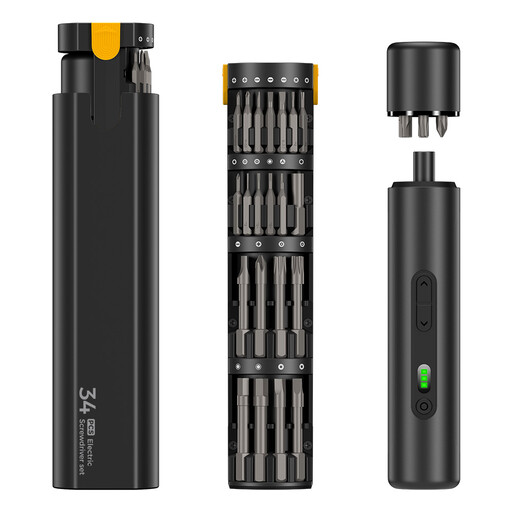
Why this product suits this profile: This compact DIY tool is suitable for assembling furniture, carrying out minor repairs and occasional screwdriving tasks around the home.
The adjustable torque of 1.2 to 3 Nm and magnetic storage case keep the intended applications and accessories manageable.
3.7 V battery with 1,500 mAh, 26 bits, three torque settings and a stated operating time of up to 60 minutes.
We have put together a complete, regularly updated list of products that fully meet these strict selection criteria and the safety regulations applicable in the EU.
For a car tool set, socket sizes, extension bars, ratchet access and robust storage for the boot are key considerations. For electricians and technicians, a tool bag with compartments is often more practical than a large case. Non-insulated tools must not be used on live electrical components.
DIY enthusiasts often benefit from combining a manual tool case with a small power tool. This keeps the ratchet set available for tasks requiring greater manual force, while the cordless screwdriver saves time when carrying out repeated screwdriving work. The crucial point is to stay within the technical limits of each product.
For basic household tasks, screwdrivers, bits, pliers, a tape measure, hex keys, sockets, a ratchet and extension bars are useful. A car tool set should also include suitable metric sockets and, where necessary, an adapter. The selection should be based on the tasks you plan to carry out, not just the stated number of pieces.
Service life depends on the material, load, maintenance and storage conditions. After use, tools should be cleaned of dirt and moisture, checked for damage and stored in a dry place. Ratchets and moving mechanisms require the maintenance specified by the manufacturer. Damaged or deformed parts should not be used again.
A manual tool set normally incurs no ongoing energy costs. With power tools, there are electricity costs for charging, as well as possible expenses for replacement batteries or wear parts. Therefore, compare not only the purchase price, but also the battery format, charger, items included and replacement parts available.