
Lieferung heute & morgen

Qualitätsgarantie

Willkommens-Angebote freischalten: KOSTENLOSE Lieferung | Bis zu 80 % RABATT | Kostenlose 30-Tage-JoyPlus-Testphase
App herunterladen
A tool set should cover a wide range of jobs without filling the case with parts you’ll never use. In practice, though, people often end up with the wrong set because size information is unclear, materials aren’t suitable or the accessories don’t match the intended use. DIY jobs around the home have different requirements from vehicle repairs, electronics or regular maintenance work.
This buying guide explains which technical details matter, which common marketing claims are worth checking carefully and which sets may suit different types of user.
A large socket set may look versatile at first glance. What matters, though, is whether the socket sizes, bit profiles and drive sizes match the screws and bolts you need to work with. A comprehensive set with lots of rarely used sizes may be less practical than a smaller tool set with the standard profiles you actually need.
Before you buy, check:
Words such as “robust” or “high quality” don’t tell you much on their own. More useful details include specific materials such as CRV steel (chrome vanadium) or carbon steel. This information can help you assess strength, corrosion resistance and intended use.
However, a tool made from CRV steel isn’t automatically suitable for every job. For example, sockets used with a cordless impact wrench must be specifically approved for use with impact tools. Conventional sockets can be damaged if used incorrectly.
A handle with a soft TPR coating can make longer jobs more comfortable. But it doesn’t replace choosing the right tool size, and it shouldn’t be mistaken for electrical insulation. A case is only practical if the tools are held securely and you can quickly check that everything is there.
With a screwdriver set, the profile and size must match the screw head exactly. Slotted, Phillips, Pozidriv and Torx profiles are common for everyday jobs around the home. A Torx key set should include the sizes you actually need, such as T10, T15 and T20, or larger profiles for machinery and vehicles.
For delicate jobs involving glasses, watches, cameras, smartphones or games consoles, a precision screwdriver set with small slotted and Phillips profiles is more suitable than a standard handle.
Socket sets are classified by the size of their square drive:
A higher torque rating doesn’t mean you should use it to tighten every screw. For safety-critical fixings, such as those on a vehicle, follow the manufacturer’s instructions and use a torque wrench where necessary.
CRV steel is listed as the material for several of the sets below. This may indicate reliable power transfer and greater resistance to wear when used as intended. Carbon steel is also commonly used for screwdriver blades.
Also check:
According to the product descriptions, the handles on the PROBUILDER screwdrivers are not electrically insulated. Do not use them on live circuits.
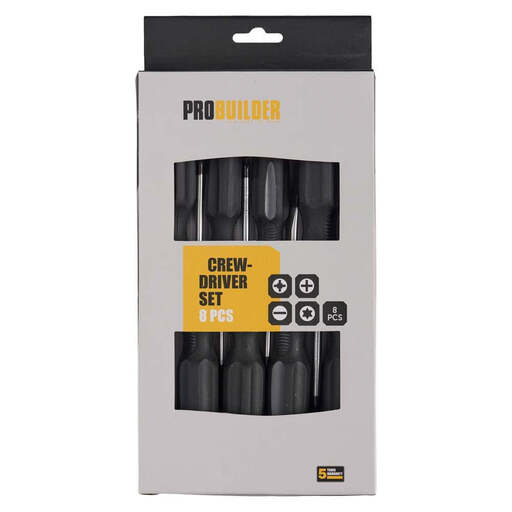
Why it suits this type of user: With eight screwdrivers covering slotted, Phillips, Pozidriv and Torx profiles, this set is suitable for everyday household, assembly and DIY jobs.
The profiles and sizes are clearly specified, so you can compare what the set offers with your needs before buying.
Eight clearly specified profiles, carbon steel blades and a choice of lengths.

Why it suits this type of user: With its 1/2-inch drive and 21 pieces, this set is designed for users who need a broader range of sockets for vehicle, machinery and more demanding assembly jobs.
The drive size, number of pieces, CRV material and case storage are all clearly specified.
A 21-piece CRV steel set with a 1/2-inch drive and carry case.

Why it suits this type of user: The more compact 3/8-inch drive is suited to maintenance, repairs and work on vehicles or household appliances when you need a handy selection of tools.
The 25 pieces are described, including the accessories and case, rather than simply being promoted with a high total count.
A 25-piece set made from CRV steel and supplied with a portable storage case.
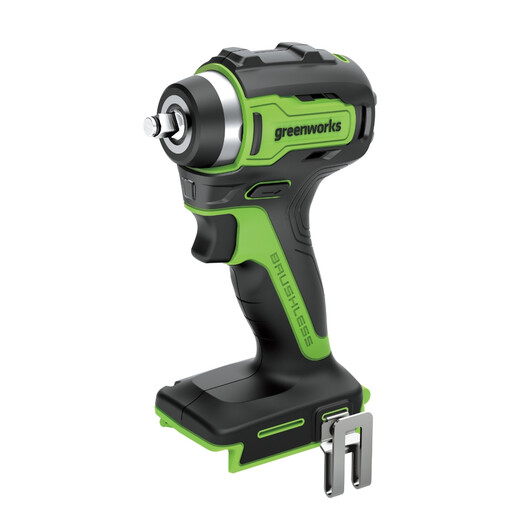
Why it suits this type of user: This cordless impact wrench has a 1/2-inch square drive and a stated torque of 200 Nm. It’s designed for the Greenworks 24V battery platform.
The battery and charger are explicitly not included, so you can factor these additional costs into your budget before buying.
24-volt system, 1/2-inch drive, 0–2,400 rpm, LED work light and product weight of 0.95 kg.
We’ve put together a complete, regularly updated list of products that meet these strict selection criteria and comply fully with the safety regulations in force in the EU.
For typical furniture assembly, repairs and maintenance, a set with slotted, Phillips, Pozidriv and Torx screwdrivers is a good starting point. You can add a compact socket set for other jobs involving hex fasteners or vehicles.
A 3/8-inch drive is more compact and suits many general maintenance jobs. A 1/2-inch socket set has a larger drive and is often used for more heavily loaded fixings. The right option depends on the size of the fastener, the available space and the force required.
After use, remove dust, oil and moisture from your tools, then store them somewhere dry. Don’t continue using damaged bits, cracked tools or bent screwdrivers. Don’t use sockets as levers or as striking tools.