
Lieferung heute & morgen

Qualitätsgarantie

Willkommens-Angebote freischalten: KOSTENLOSE Lieferung | Bis zu 80 % RABATT | Kostenlose 30-Tage-JoyPlus-Testphase
App herunterladen
A tool set can make individual repairs much easier – as long as its contents and design suit the jobs you actually need to do. A large case isn’t necessarily more useful than a compact selection. The key is having the right sizes, durable materials and storage that works in everyday use.
The phrase ‘complete tool set’ sounds comprehensive, but tells you little about how practical the contents are. A set may include lots of bits or small accessories, while missing commonly used socket, open-ended spanner or plier sizes. Before buying, check the detailed list of contents:
‘Steel’ is a very broad description. For tools that will be put under frequent strain, details such as Cr-V steel, chrome vanadium steel or heat treatment are more informative. However, they don’t replace checking the finish, joints, handles and surfaces.
If you’re choosing a professional tool set or tools for a workshop, you should also check the permitted load limits. For example, don’t overload a ratchet by using an unsuitable extension pipe.
A tool case with wheels is easier to move, but takes up more storage space and often weighs more. An aluminium tool case can keep your tools neatly organised, but check that it has sturdy catches, secure tool holders and dimensions that suit your available space.
For pliers and cutting tools, consider how the handles feel, the jaw opening, the locking mechanism and whether the tool is suitable for the material. Water pump pliers aren’t automatically a substitute for a cable cutter.
Chrome vanadium steel is commonly used for spanners and sockets. Also look for:
A combination spanner set is suitable for many assembly jobs, as the open-ended and ring ends provide different ways to access fasteners. A double ring spanner set can be more practical for recessed or hard-to-reach fasteners. S-shaped designs give you extra clearance around obstacles.
Compare the spanner sizes and jaw openings with the jobs you need to do. For plumbing, for example, the maximum jaw opening of water pump pliers is important. For vehicle maintenance, check the diameter range of an oil filter wrench and whether it’s compatible with your vehicle.
Check the drive sizes on a ratchet, too. A model with 1/4, 3/8 and 1/2 inch drives can cover several types of job, but won’t necessarily replace a complete socket set.
A compact case is suitable for occasional repairs at home. If you’re a mobile tradesperson or run a workshop, a case with wheels may be more practical. The key things to check are:
A DIY tool set may be enough for light assembly work. If you regularly work on cars, bikes or machinery, add specialist tools separately as needed.
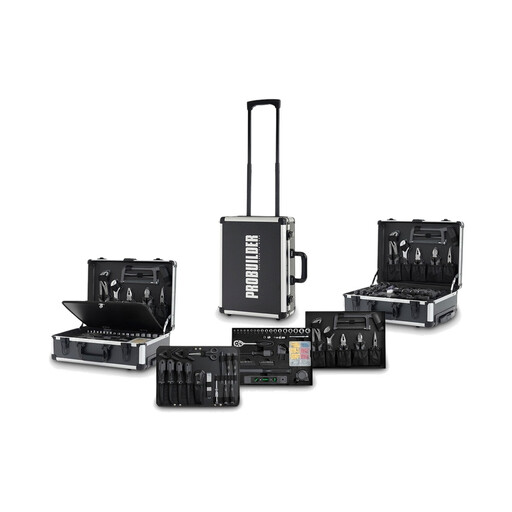
Why it suits this profile: This set combines 83 tools with 135 screws and wall plugs. According to the product details, it includes screwdrivers, bits, pliers, a hammer, a spirit level and a tape measure, among other items. The trolley case is designed for use at home or in the workshop, and for easy transport.
The contents are listed in detail, including both tools and fixing accessories. This makes it easier to assess what you’re actually getting before you buy.
83 tools, 135 accessories, an aluminium and plastic case, and wheels for easy transport; net weight according to the product details: 7,8 kg.
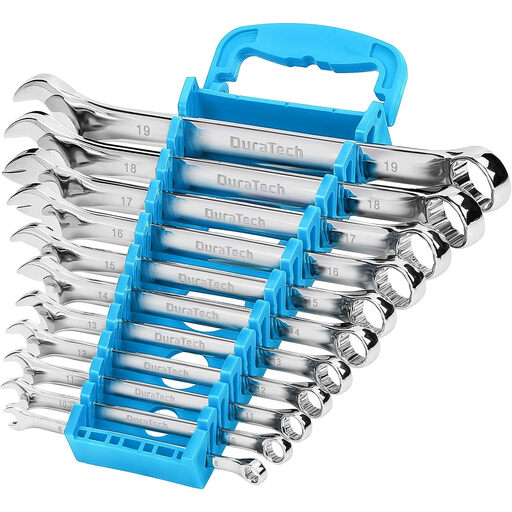
Why it suits this profile: This combination spanner set covers the stated metric sizes from 6 to 22 mm and is designed for use at home, for DIY and for vehicle maintenance.
Each size is listed individually and marked at both ends. The Cr-V steel material specification and reference to DIN 3113 make it easier to assess the technical details.
12 sizes, a ring end angled at 15°, a 12-point ring and a roll-up pouch for tidy storage.
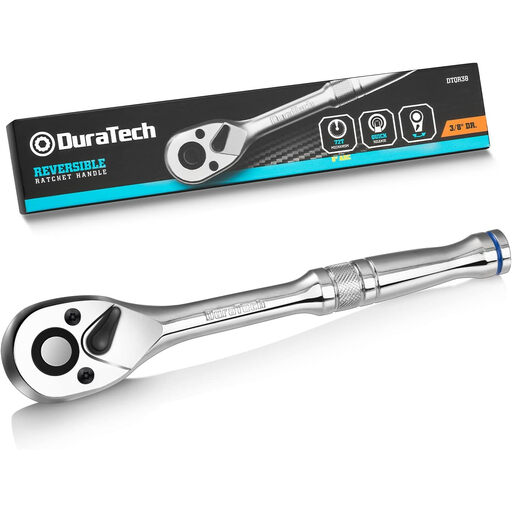
Why it suits this profile: For car mechanics, motorbike owners and anyone tackling a variety of jobs, this ratchet offers three drive sizes: 1/4, 3/8 and 1/2 inch.
The stated maximum torque varies by drive size. Check these limits before applying force and don’t exceed them.
72 teeth, a 5° swing arc and a switchable direction of rotation; head made from CR-MO, according to the product description.
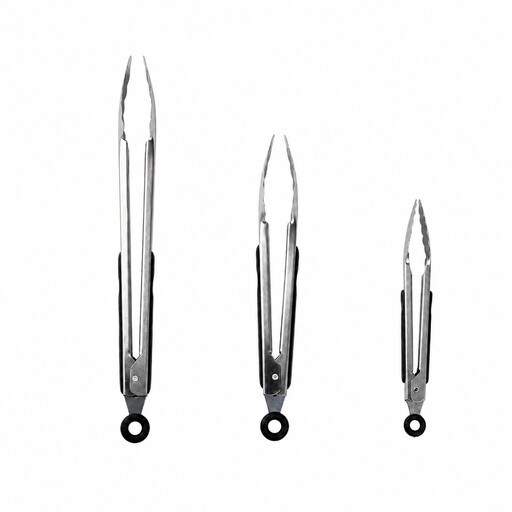
Why it suits this profile: According to the product details, this kitchen tongs set includes three lengths – 20,5, 26 and 34 cm – for cooking, serving, deep-frying and barbecuing.
The different lengths and suitability for food contact are clearly described. That means choosing the right set isn’t just about the number of pieces.
430 stainless steel bodies, wavy gripping surfaces, extended silicone handles and, according to the product details, dishwasher-safe cleaning.
We’ve put together a complete, regularly updated list of products that meet these strict selection criteria and comply fully with the safety regulations in force in the EU.
How long a tool lasts depends largely on how it’s used, the strain it’s put under and how it’s stored. Clean and dry metal parts after use, especially if they’ve come into contact with moisture, oil or food. You can occasionally apply a suitable drop of oil to plier joints, following the manufacturer’s instructions.
Cutting tools such as a cable cutter should only be used within their stated cutting capacity. An oil filter wrench should match the filter diameter. When working on a vehicle, follow the manufacturer’s instructions and make sure it’s safely supported. Safety glasses and suitable gloves are recommended for cutting, drilling and assembly work. Never use tools on live electrical wires unless they’re specifically designed for the job.
For common repairs, it’s useful to have screwdrivers, bits, a hammer, a tape measure, a spirit level, combination pliers, side cutters and a range of metric spanner sizes. A compact set may be enough for assembling furniture and carrying out small repairs. For work on vehicles, you’ll also need sockets, a compatible ratchet and specialist tools.
It depends on how far you need to move it and how much storage space you have. A trolley case is handy if you regularly move tools between the cellar, garage and work area. For a fixed workbench, a lighter case or drawer storage is often more space-efficient.
The price depends on the number of pieces, materials, build quality, specialist tools and storage. Don’t compare sets on piece count alone: check the sizes included, material details, torque limits and what you’ll actually use them for. A smaller set with the right tools can be better value than a large case full of accessories you’ll never use.